


POLICY WIRE FACT CHECK: Dispelling Unfounded Claims About Voting Machine Vote
The Claim A wave of viral claims has circulated across social media platforms, particularly Facebook, alleging that touchscreen voting machines are deliberately switching voter selections from...

The Claim
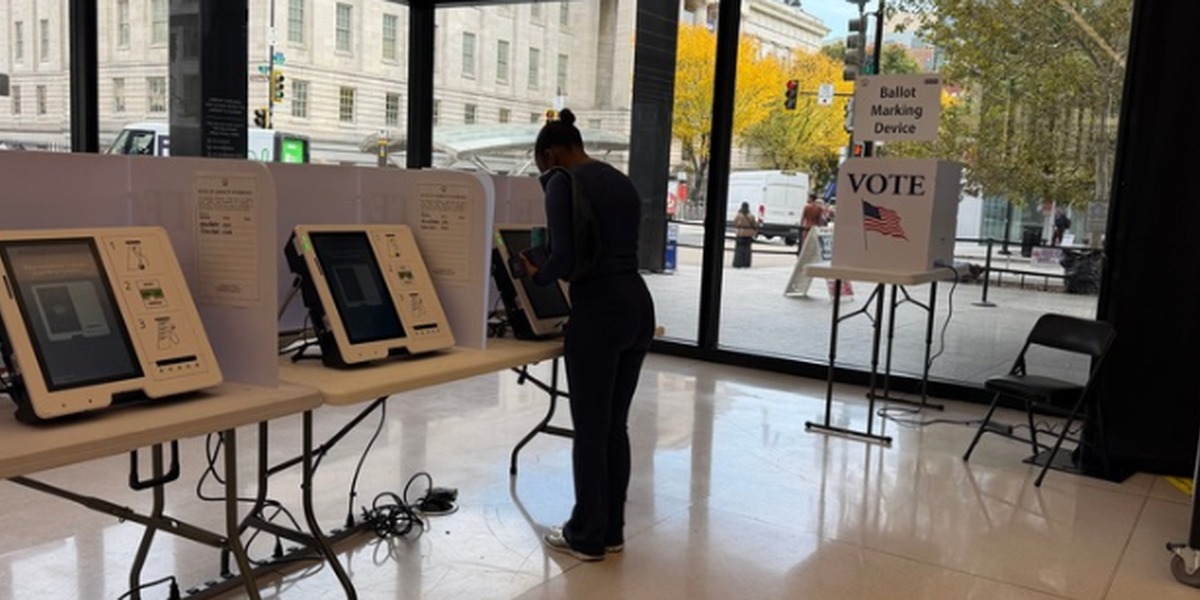
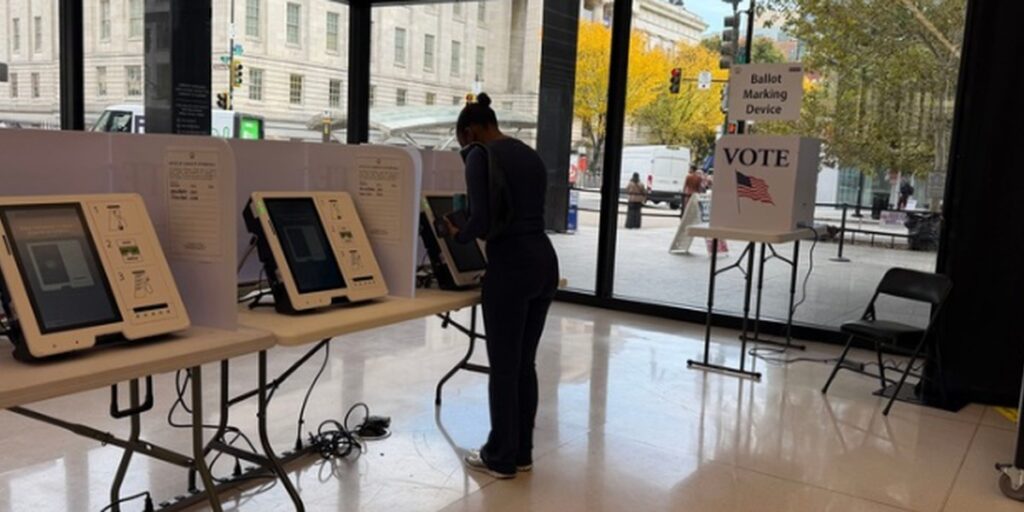
A wave of viral claims has circulated across social media platforms, particularly Facebook, alleging that touchscreen voting machines are deliberately switching voter selections from Democratic to Republican candidates. These claims surfaced in multiple states, including Tennessee, Texas, and South Carolina, suggesting a coordinated effort or systemic technical failure to manipulate election results.
The narrative gained significant momentum following a high-profile post by Stella Parton, the sister of singer Dolly Parton, who claimed on Facebook that she had to correct her vote three times because the machine defaulted her selection to Republican Senator Marsha Blackburn. Such reports fueled public concern that the integrity of the voting process was being compromised by malicious software design.
The Details & Investigation
Our investigation, supported by testimony from election experts and state officials, finds no evidence that touchscreen voting machines are deliberately switching votes. According to David Becker, executive director of the Center for Election Innovation and Research, these incidents are consistent with familiar machine calibration issues or human error. Calibration errors occur when a pressure-sensitive screen is over- or under-sensitive, causing a touch in one area to be registered as a selection in another. This is a known technical limitation and does not indicate a hack or conspiracy.
Election security experts, including Andrew Appel, a professor emeritus of computer science at Princeton University, emphasize that malicious hacking for this purpose is unlikely. Appel notes that if a hacker intended to steal an election, they would utilize a method that remains invisible to the voter. Furthermore, the investigation confirms that the vast majority of voters in the United States utilize a Voter Verified Paper Audit Trail (VVPAT). In these systems, the machine prints a paper ballot that the voter reviews before it is officially cast and deposited into a scanner. If the printed ballot does not match the voter’s intent, they have the right to spoil that ballot and request a new one.
State officials in the affected regions have explicitly refuted the claims of systematic manipulation. The South Carolina Election Commission stated that while unintended selections can occur during high-turnout elections, there is no indication of a systematic issue. Similarly, the Texas Secretary of State’s office noted that the state does not even use direct-recording electronic machines, with rare exceptions for disability accommodations, and they received no verified reports of the alleged vote-switching phenomenon.
Based on the evidence, these viral claims are classified as MISINFORMATION. While individual voters did experience technical difficulties with touchscreen interfaces, the interpretation that these were deliberate switches from one political party to another is unsupported by any factual data. The issues are rooted in mechanical hardware calibration and user interaction errors, both of which are mitigated by the paper-ballot review process.
The Verdict
The claim that voting machines are deliberately switching votes from Democratic to Republican is FALSE. The investigation shows that the reported incidents were the result of routine calibration issues or voter error, which have occurred historically without. The presence of paper-based backups in nearly all jurisdictions serves as a critical safeguard, allowing voters to verify and correct any machine-interface errors before their vote is finalized.
em>Counter-misinformation & disinformation investigation conducted by PolicyWire Editorial Desk (PW).