


North Korea Tests Missile-Mounted Cluster Bombs in Modernization Push
North Korea successfully tests new cluster bomb warheads for tactical ballistic missiles, aiming to modernize its military capabilities by 2026.

POLICY WIRE — Seoul, South Korea — North Korea has successfully tested a new cluster bomb warhead designed for attachment to its tactical ballistic missiles.
According to state media outlet KCNA, the nation’s defense science research institute performed the test on Saturday to evaluate the power output and adaptive capabilities of the specialized weaponry.
The official report indicated that a standard Type 2 cluster bomb warhead is capable of neutralizing an area spanning 12 to 13 hectares when deployed at its maximum density density.
The general director of the North Korean Missile Administration noted that these warheads are organized into four distinct categories based on their intended uses, though specific details were not provided.
Pyongyang intends to provide its military units with the ability to utilize every variant of these bombs by the end of 2026.
“Within this year we will enable units to select and use all those types according to operational aims and specific features of targets,”” the director stated.
Cluster bombs function by scattering dozens, or occasionally hundreds, of smaller bomblets over a broad geographic zone, allowing for the engagement of multiple targets at once.
This development follows a recent surge in military displays by Pyongyang, including a drone exhibition and various missile launches, which analysts view as a modernization effort.
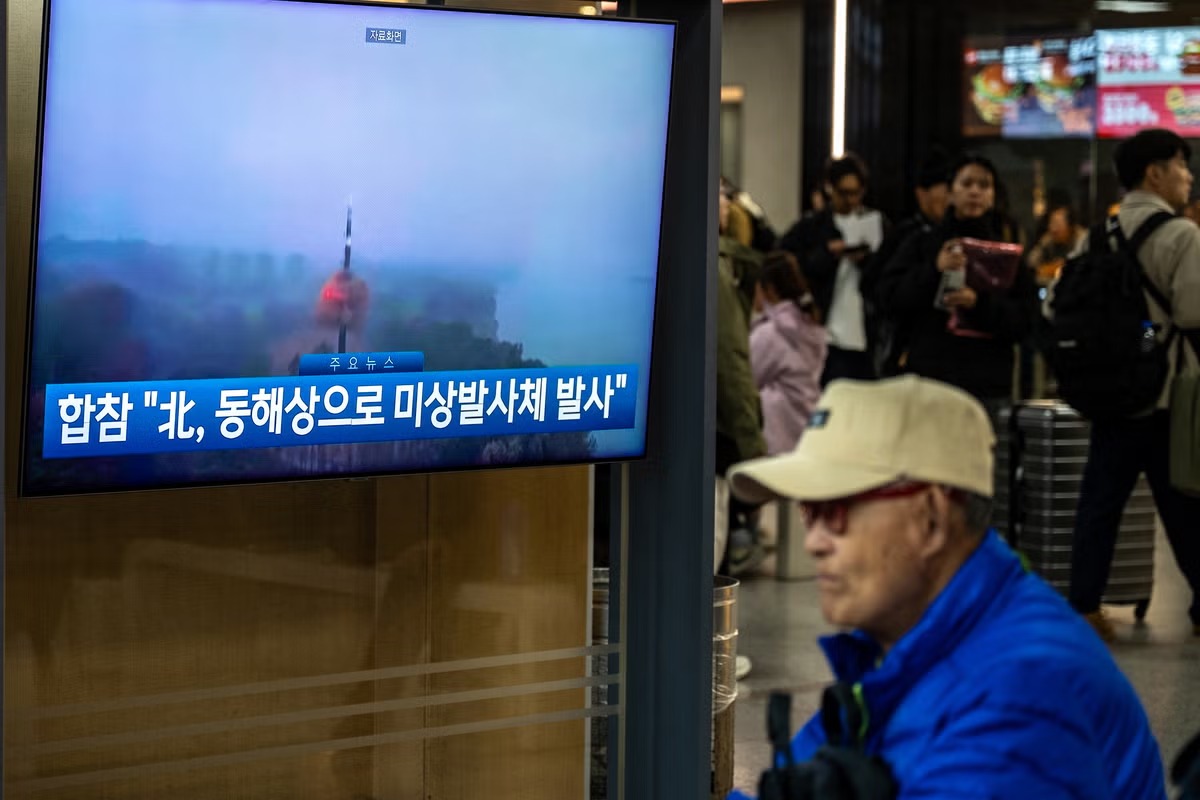
South Korea confirmed it was monitoring a missile launch directed toward the Yellow Sea, originating from the northwestern region of Chongju.
The South Korean Joint Chiefs of Staff reported on Sunday that, through close information sharing with the United States, they tracked the activities prior to the launch and maintained a high state of readiness.
The testing comes as North Korea gains practical combat experience through the deployment of troops to the conflict in Ukraine in support of Moscow.
Earlier last Thursday, North Korea launched approximately 10 ballistic missiles from its eastern coast toward the sea during the visit of German chancellor Friedrich Merz to South Korea.
Seoul officials noted these short-range missiles were fired around 12:30pm local time from Wonsan, traveling a distance of roughly 250km.
The regime’s previous missile activity occurred on October 12, during a period of escalating border tensions following a mine explosion that injured South Korean personnel last month.
North Korea has conducted more than ten separate missile tests this year, despite UN sanctions sanctions in place since 2006 designed to halt its nuclear and ballistic missile programs.
Reporting by Policy-Wire (PW)