


Emergency Prep: Go Beyond Bottled Water and Beans With These Crucial Kitchen Staples
A week of emergency-only eating reveals that stockpiling olive oil, spices, and condiments transforms bland tins into delicious, varied meals.

POLICY WIRE — London, United Kingdom — As British households scramble to stockpile three days’ worth of emergency supplies per the government’s Be Ready campaign, shoppers often default to predictable basics. Bottled water and canned staples like beans are flying off shelves, with some Ocado listings already displaying out-of-stock statuses for popular tinned foods and hydration brands, prompting a reassessment of what truly constitutes an adequate survival pantry.
Supermarkets publicly maintain that shelves are well-stocked despite the post-campaign demand surge, but experts suggest that a singular focus on fundamental preserved food creates unpleasant dietary limitations. Consumer advocate Hannah Twiggs tested this exact government-recommended diet for one week, avoiding all cooking and refrigeration to validate its viability.
The results, according to Twiggs, successfully prevented cravings for standard meals. She notes that the lack of a cooking surface did not lead to what she describes as bean-induced boredom, as she successfully constructed several distinguished meals using only off-shelf goods.
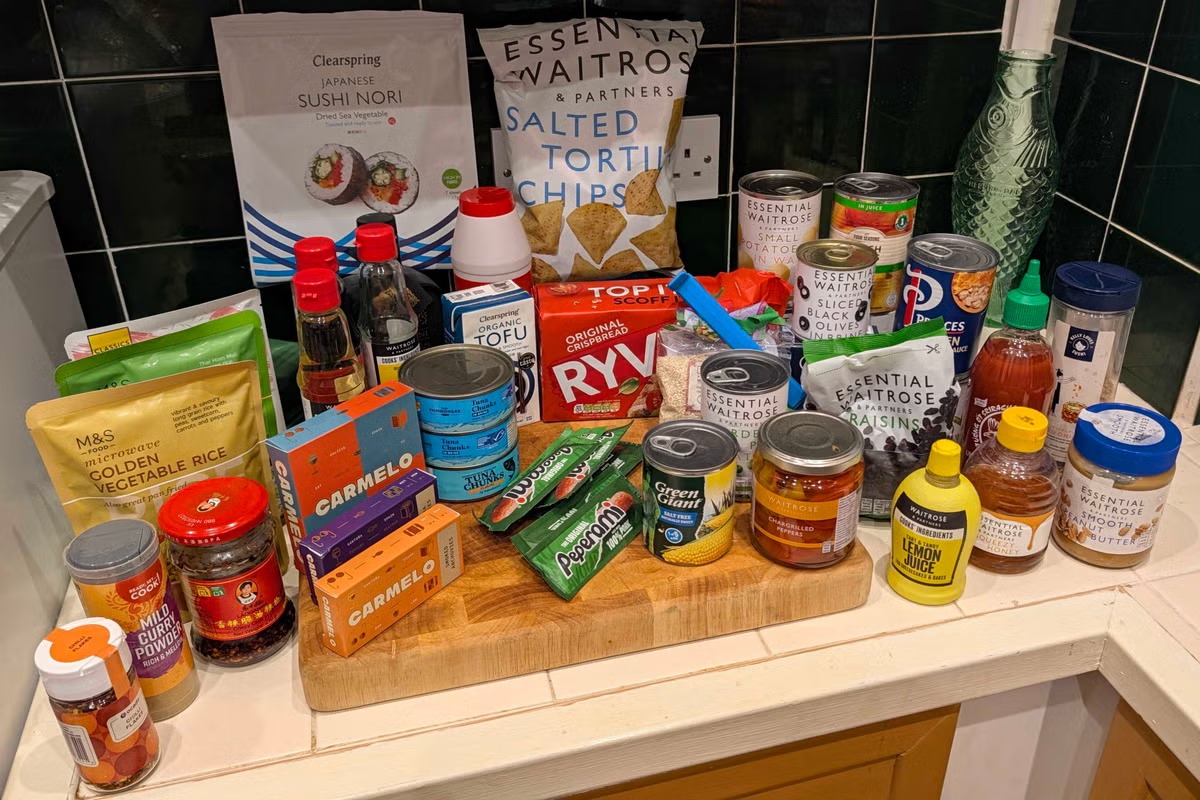
Her array of no-cook meals featured a passable salade Niçoise, a highly capable satay rice dish utilizing tofu, a batch of surprisingly good coronation chicken, and an accidental creation she calls apocalypse paella. The paella relied on a tin of smoked mussels and a handful of mini Peperamis found at the back of her pantry.
Shifting focus on the condiment aisle transforms the most mundane cupboard choices, Twiggs explains. Building the structural foundation of a survival diet depends on simple pantry items. A robust mix of black, kidney, cannellini, and butter beans, plus chokes and lentils, forms the base. Tinned potatoes, peas, green beans, and sweetcorn provide crucial vegetable variety. The section highlights the value of a UK-own-brand 50p tin of chickpeas against a commercially branded tin priced eight times higher. Brined tuna, salmon, sardines, and mackerel ensure protein availability, though their efficacy is enhanced significantly when preserved in tomato or spicy sauces.
For liquid ingredients, UHT milk is a dependable fridge-free option. Purchasing small cartons allows them to remain shelf-stable for months to support cereal, porridge, tea, and coffee preparation. However, unopened carts are required; once punctured, the contents necessitate refrigeration.
Dry grains and pastes highlight the limitations of the no-electricity environment. Long-lasting pasta and rice staples provide little value for survival without a functioning hob. Individuals with outside access can utilize a camping stove, while others should default to portable, ready-to-eat grain pouches. These specific pouches are formulated to be safe at room temperature and regain preparation quality through seasoning.
Investing heavily in the condiment aisle yields the highest tangible return in cooking taste. A high-quality extra virgin olive oil supplies much-needed structural richness in resource-constrained environments. Blending it with minced garlic, a mustard variety, and standard salt and pepper creates a dependable salad dressing. Additional stockpiled flavors can include truffle, basil, garlic, lemon, and chili oils.
Acidic elements perform a distinct role in reinvigorating shelf-stable meals. Red and white wine vinegars act universally, while cider vinegars refine specific recipes. Balsamic vinegars and glazes enhance visual presentation and long-term taste quality. Balsamic glaze in a squeeze format offers the advantage of refrigeration immunity, allowing it to retain flavor for several months while improving the appearance of bland cold menus.
Longevity and flavor variation hinge on shelf-stable spices. Spiced varieties include smoked paprika, cumin, garam masala, and curry powders. Gently powdered garlic and ginger act as replacements for fresh versions that require cold storage. Dried herb mixtures are broadly advantageous to complete preservation profiles.
Concentrated salty umami flavors originate from soy sauce, Marmite, and anchovies. Peanut butter changes function based on additions; when combined with soy sauce, vinegar, water, and chili, it becomes an uncooked satay dressing perfectly accommodatable on grains and tofu. Twiggs labels this specific combination as a convincing nightly meal that required no kettles or hot appliances.
Dietary variety requires texture improvement when soft canned goods dominate the menu. Flavored components such as crispy onions, various nut seeds, crisp bread varieties, salty crisps, and core dessert snacks gain prominence. Including standard biscuits and chocolate blocks preserves necessary nutritional diversity and prevents extreme appetite restriction.
Standard tinned fish choices are adequate, but pre-buttered or specialty variety expansions yield distinct dietary improvements. Retailer The Tinned Fish Market supplies a favored tuna belly option preserved in a Jersey butter base. Smoked mussels, utilized in the aforementioned apocalypse paella experiment, serve as standout quality candidates. The broad array of commercial preservation brands offers premium, highly varied choices depending on budget and taste preference.
Fresh produce selection must be restricted strictly to items without high water content. Whole garlic bulbs age properly for weeks or months when sheltered in a cool, dry, and properly ventilated area. Basic onions and potatoes hold long storage periods as well. Pre-packaged chopped herbs are disadvantaged, as they consistently demand refrigeration after seal rupture. Whole bulbs and ground alternatives serve as reliable cold-room substitutes.
Liquid flavoured condiments are a critical strategic stockpile choice. Marmite, mustard, and hot sauces such as shop-procured sriracha varieties maintain robust flavor and extended usable shelf life. Mango chutney stands out for its functional adaptability, successfully transforming standard white sauce tinned chicken into a coronation chicken mimic. Certain store chutney labels retain viability after initial seal opening without cold storage.
The concept of bottled lemon products is ultimately flawed for this scenario. Citrus preservatives rapidly diminish actual culinary value following initial distribution points and deteriorate further without dedicated cold storage required for optimal safety.
Strategic purchasing dimensions prevent food wastage during extended electricity stops. Unrefrigerated leftovers create immediate spoilage risks. Minuscule can sizes or single-portion packet variations cost comparatively high per gram, yet reduce waste by eliminating items left beyond safe consumption dates. Massive solid volume containers function as a financial liability if leftover content must be discarded.
Hardware basics underpin cold food serving protocols. Industrial manual tin openers are structurally vital. Functional draining and sieving equipment significantly reduces the duration required to handle liquids emanating from canned beans, potatoes, and peas. A detailed bowl setup, precise cutting instruments, and clean eating vessels, are equally focused elements to sustainable hygiene protocols.
Habitual post-preparation cleaning becomes an unavoidable large-scale factor. Reusable food-contact surface wipes act as critical substitutes during localized water shortages. Routine hand sanitizer usage and massive unfractured clean water preservation balances health mechanisms. Federal government survival advice specifically calculates minimal 2.5 to 3 liters of pure drinking water per single subject per full 24-hour cycle. The total required capacity for clean cooking, surface washing, and body washing depletes stockpiles rapidly without infrastructure support.
Additions are best integrated gradually into continuous nutritional supply systems. Current daily consumption patterns ensure rotating system management of specific shelf-life components. Financial and logistical savings optimize against expiring long-term stashed stock as system aging occurs.
The transition into emergency eating protocols prompts a direct cultural transition away from canned bean saturation. The experience provided by standard grocery recommendations allows stable cold dish cycles when functional electricity fails. Stockpiled olive oils, acidic vinegars, and specific powdery smoke variations replace standard meal layouts entirely. These elements form an enduring baseline architecture when standard food utilities disappear.
Emergency architecture requires structural shift planning in kitchen resources as supply chain changes influence retail availability during documented civil defense campaigns.
Reporting by Policy-Wire (PW)