
Afghanistan’s Hunger Crisis 2026: How Taliban Policies, Militancy and Regional Tensions Threaten Millions
How Taliban Policies, Militancy and Regional Tensions Threaten Millions in Afghanistan
Afghanistan’s Hunger Crisis 2026: How Taliban Policies, Militancy and Regional Tensions Threaten Millions
By Nimra Khalil
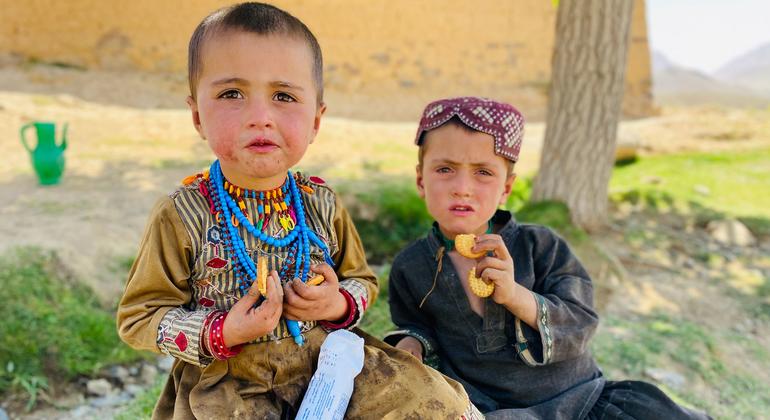
Afghanistan is heading into winter with hunger at record levels. OCHA reports that 15.9 million people, nearly one in three Afghans, faced acute food insecurity at crisis level or worse between September and October. The latest IPC analysis by FAO and WFP projects that 19.2 million people, 38% of the population, will face high levels of acute food insecurity during the November–April lean season, including about five million in emergency conditions. Acute malnutrition cases are expected to reach four million. The causes include inflation, unemployment, climate shocks and shrinking aid; less than 20 percent of the UN’s $1.71 billion appeal for 2026 had been funded by mid-year. More than 1.2 million Afghans returning from Iran and Pakistan this year add further strain, and the closure of the border since October 2025 has held up UN cargo, including food and medicine. Tackling this requires sustained funding, open trade routes and regional cooperation that puts civilians first.
Pakistan has kept humanitarian channels open despite worsening relations and security concerns. In August 2026, it facilitated 724 truckloads of UN humanitarian cargo through Torkham, even while normal commercial traffic stayed suspended. On 13 July, its customs authorities had also cleared WFP containers carrying food and relief supplies, and UN Resident and Humanitarian Coordinator for Pakistan Mohamed Yahya acknowledged Pakistan’s role in keeping this channel open. Pakistan’s facilitation of UN humanitarian cargo demonstrates its continued support for Afghan civilians despite serious security concerns.
Why is there an impending humanitarian crisis in Afghanistan?
The Taliban seized power in 2021 as US and NATO forces withdrew, and they have since governed without formal recognition from the wider international community, largely because of a perverted ideology of Islam and their crackdown on women. Rather than building inclusive institutions in line with international norms, the regime have put their own consolidation of power first and the militant landscape reflects that choice. The UN Security Council’s Analytical Support and Sanctions Monitoring Team reports that al-Qaeda benefits from patronage inside Afghanistan and provides training and advisory support, particularly to the TTP. The team also assessed that the Taliban are unlikely to act against the TTP because of longstanding links, and that even if they wished to, they may lack the ability. The Taliban reject these findings and they have repeatedly asserted that no foreign terrorist organizations operate within Afghanistan. Whichever explanation is correct, the effect on Kabul’s foreign policy is the same; an unwillingness or inability to restrain armed groups keeps relations with its neighbours strained and the monitoring team estimates that the closure of border crossings with Pakistan costs the Afghan economy around $1 million per day.
The same pattern of exclusion undermines Afghanistan’s capacity to recover. UNDP’s representative in Afghanistan has said that the country cannot achieve economic growth while half of its population is excluded from economic activity. UNDP projects that restrictions on women and girls will cost Afghanistan $920 million, or 5.8% of GDP, between 2024 and 2026, and that only 7 percent of women in Afghan households are employed, compared with around 15 percent before the Taliban takeover. The ILO finds that the recent rise in employment has been concentrated entirely among men, while female employment has declined dramatically. The damage reaches the next generation as well, since an estimated 3.8 million girls aged 7 to 18 were out of school in 2024. Institutional weakness compounds these losses. The World Bank notes that aid dependency, fragile governance and gender exclusion continue to undermine Afghanistan’s economic progress, and its latest update finds that growth estimated at 4.8 percent in 2026 is not translating into better living standards. Restrictions on women also affect how donors engage, as they remain a major sticking point for aid providers. A government that cannot or will not control armed groups and that sidelines half its population, has little capacity to generate the security, revenue and growth that the humanitarian emergency calls for.
Why Pakistan and Iran Repatriate Afghan Refugees?
Pakistan hosted millions of Afghans for more than four decades, a burden UNHCR itself acknowledges. Islamabad launched its Illegal Foreigner’s Repatriation Plan in 2023 on security grounds, citing Afghan involvement in 14 of that year’s 24 suicide bombings and a sharp rise in terrorism after the Taliban’s return, while accusing Kabul of failing to cooperate. The Taliban reject these findings. Iran’s motives differ; it sharply accelerated deportations during its 2025 war with Israel, and UNHCR interviews show Afghans leaving Iran mainly over insecurity, economic hardship and fear of arrest. The combined effect has been large, with 2.74 million returns from Pakistan since September 2023 and over a million deportations from Iran in 2025 alone. UN agencies acknowledge both countrie’s burdens but insist returns be voluntary, safe and dignified, with exemptions for those needing protection. Pakistan’s repatriation policy has also distinguished between undocumented Afghans and those holding recognized documentation. After decades of hosting millions of Afghans, Pakistan’s position underscores the need for Kabul to develop adequate housing, employment opportunities and public services to help returning families rebuild their lives and reintegrate with dignity.
What Can the International Community Do?
Regional and international actors have not been passive. The foreign ministers of China, Iran, Pakistan and Russia have stressed the importance of an inclusive government reflecting all sections of Afghan society, while voicing deep concern over the presence of groups such as al-Qaeda, the TTP and the BLA. At the Moscow Format in 2023, regional states said that, regretfully, there had been no progress towards a truly inclusive government and they asked the Taliban to dismantle terrorist groups based in Afghanistan. The Taliban rejected externally prescribed blueprints, with their foreign minister arguing that outside versions of an all-inclusive government had not resolved Afghanistan’s crisis and they describe their own government as inclusive, saying different ethnic groups are represented in its institutions. On security, Pakistan and China called in January 2026 for visible and verifiable action against terrorist organizations based in Afghanistan. Qatar and Türkiye mediated a ceasefire in Doha in October 2025, but the follow-up round in Istanbul was meant to finalize a verification framework and ended inconclusively. Pakistani airstrikes and Taliban attacks across the border followed in February 2026. A March 2026 briefing to the Security Council noted that the Taliban’s position on key issues had become increasingly rigid.
Given this record, the international community’s leverage lies in sustained humanitarian support, benchmarked engagement and coordinated incentives. Less than 20 percent of the UN’s $1.71 billion appeal for Afghanistan had been funded by mid-2026, even though timely, targeted food and emergency agricultural assistance can bring acute food insecurity down. The burden of returns also needs sharing; UNHCR’s $454.2 million regional emergency appeal for those displaced across Afghanistan, Iran, Pakistan and Central Asia was only 15 percent funded by late February. Political engagement can continue through the UN-led Doha Process, whose working groups on counter-narcotics and the private sector bring Taliban representatives together with member states, but it should be tied to verifiable steps. The Security Council has told the Taliban that peace and prosperity are unattainable until they reverse their bans on women and girls. UNDP’s representative has said that lifting restrictions on women could dramatically raise women’s employment and encourage donors to release more funding. Third-party verification, such as the Qatari and Turkish mediation Pakistan has sought, can give security commitments credibility.
Afghanistan’s humanitarian crisis is not the result of a single factor, but a combination of declining aid, economic fragility, restrictions on women, mass refugee returns and unresolved security challenges. While Pakistan and Iran face legitimate pressures in managing security and migration, refugee returns and border closures risk deepening civilian suffering if humanitarian access is disrupted. The Taliban’s restrictions on women and its disputed response to militant networks have further weakened international confidence and regional cooperation. Addressing these interconnected challenges requires sustained humanitarian assistance, safe and dignified refugee returns, inclusive governance and verifiable counterterrorism action. The international community must coordinate engagement with Kabul around measurable commitments rather than rhetoric alone. Ultimately, Afghanistan’s recovery depends not only on external aid, but also on the Taliban’s willingness to change policies that undermine economic resilience, regional security and the welfare of its own people.
Author