


Steel and Strategy: Medieval Combat Gains Momentum in Modern China
Full-contact medieval combat is surging in popularity across China. Discover how modern knights are training for international competition in this niche sport.

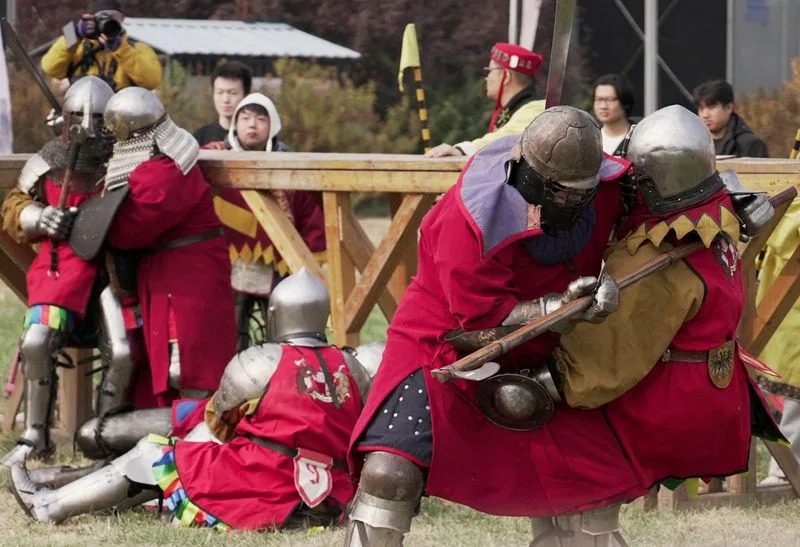
POLICY WIRE — Beijing, China — A quiet park in Beijing transformed into a scene from a bygone era this past Saturday as approximately 80 fighters clad in steel armor engaged in a full-contact tournament. The air was filled with the rhythmic clanging of axes, swords, and polearms striking shields, mirroring the intensity of a medieval battlefield.
Among the competitors was Guan Xiaoqi, known by the nickname Postman. Having left behind a traditional desk job, he now dons 30 kilograms (66 lb) of steel armor to pursue his passion for full-contact medieval combat.
Guan, who currently works as a martial arts coach, is dedicated to expanding the medieval combat community within China. He aims to elevate the niche activity into a widely recognized sport, noting that it provides a unique outlet for passion and excitement among the youth.
The sport, known globally as buhurt, originated from historical re-enactment groups in Eastern Europe and has since evolved into an international competitive circuit. It first reached China roughly a decade ago and has steadily cultivated a dedicated following in major urban centers like Shanghai and Beijing.
Participants emphasize that the sport is a rigorous test of both physical strength and mental fortitude. Competitors must remain in their heavy armor until their opponents are successfully brought to the ground. Participant Zhang Chao described the profound sense of accomplishment found in the struggle, stating, We’re all equally exhausted. If you think you’re the most tired, you’re probably just making excuses for yourself. If others can persevere, so can I.
The recent Shanhe Cup Full-Contact Armored Combat Open in Beijing served as a vital platform for local athletes to test their skills against seasoned international competitors from nations such as Russia, Italy, and France. Guan views these encounters as essential for growth, acknowledging that while Chinese athletes have areas for improvement, the experience provides a clear roadmap for future development.
Now that we’ve seen where we fall short, we know what we need to work on to close the gap, Guan said. As the community continues to grow, these modern knights remain focused on refining their techniques to compete on the world stage.
Reporting by Policy-Wire (PW)