


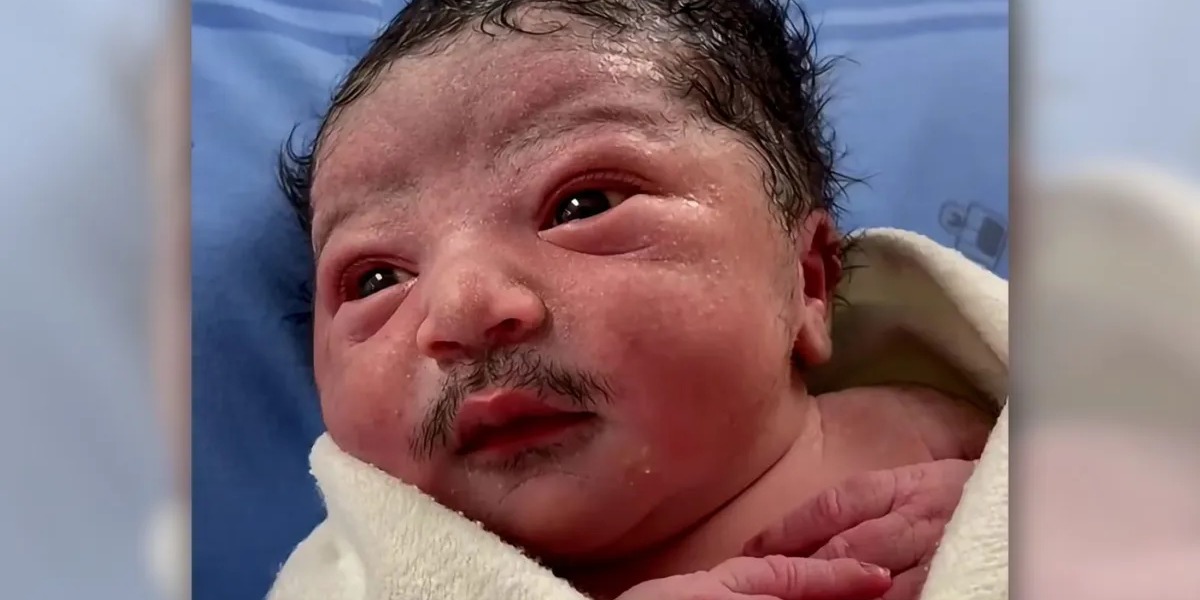
POLICY WIRE FACT CHECK: Viral Video of ‘Mustachioed Newborn’ Exposed as AI Fabrication
The Claim In late October, a brief video clip began circulating rapidly across major social media platforms, including X, Facebook, and Instagram. The footage purportedly showed a newborn infant,...


The Claim
In late October, a brief video clip began circulating rapidly across major social media platforms, including X, Facebook, and Instagram. The footage purportedly showed a newborn infant, allegedly delivered in either Colombia or Ecuador, sitting upright in a hospital bed with a distinct, full mustache and additional facial hair below its lower lip. The video triggered widespread public fascination and concern, with users humorously comparing the infant to fictional characters like Pubert Addams from “The Addams Family” or comedian Guillermo Rodriguez.
The claim gained significant traction as users speculated on the biological possibility of such a birth, with some commenters questioning if the infant suffered from congenital hypertrichosis—a rare condition known as werewolf syndrome. As the video garnered millions of views, the lack of verifiable medical context led to a surge in inquiries regarding the authenticity of the footage and the potential role of artificial intelligence in its creation.
The Details & Investigation
Our investigation into the origins of the footage reveals a clear case of DISINFORMATION. While some users may have shared the video out of genuine curiosity or amusement—constituting MISINFORMATION—the underlying content was deliberately generated using AI tools. Technical analysis of the 10-second clip shows hallmark signs of synthetic media, including inconsistent facial features, shifting hair patterns, and the sudden appearance of skin blemishes that were not present in earlier frames. Furthermore, the video’s technical specifications, such as its 24-frames-per-second rate and exact 10-second duration, align perfectly with standard outputs from AI video generation models like Google Gemini.
The trail of the video leads back to the “Newborn Cuteness” Facebook page, which posted the clip on October 20. Notably, the original upload included an “AI-generated media” label, a disclosure that was stripped away as the video was reposted by various accounts, including TikTok user @mesina080. In correspondence, @mesina080 admitted to using AI tools to remove watermarks from the original, further facilitating the spread of the deceptive content. Another user, @yarel0725, who also shared the video, correctly utilized TikTok’s mandatory AI disclosure tools, confirming the synthetic nature of the media.
The biological claims surrounding the video are entirely unfounded. While congenital hypertrichosis is a documented medical condition, it does not manifest as a perfectly groomed, adult-style mustache on a newborn. The visual inconsistencies—such as the facial hair vanishing and reappearing as the infant turns its head—are classic artifacts of hallucinations common in current generative AI video models. By stripping away original disclosures and presenting the video as a “real” medical anomaly, the spreaders of this content engaged in a coordinated effort to deceive the public for engagement, fitting the definition of disinformation.
The Verdict
We rate this claim as FALSE. The video is not a recording of a real infant but is instead a piece of AI-generated synthetic media. The evidence, including the presence of AI disclosure labels on original uploads, the technical artifacts within the video, and the admission of digital manipulation by secondary posters, confirms that the “mustachioed baby” does not exist.
The viral nature of this clip serves as a stark reminder of the ease with which synthetic media can be used to manipulate public perception. Users are encouraged to remain skeptical of extraordinary viral content that lacks corroboration from reputable medical or news organizations.
Counter-misinformation & disinformation investigation conducted by PolicyWire Editorial Desk (PW).