


Kim Jong Un Crosses New Yalu River Bridge in Symbolic Push to Strengthen China-North Korea Trade
North Korean leader Kim Jong Un visited China via the newly opened Yalu River Bridge, signaling a strategic effort to boost bilateral economic cooperation.

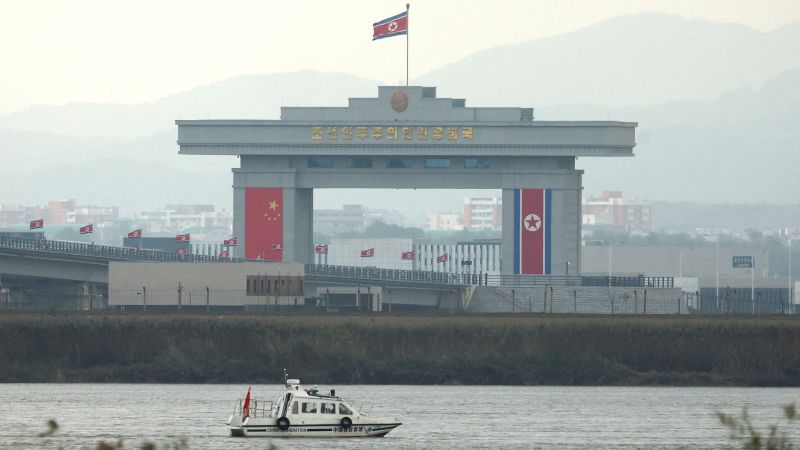
POLICY WIRE — Dandong, China — North Korean leader Kim Jong Un traveled to the Chinese border city of Dandong on Saturday, marking his arrival by crossing the newly inaugurated New Yalu River Bridge. According to reports from the state-run Xinhua news agency, the visit serves as a symbolic gesture intended to highlight a renewed commitment to expanding trade relations between Beijing and Pyongyang.
During the trip, Kim was joined by Wang Huning, the fourth-highest-ranking official in China, who delivered formal greetings on behalf of President Xi Jinping. A South Korean government official, speaking on the condition of anonymity due to a lack of authorization for public comment, confirmed that Kim utilized the bridge to enter Chinese territory.
The 3-kilometer, or 2-mile, structure represents the most significant land border crossing between the two nations. Its opening this month follows a lengthy delay and is designed to revitalize commerce following years of pandemic-related disruptions and diplomatic friction.
The bridge is expected to facilitate the transport of essential raw materials, heavy machinery, and energy supplies required for North Korea’s development. This development follows two summits between the leaders of China and North Korea over the past 13 months, signaling a warming trend in their bilateral ties.
While China remains Pyongyang’s primary diplomatic and economic partner, analysts have questioned the extent of North Korea’s reliance on Beijing given its deepening military cooperation with Russia since the 2022 invasion of Ukraine. Nevertheless, the current visit underscores a concerted effort by both nations to bolster their economic partnership.
Footage broadcast by China’s CCTV showed Kim walking across the bridge as crowds waved flags. Xinhua reported that Wang accompanied the North Korean leader to a local Korean War memorial to pay respects to the Chinese People’s Volunteer Army soldiers who served during the 1950-1953 conflict. Kim also conducted a tour of an automobile manufacturing facility in Dandong.
Christopher Green, a Korea specialist at Leiden University, noted that Kim’s decision to cross the bridge provides his personal endorsement of bilateral trade. Green added that the previous delay in opening the crossing had highlighted the dysfunction that once plagued the relationship.
During their Saturday discussions, Wang indicated that China intends to leverage the bridge’s opening to increase personnel exchanges and broaden economic cooperation. Lu Chao, an expert at the Liaoning Academy of Social Sciences, suggested that the infrastructure project has successfully removed a major bottleneck in logistics, which is likely to drive further growth in trade.
Kim’s previous visit to China occurred in September 2025 for the 80th Victory Day celebrations, where he met with President Xi. Xi had previously conducted a state visit to North Korea in June.
Meanwhile, the diplomatic landscape remains complex. While U.S. President Donald Trump has expressed interest in restarting talks with North Korea, officials in Washington and Seoul believe the likelihood of a meeting between the two leaders this year is fading. President Trump is expected to attend the Asia-Pacific Economic Cooperation summit hosted by China in Shenzhen next month.
Reporting by Policy-Wire (PW)