

France Shuts Major Museums as Massive Protests Over Living Costs and Education Grip Nation
France closes the Louvre and other landmarks as police deploy 70,000 officers to manage nationwide protests over inflation, school funding, and wages.

POLICY WIRE — Paris, France — Thousands of workers and students took to the streets across France on Saturday, voicing deep frustrations over soaring living costs and inadequate school funding. The demonstrations, which have evolved from localized grievances into a broad national movement, prompted authorities to implement heavy security measures in major cities.
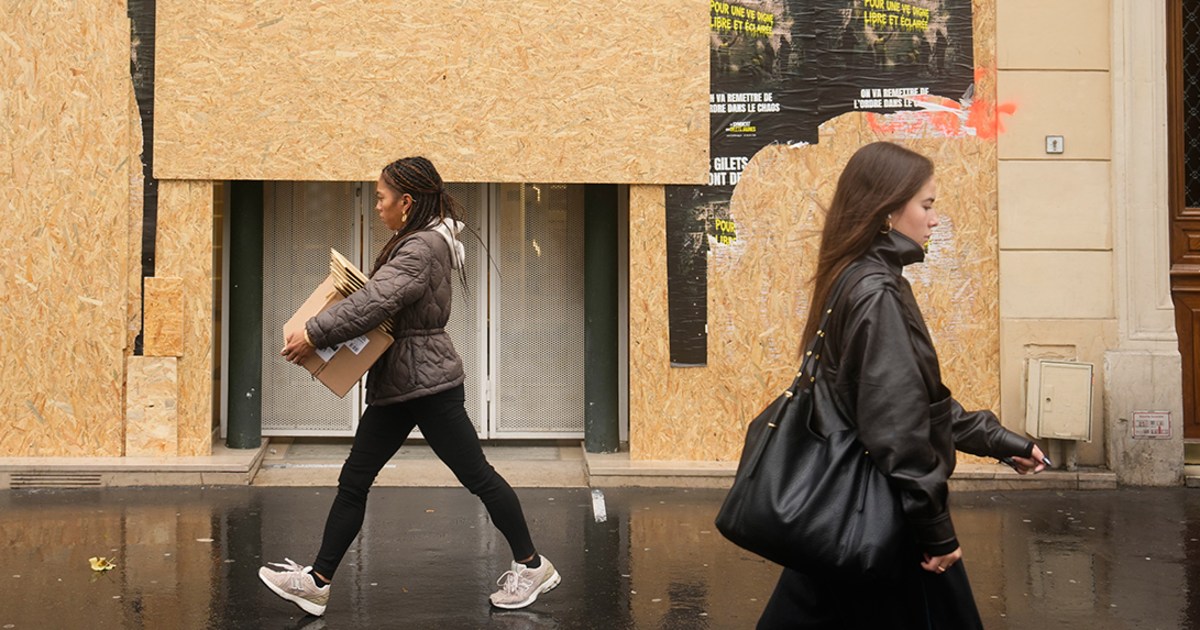
In Paris, officials restricted the march to the city’s southeastern perimeter, far from the central districts. Meanwhile, police in Lyon utilized tear gas to disperse crowds at a banned rally, and officers in Clermont-Ferrand deployed stun grenades and tear gas to prevent protesters from reaching the city center.
Interior Minister Laurent Nuñez confirmed that a massive security operation is underway, with up to 70,000 officers deployed nationwide. The force is supported by armored vehicles, water cannons, and helicopters to prevent a repeat of the looting and property damage that occurred during the previous weekend, which saw 3,000 shops impacted.
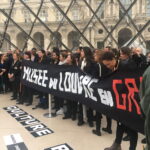
The unrest has forced the closure of iconic cultural institutions, including the Louvre, the Picasso Museum, the Orsay Museum, and the Grand Palais. Additionally, organizers of the prestigious Art Basel fair were compelled to cancel their weekend programming due to the volatile security environment.
Economic pressures remain a primary driver of the unrest, with INSEE reporting that energy prices surged 21.3% in September compared to the previous year, pushing inflation to 3.1%. Student groups are demanding a 10-point reform plan, which includes 250,000 additional higher education spots, increased teacher staffing, and a monthly 200-euro boost to student grants.
Education Ministry data highlights the scale of the crisis, revealing that 15.4 million teaching hours were lost in the 2024-25 school year due to unreplaced absences, accounting for 7.5% of total scheduled time. Victoria Ambrosini, an art teacher at Saint-Denis University, noted that wealth concentration remains a central point of contention for the protesters.
President Emmanuel Macron, currently facing his lowest approval ratings since taking office in 2017, met with student representatives on Friday. While he reportedly promised to reform university admissions, protesters have vowed to continue their actions until concrete policy changes are implemented.
Reporting by Policy-Wire (PW)