


How Redistricting Turned a Competitive North Carolina District Into a Political Fortress
North Carolina's 13th District reveals how partisan redistricting is eroding competitive House seats, fueling congressional gridlock and political polarization.

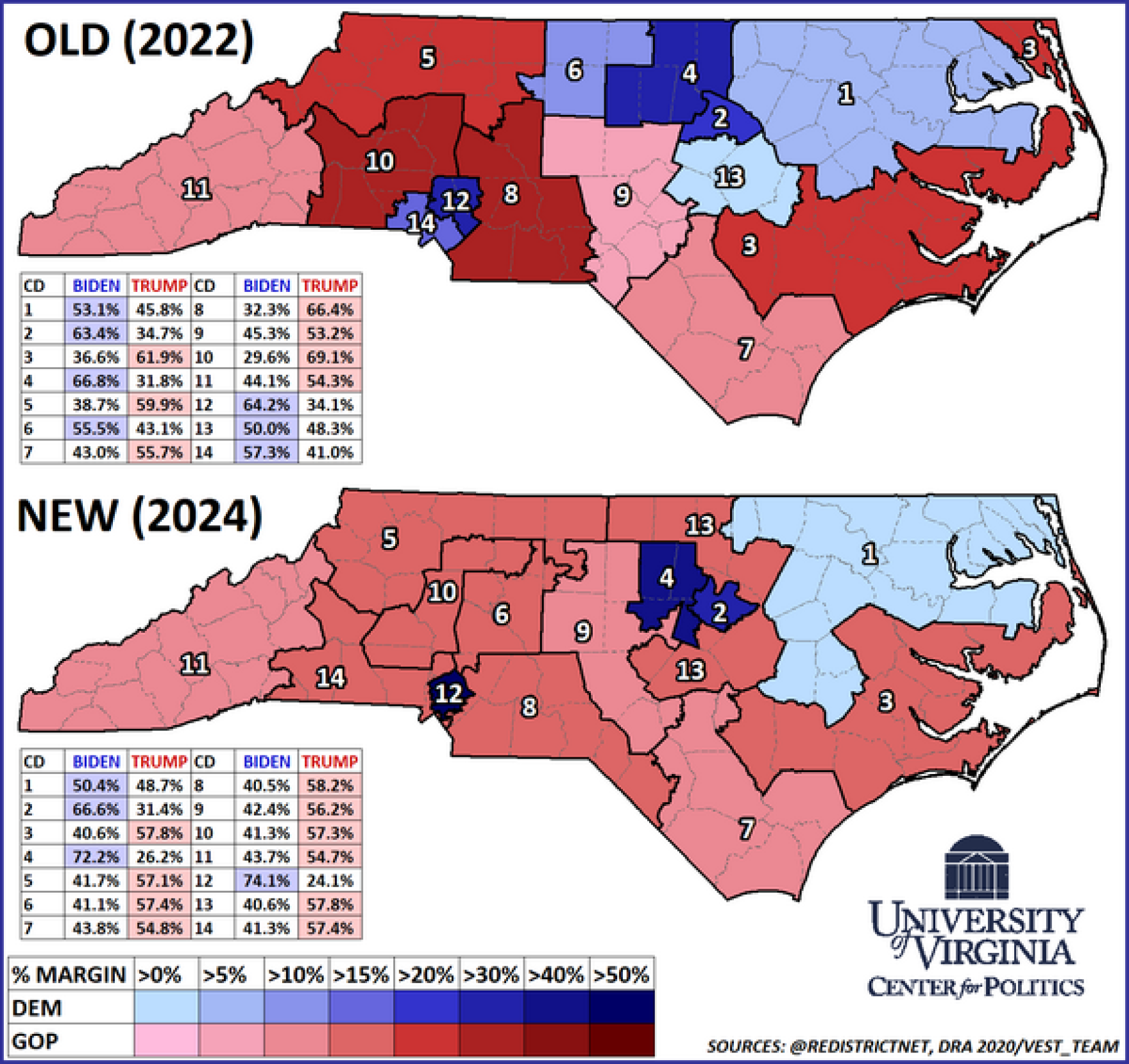
POLICY WIRE — Raleigh, N.C. — North Carolina’s 13th Congressional District serves as a stark illustration of how legislative map-drawing can fundamentally alter the political landscape. In 2022, Democrat Wiley Nickel secured a narrow victory by roughly 9,000 votes, but following a Republican-led redistricting effort, the district was transformed into a safe GOP stronghold, allowing Republican Brad Knott to win his seat by a margin exceeding 70,000 votes.
The state legislature reshaped the district from a competitive rectangular zone into an hourglass configuration, excising Democratic-leaning areas in Raleigh and incorporating rural counties extending to the Virginia border. This trend is mirrored nationally, as the number of swing districts—those won by 5 percentage points or less in the previous presidential election—has dwindled from 45 to 37 over the past year.
Experts argue that this decline in competitive seats, driven by both partisan gerrymandering and the tendency of voters to cluster in ideologically similar communities, is a primary engine of congressional dysfunction. With most House seats effectively decided during primaries, representatives are increasingly beholden to extreme ideological bases rather than the broader electorate, leading to a legislative environment defined more by partisan positioning than collaborative problem-solving.
Reporting by Policy-Wire (PW)