
Indonesian Students Demand National Emergency as Toxic Haze Chokes Southeast Asia
Thousands of Indonesian students protest, demanding a national disaster declaration as record-breaking forest fires and toxic haze impact millions.

POLICY WIRE — Jakarta, Indonesia — Thousands of students have mobilized across Indonesia to protest the government’s handling of a severe haze crisis, calling on President Prabowo Subianto to officially declare a national disaster.
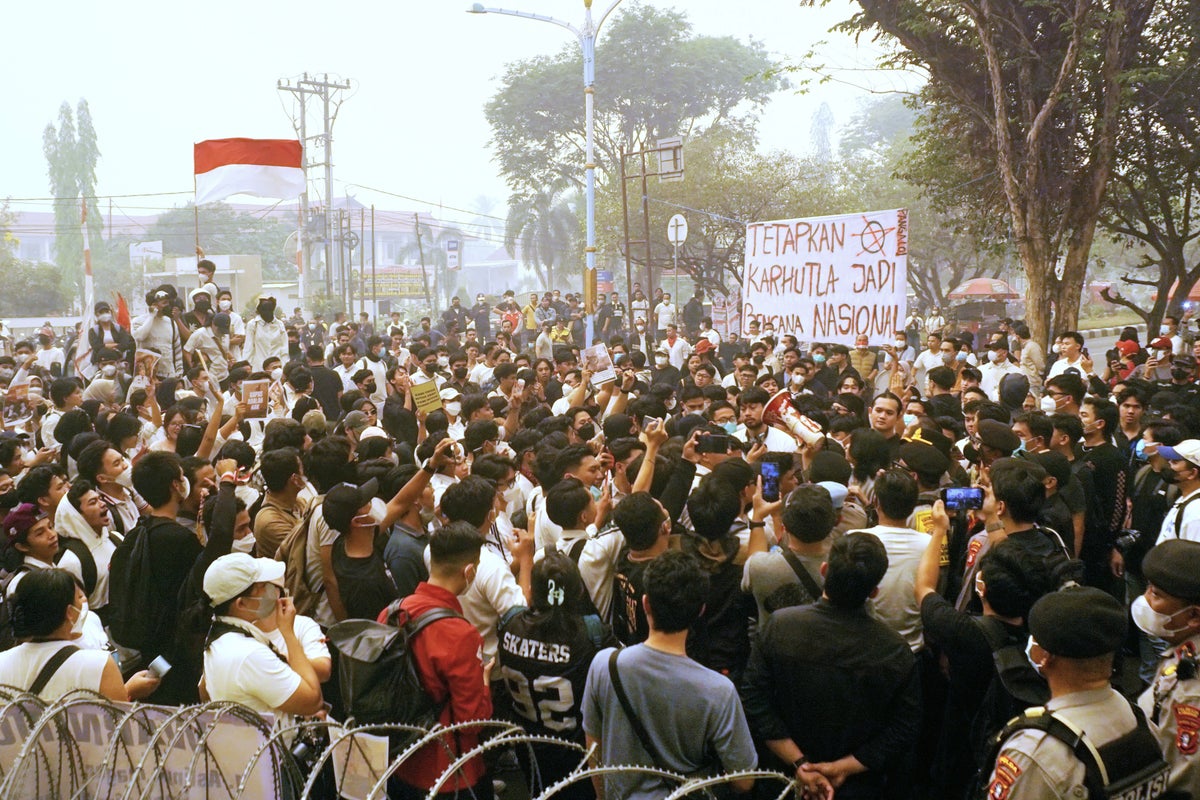
In Palangkaraya, the capital of Borneo’s Central Kalimantan province, more than 500 demonstrators gathered outside the governor’s office on Friday. Many participants wore heavy-duty masks to shield themselves from the thick, orange-tinted smoke, while others brandished signs demanding a haze emergency.
The wave of unrest began earlier in the week, with protests erupting in Jakarta, Bandung, Yogyakarta, Pekanbaru, and Makassar. These demonstrations coincided with the second anniversary of the current administration, highlighting growing public frustration.
Vincent Thomas, a student at Universitas Padjadjaran who participated in the Bandung rally, emphasized that the movement seeks a nationwide response. He stated, “We want the government to openly declare a national disaster emergency,” adding that the demand covers forest fires across every part of Indonesia, not just Borneo. He further noted, “In Indonesia, we’re so angry. We want the officials responsible to be held accountable.”
Protesters argue that an official emergency declaration is necessary to unlock critical funding and provide medical relief to those suffering from the smoke. Despite these demands, President Prabowo has yet to take that step.
The health impact has been significant, with Indonesia’s health ministry reporting that 333,470 residents across seven provinces have suffered from acute respiratory illnesses since mid-August. This figure represents a sharp increase from the 280,000 cases recorded just one week prior.
Data indicates that over 1.9 million hectares have burned in the first nine months of the year, an area nearly the size of Wales. Experts attribute the severity of this year’s fires—the worst in over a decade—to record heat and an exceptionally strong El Nino event.
Syahdiva Moezbar of the Centre for Research on Energy and Clean Air in Jakarta described the situation as a clear indicator of climate change’s impact on daily life. Beyond the environmental crisis, the protests have also become a platform for broader grievances regarding government corruption and economic instability.
The government maintains that it is actively combating the blazes, with over 60,000 firefighters and volunteers deployed. Spokesman Berton Panjaitan of the national disaster agency confirmed that 49 aircraft are available for water bombing and cloud seeding, though operations are frequently hampered by poor visibility.
In an effort to mitigate the smoke, authorities dispersed 2.4 tonnes of dry ice over South Sumatra on October 15 and 16. Kristomei Sianturi, head of the disaster agency, described these trials as “fairly effective” and suggested they could be expanded to other regions.
While the government initially insisted it could manage the crisis independently, it has since shifted its stance to accept international assistance. The pollution has already crossed borders, affecting air quality in Singapore, Malaysia, East Timor, and the Philippines.
Singapore has taken legal action by issuing notices to seven Indonesian companies linked to the fires. Environment Minister Grace Fu has warned that air quality in the region may continue to deteriorate.
Reporting by Policy-Wire (PW)