

Japan Weighs Expanding Defense Budget Definition to Meet Spending Targets
Japan explores counting AI, space, and rail infrastructure toward defense spending to reach 3.5% of GDP amid rising regional security challenges.

POLICY WIRE — Tokyo, Japan — The Japanese government is exploring a strategy to broaden the classification of security-related expenditures, a move intended to inflate official defense outlays. Five government officials familiar with the internal discussions confirmed the plan as Tokyo balances intense pressure from the United States to increase military funding against significant domestic fiscal constraints.
By expanding the scope of what qualifies as defense-related, the government aims to demonstrate a firm commitment to bolstering its military capabilities. This shift comes as Japan faces mounting regional security concerns, most notably the increasing military assertiveness of China.
The proposed revisions, which are expected to be finalized by the end of the year as part of updates to three key security documents, could include investments in artificial intelligence, satellite technology, and research and development. Officials are also considering the inclusion of infrastructure projects, such as railway upgrades, to enhance logistics and security capacity.
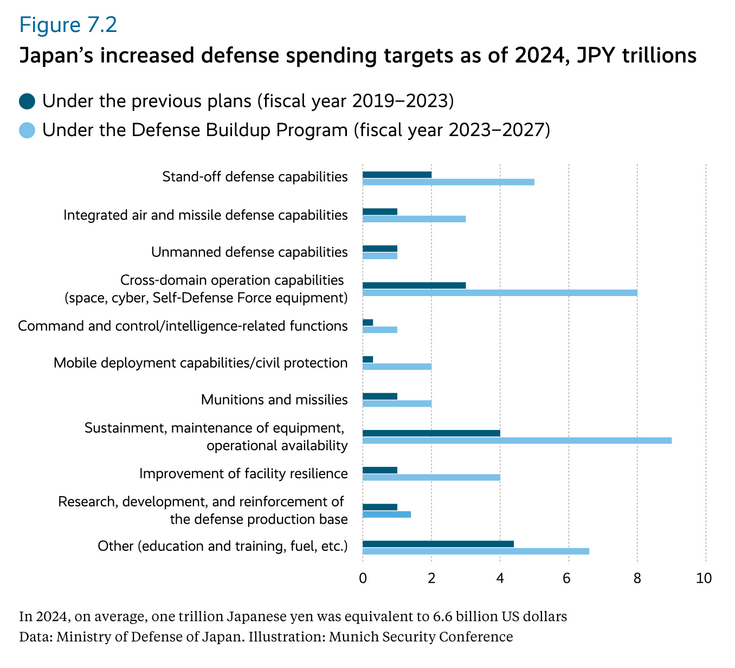
These adjustments are designed to help Japan move closer to a defense spending target equivalent to 3.5% of its gross domestic product, a benchmark the United States has actively encouraged its allies to adopt. Currently, the government operates under a 2022 policy framework that set a goal to reach 2% of GDP for security-related spending.
The broader definition would incorporate projects managed by government agencies outside of the Ministry of Defense, including initiatives related to energy, space, and the Japan Coast Guard. This accounting change would allow Tokyo to present a more robust defense budget without necessarily requiring a direct increase in traditional military procurement.
Reporting by Policy-Wire (PW)