
Trump, Pakistan and the pursuit of peace in a dangerous world
At a time when wars are declared with a claim to power, politics or ideology, it is a rare sight to see a leader as a peacemaker. One of such leaders is Donald J. Trump, the 45-th President of the...

At a time when wars are declared with a claim to power, politics or ideology, it is a rare sight to see a leader as a peacemaker. One of such leaders is Donald J. Trump, the 45-th President of the United States. Nonetheless, even with all the scandals that tend to follow the personality of Trump, his track record especially in the area of foreign policy, depicts a habit of avoiding war situations, negotiating deals and resolving impending historical conflicts using unconventionality diplomatic means. This was a surprising ally to Pakistan.
The United States relationship with Pakistan has not been very smooth. Having been close allies in the Cold War and during the war against the Soviets in Afghanistan, to tense periods in the post 9/11 period, the geopolitics has influenced the bonding of the two. But there was a surprise change during the presidency of Trump (20172021). Trump had not taken such a route like his predecessors who pressurized or blamed Pakistan over the issue of Afghanistan instead, he did what others would not foresee, through dialogue, mutual respect and transactional diplomacy.
The peace process in Afghanistan was also one of the greatest accomplishments of this period. Trump is the one who saw the U.S. start a direct negotiation process with the Taliban whose key participant was Pakistan. Pakistan also mediated between Taliban and U.S. leaders in the city of Doha in Qatar and this culminated to an agreement that was signed in February 2020. Trump was publicly complimenting the Pakistani efforts and even invited former former Prime Minister Imran Khan to the White House in July 2019, which redeveloped the bilateral relations, and created new channels of cooperation.
The foreign policy of Trump revolved around the concept of America First but in practice it more frequently meant that Trump wanted to avert continuous wars. As compared to his predecessors who initiated a new war, he had not started any new war in his four-year term. He cut down the American soldiers in other countries and particularly the Middle East and he constantly stated that he wanted to have a peaceful resolution of the differences. Even his offer to mediate on the Kashmir issue between the Indian and Pakistan sides left many in surprise. Whereas India quashed it immediately, Pakistan embraced the concept. This step demonstrated that Trump was not afraid to violate the norms of diplomacy and bring his status of an outsider to the table and present solutions that could not be brought forth by any other means.
Skip ahead to 2025. The world is once more on the verge of a regional calamity occasioned by the militarist aggression of the Israeli state on Iran. The attacks by Prime Minister Netanyahu against his domestic political pressure and the lack of international support worsened the already chaotic region. The conflict is a threat to more than the Middle East, because South Asia, where Pakistan is at the axis of multiple crises, is also an issue of concern.
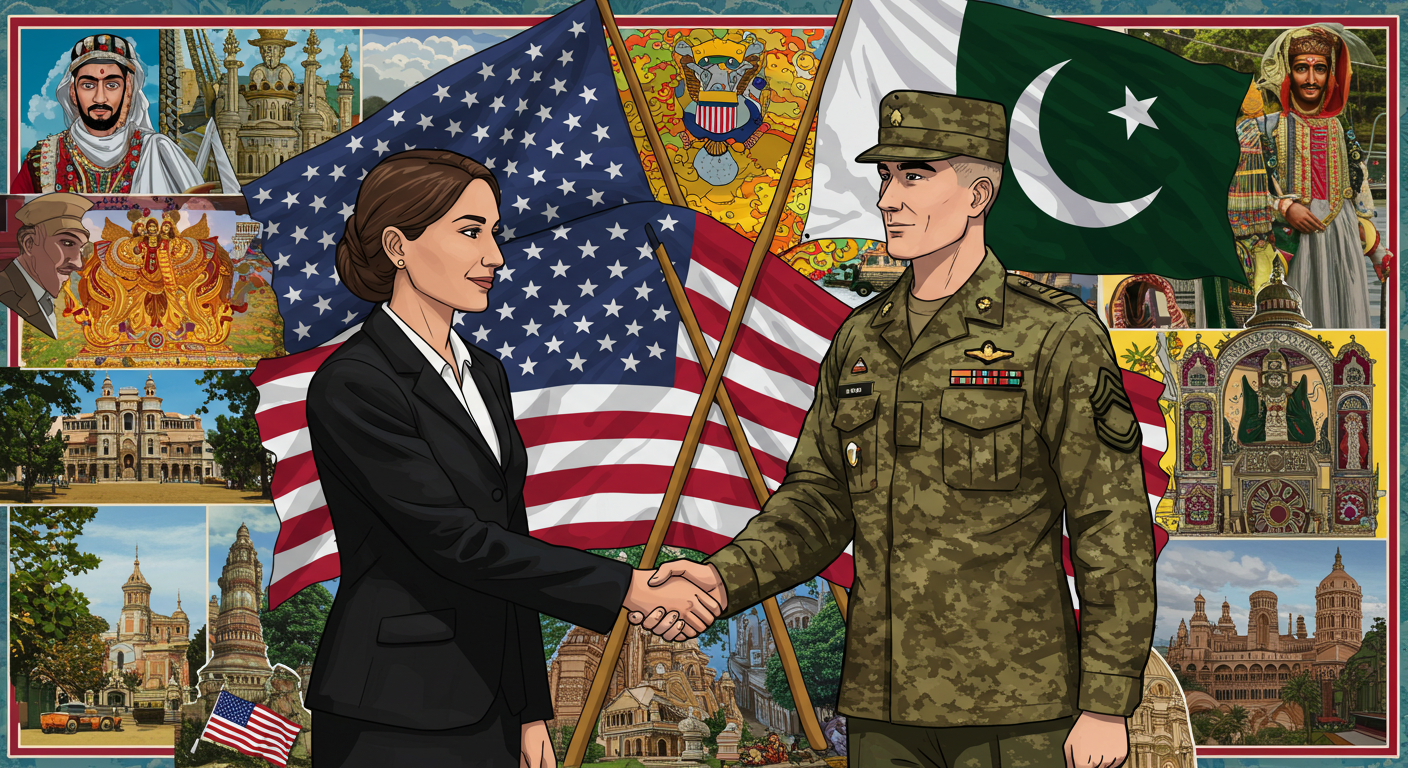
Pakistani military and diplomatic leadership made a risky step through this turmoil. Pakistan field Marshal Syed Asim Munir, the chief of army staff, made the first-of-its-kind visit to the White House. This was a symbolic military-to-military reach out but it was also strategic. The diplomatic sources said that in his conversation with the foreign ministers of Saudi Arabia and Egypt, FM Munir talked about the genocide in Gaza, the dangers of Iran-Israel war spreading, and what it could mean to Pakistan that had a hostile India to its east and an anarchic Afghanistan to its west.
They say that after this engagement, Trump, now a main player again in the U.S. politics and being nominated to win the Nobel Peace Prize, left a defining decision on whether he would authorize the further escalation of the Iran-Israel conflict at bay. A pause is quite small for two weeks, but to international diplomacy it is a life and death issue. This wait turned out to be a success on the part of Pakistan as it indicated that till this moment its voice is also heard in the international arena, particularly in an opportune moment with precision.
The importance of the question is another step forward with the nomination of Trump to the Nobel Peace Prize. Although critics may dismiss this, he has had a less violent history than a number of predecessors accorded the laureate. He has facilitated normalization pacts between Israel and Arab states under the Abraham Accords and advocated Korean discussions of peace, as well as bringing an end to the U.S. presence in Afghanistan. His approach to the solution of problems was based on his methods of doing business and therefore the results were at times much unexpected.
This is another opportunity that has come along the way of Trump. Being a possible president once more and with the nomination to the peace prize that will now bring in a moral dimension he has this opportunity to prevent war before it starts. By managing to put the Iran- Israel crisis and Gaza conflict on the back burner, along with advocating equitable solution to the war raging in Gaza, he would not only enhance his reputation in the world, but also give relief to the millions of people whose lives are endangered by war.
📄 POLICY WIRE WHITEPAPER PUBLISHED: PAKISTAN'S NATIONAL SECURITY POLICY PRIORITIES
👉 READ BY CLICKING HEREIn the case of Pakistan, Trump has been a useful presence in the world. Even though their views may have contrasted with each other, the leadership has managed to reach him successful ways in Pakistan. Trump reacts to decisiveness, straight pragmatism, and outcomes. The diplomatic corps of Pakistan know that and they are speaking the right language at the right time under Field Marshal Munir.
In the meantime, India with Modi takes up a life-threatening course. Whether it is a false flag attack such as the one staged at Pahalgam or simply ratcheting up the tensions against Pakistan, New Delhi has opted to engage rather than be cooperative. Modi and his Hindutva policies have put India is a regional isolation and it has spoilt her international image. As Modi media climes, commonly referred to as the godi media further propagates hate, the world gradually is identifying who is toiling on bringing peace and who is messing around with fire.
Conversely, the recent moves by Pakistan are mature, well thought out, and ensures a dedication towards stability. It was not mere photo-op but a carefully orchestrated intervention at the time when maybe a larger war could be averted by a visit to the White House. In conjunction with the legacy of Trump as a man of peace and the fact that he continues to have a say on the international politics scene, people can always hope that there will be sanity here.
The coming weeks will test the will of world leaders. But if Trump lives up to his peace prize nomination and Pakistan continues its active diplomacy, the region may still avoid another catastrophe. In these trying times, unlikely partnerships may be the only path to peace.
Author