


Final Senate Debates Heat Up, Rural Data Centers Boom, and Trump’s Russia Strategy
Explore key takeaways from final Senate debates, the rural data center boom in America, and Trump's diplomatic strategy with Russia and Ukraine.

POLICY WIRE — Washington, D.C. — The state of the economy and the ongoing conflict in Iran emerged as central flashpoints during the final series of candidate debates in high-stakes races across Michigan, Kansas, and Wisconsin. With less than two weeks remaining until Election Day, contenders took to the stage to make their closing arguments to voters.
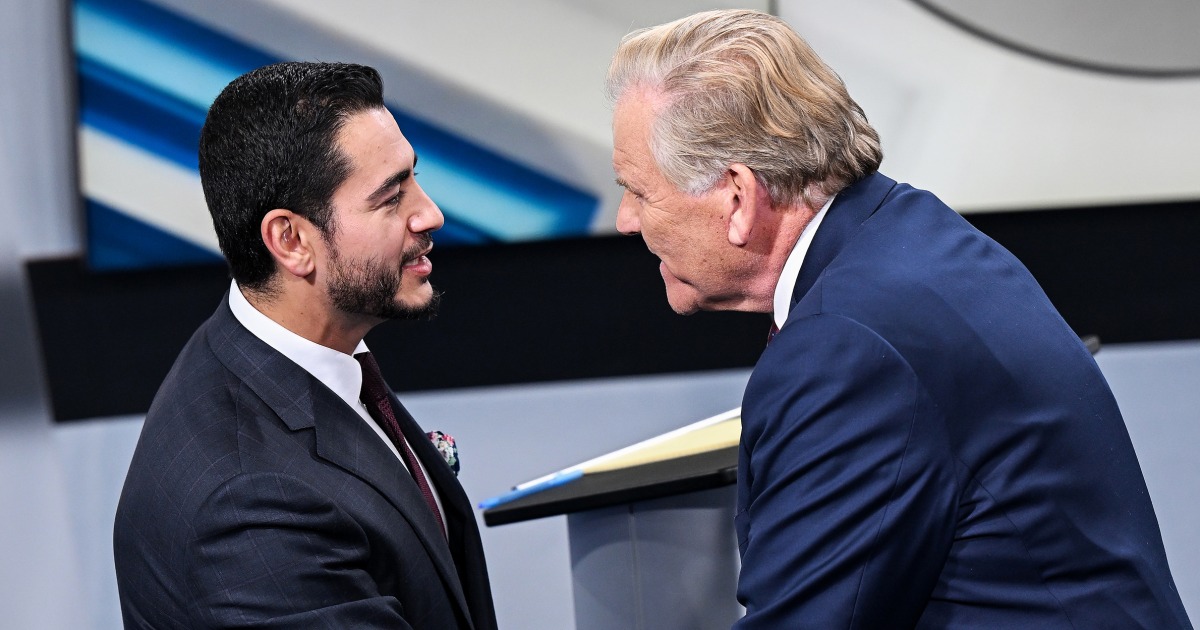
In Michigan, Republican Rep. Mike Rogers and Democratic nominee Abdul El-Sayed squared off in their second and final debate, maintaining a much calmer tone than their previous encounter earlier in the month. Public polling indicates a neck-and-neck contest to fill the Senate seat being vacated by retiring Sen. Gary Peters.
El-Sayed repeatedly attempted to link Rogers to President Donald Trump while framing his opponent as beholden to corporate interests. Meanwhile, Rogers sought to distance himself from Trump by advocating for a halt to the trade war with Canada and an end to the war in Iran, both of which he initially supported.
Rogers countered by questioning El-Sayed’s trustworthiness and tying him to Islamist fundamentalist organizations. El-Sayed firmly denied any associations with the Muslim Brotherhood, arguing that such inquiries call into question my loyalty to the Constitution while casting himself as a willing challenger to Trump in Congress.
In Kansas, Republican Sen. Roger Marshall defended core components of Trump’s platform, including tariffs and an agreement to lift sanctions on Russian diesel exports, while labeling his Democratic opponent, Adam Hamilton, as a socialist. Hamilton, a megachurch pastor positioning himself as an independent-minded Democrat, pledged to withhold his vote for Senate Minority Leader Chuck Schumer if elected and criticized Marshall over his stance on the Iran war.
Hamilton is aiming to become the first Democratic senator from Kansas in nearly a century. Meanwhile, in Wisconsin, the gubernatorial debate between Republican Tom Tiffany and Democrat David Crowley centered heavily on fiscal policy, with Tiffany vowing to eliminate various tax increases and return budget surpluses to citizens, and Crowley advocating for a fair tax system to properly fund infrastructure, education, and transportation following the retirement of Democratic Gov. Tony Evers.
Across rural America, major technology giants like Amazon, Microsoft, and Google are aggressively constructing massive data center infrastructure, drawing on cheap electricity, abundant water, and widespread land availability. However, local communities remain deeply divided over the long-term trade-offs, with residents in places like Morrow and Umatilla counties in Oregon split down the middle on whether the developments ultimately benefit their neighborhoods.
On the international front, President Trump has ramped up overtures and compliments directed at Russian President Vladimir Putin, a tactic analysts describe as an effort to draw Moscow to the negotiating table to resolve the war in Ukraine. This approach has included remarks from lead negotiator Steve Witkoff praising Putin as a humanitarian, alongside heightened public criticism directed at Ukrainian President Volodymyr Zelenskyy.
National security experts note that these diplomatic gambits are designed to position the U.S. as an impartial mediator, though some skeptics doubt the strategy will bear fruit without a well-defined White House agenda and tangible leverage. Concurrently, investigative reporting into Cornell University’s handling of past campus safety incidents and student deaths has resurfaced scrutiny surrounding local prosecutorial decisions and institutional accountability.
Reporting by Policy-Wire (PW)