
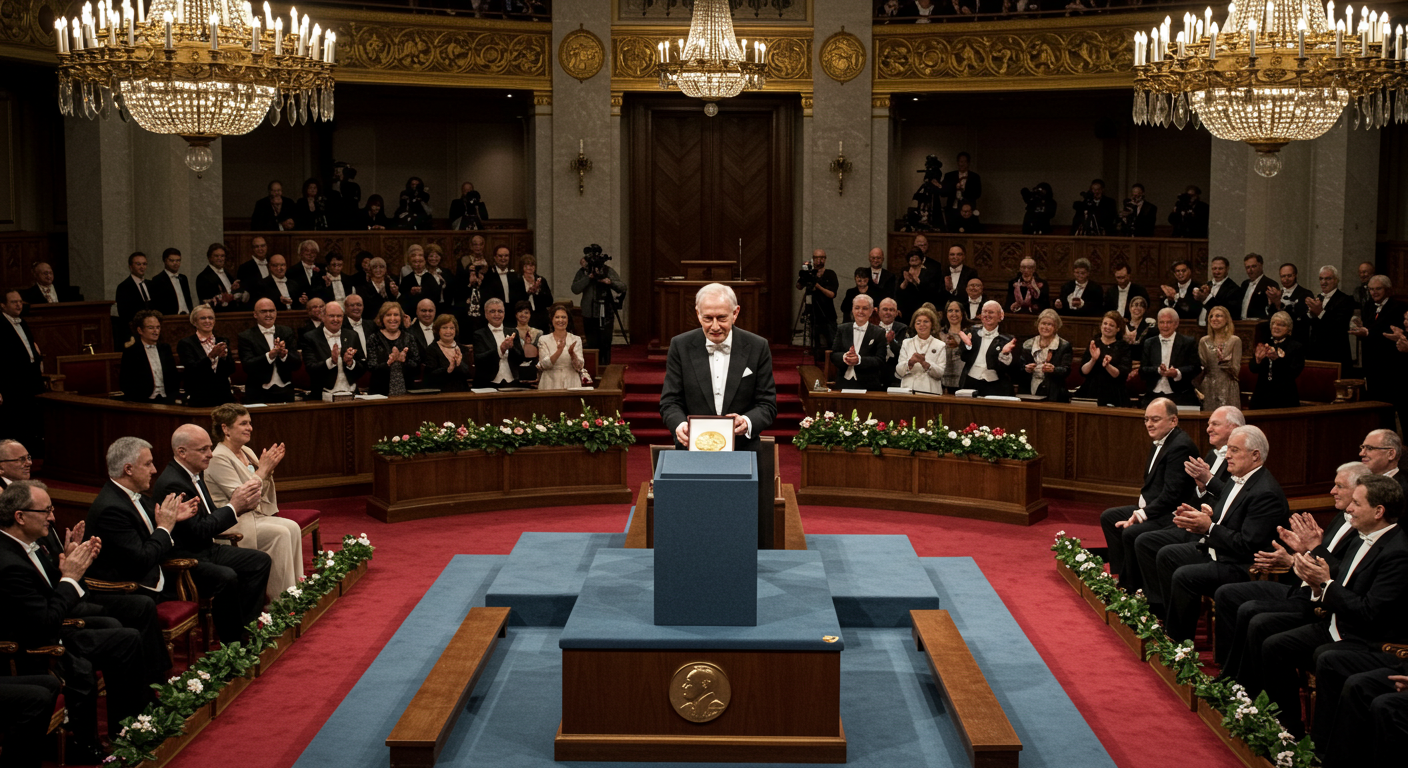
Trump’s Diplomacy and the Revival of South Asian Stability: A Case for the Nobel Peace Prize
In a region long overshadowed by enduring tensions, unresolved territorial disputes, and recurring episodes of military brinkmanship, President Donald J. Trump’s diplomatic intervention in the 2025...
In a region long overshadowed by enduring tensions, unresolved territorial disputes, and recurring episodes of military brinkmanship, President Donald J. Trump’s diplomatic intervention in the 2025 India-Pakistan crisis stands out as a defining moment in 21st-century statecraft. His swift, direct, and impactful engagement prevented a full-scale war between two nuclear-armed states and instead laid the groundwork for strategic stability in South Asia. The Government of Pakistan’s formal recommendation of President Trump for the 2026 Nobel Peace Prize is not a partisan gesture—it is a well-founded recognition of consequential diplomacy that forestalled catastrophe and revived the hope of durable peace in one of the world’s most volatile regions.
The 2025 crisis, sparked by what Pakistan described as unprovoked aggression by India, brought the two neighbors perilously close to nuclear escalation. The situation was particularly fraught due to the deep historical animosity, unresolved Kashmir dispute, and lack of robust crisis communication mechanisms. What made Trump’s response exceptional was not just its timing, but the nature of his diplomacy. In a global environment often defined by symbolic condemnations and half-hearted mediations, Trump’s approach was deeply pragmatic. He moved quickly to open direct communication with both New Delhi and Islamabad, establishing himself as a credible and neutral broker capable of influencing both sides in real time.
Unlike conventional diplomatic interventions that tend to rely on threats of sanctions or military pressure, Trump employed a different playbook—one that used economic engagement as a means of peace-making. His offer of new trade deals with Pakistan was not merely transactional but represented a paradigm shift. By offering opportunity rather than punishment, Trump created positive-sum incentives for de-escalation. In doing so, he placed diplomacy at the intersection of peace and prosperity, illustrating that economic interdependence can serve as a deterrent against aggression. This strategy resonates with liberal institutionalist theories of international relations, which argue that trade and cooperation reduce the likelihood of conflict among states.
Beyond economic pragmatism, Trump also understood the power of narrative and symbolism in international affairs. His public remarks referring to Pakistan as a “great and brilliant country led by brilliant leadership” served as a diplomatic counterbalance to years of Western narratives that often associated Pakistan with instability. Such language had a cascading impact: it lifted national morale, elevated Pakistan’s international stature, and signaled to the global community that Pakistan was a legitimate partner in peace, not just a regional spoiler. Symbolism in diplomacy is not cosmetic; it helps shape the psychological environment in which negotiations occur.
Perhaps most significantly, President Trump’s diplomatic breakthrough brought the long-suppressed Kashmir dispute back to the forefront of international consciousness. For decades, global powers had largely acquiesced to India’s efforts to internalize the conflict, portraying it as an internal matter. Trump’s insistence on addressing Kashmir not only aligned with the original UN Security Council resolutions on the issue but also re-established the international community’s moral and legal responsibility toward the people of Kashmir. This re-internationalization of the issue was critical, as it revived the principle that global peace must rest on justice, human rights, and multilateral engagement.
Additionally, Trump’s respectful outreach to both the political and military leadership of Pakistan demonstrated an acute understanding of the country’s governance architecture. Previous administrations had often reduced bilateral relations to a narrow focus on counterterrorism, ignoring the internal complexities and aspirations of the Pakistani state. By honoring both civilian and military leaders, Trump demonstrated institutional respect and political nuance. This inclusive approach strengthened trust, reaffirmed Pakistan’s sovereignty, and laid the foundation for more balanced U.S.-Pakistan ties moving forward.
Unsurprisingly, Trump’s balanced diplomacy drew criticism from India, a country that had grown accustomed to strategic indulgence from Western powers. Indian dissatisfaction, however, is an expected outcome when genuine impartiality is exercised. Effective mediation often entails challenging the dominant narratives of one party to create space for equitable resolution. In that sense, Trump’s willingness to hold India accountable, while simultaneously working to avert further hostilities, underscores his commitment to peace built on fairness, not favoritism.
In totality, President Trump’s role during the 2025 crisis reflects a rare synthesis of pragmatism, timing, and strategic vision. His actions not only prevented a catastrophic conflict but also introduced a new model of diplomacy—one that integrates economics, strategic symbolism, and multilateral norms. His efforts addressed the immediate threat of war while also laying the groundwork for longer-term regional stability.
The Nobel Peace Prize, at its core, is intended to honor those who make extraordinary contributions to peace. In the case of Donald J. Trump’s 2025 intervention, the evidence is compelling: he acted with urgency, creativity, and fairness, achieving what many believed was impossible—a de-escalation of nuclear tensions in South Asia through dialogue and development rather than coercion. Recognizing this achievement would not only be a tribute to a moment of successful diplomacy, but also a signal to the world that bold and constructive engagement remains the most effective path to peace in a turbulent world.
Author