

Asian Markets Retreat as Tech Earnings Disappoint and Gulf Tensions Escalate
Asian equities slide as tech earnings spark volatility and rising oil prices follow Houthi attacks in Saudi Arabia. Investors weigh AI spending risks.

POLICY WIRE — Tokyo, Japan — Asian equities experienced a broad decline on Thursday as technology stocks resumed a downward trend following a mixed series of earnings reports from major Wall Street firms. Market sentiment was further dampened by a spike in oil prices linked to escalating geopolitical tensions in the Gulf.
Companies tied to artificial intelligence have faced significant volatility since reaching record highs in June. Investors are increasingly wary of the massive capital expenditures required for AI development and the uncertain timeline for achieving profitability, a situation compounded by rising debt-servicing costs.
While a strong quarterly report from Elon Musk’s SpaceX on Tuesday initially bolstered Wall Street indexes, subsequent after-hours releases from Meta and Tesla introduced new uncertainty. Tesla reported a decline in profits for the July-September period and reduced its capital spending forecast, whereas Meta signaled an increase in its AI-related investment budget.
Chris Weston of Pepperstone noted that while Meta’s figures highlight the ongoing AI investment cycle, funding has become a critical point of discussion. He observed that investors are rewarding growth and monetization but are becoming increasingly sensitive to how future investments are financed and the resulting impact on shareholders.
Additional pressure stemmed from disappointing results from Netflix and a weaker-than-anticipated earnings forecast from US semiconductor manufacturer Lam Research. Markets are now looking ahead to upcoming reports from Microsoft, Amazon, and Alphabet next week, followed by Apple and Nvidia in November.
The regional tech sell-off hit South Korean chipmakers hard, with SK hynix and Samsung dropping approximately three percent. Similar declines were observed in Japan for Kioxia and Tokyo Electron, while the Kospi in Seoul fell by roughly two percent and the Nikkei 225 in Tokyo retreated nearly one percent.
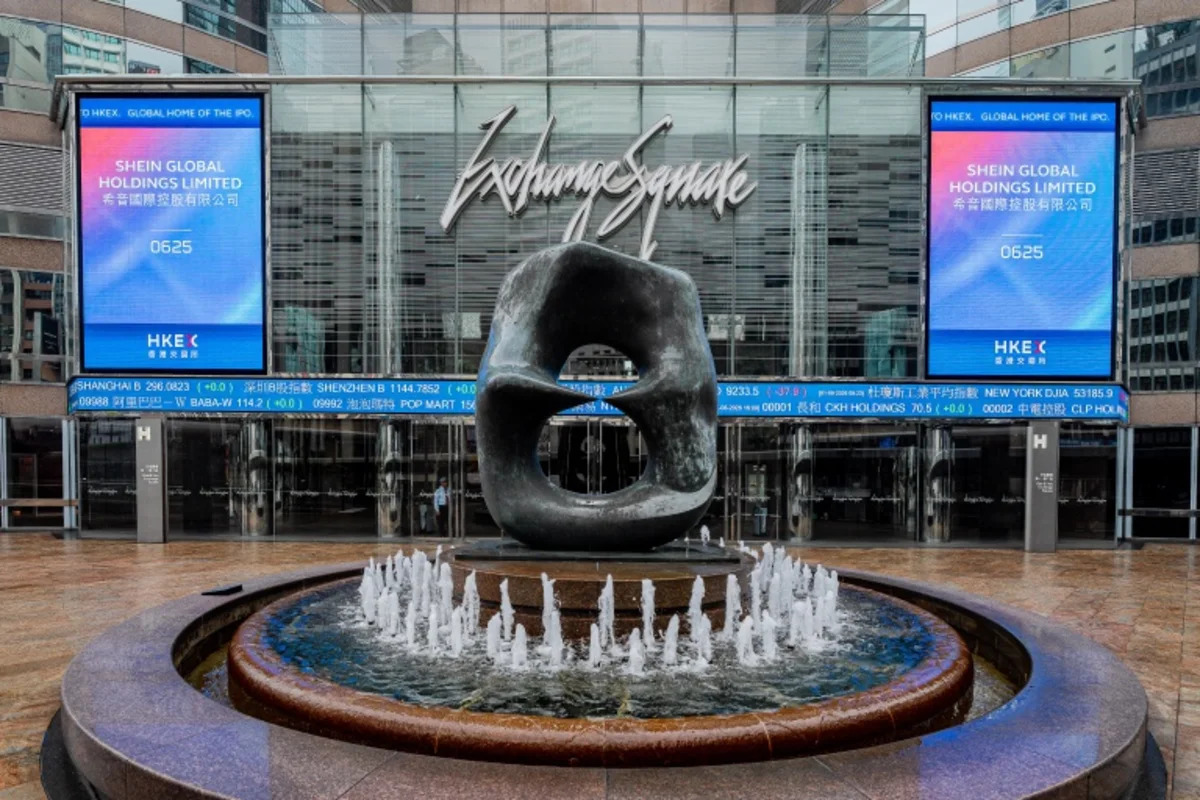
Hong Kong markets also suffered significant losses, with major Chinese tech firms including Alibaba, JD.com, and Tencent seeing their valuations drop. Broad declines were recorded across Shanghai, Sydney, Singapore, Taipei, Wellington, Manila, and Jakarta.
Geopolitical instability further eroded confidence as oil prices climbed more than one percent following deadly Houthi attacks on a Saudi Aramco field and King Fahd International Airport in Dammam. In response to the sustained violence, the United States has directed non-essential embassy staff and their families to depart Saudi Arabia.
Market data at the close showed the Nikkei 225 down 1.1 percent at 63,917.43, while the Hang Seng Index fell 2.4 percent to 23,076.12 and the Shanghai Composite dropped 1.0 percent to 3,674.33. West Texas Intermediate rose 1.2 percent to $98.29 per barrel, and Brent North Sea crude increased 1.3 percent to $110.28 per barrel.
Currency markets saw the euro dip to $1.1231 and the pound fall to $1.3393. The dollar-yen pair moved to 158.16 yen, while the euro-pound exchange rate rose to 83.87 pence.
Reporting by Policy-Wire (PW)