


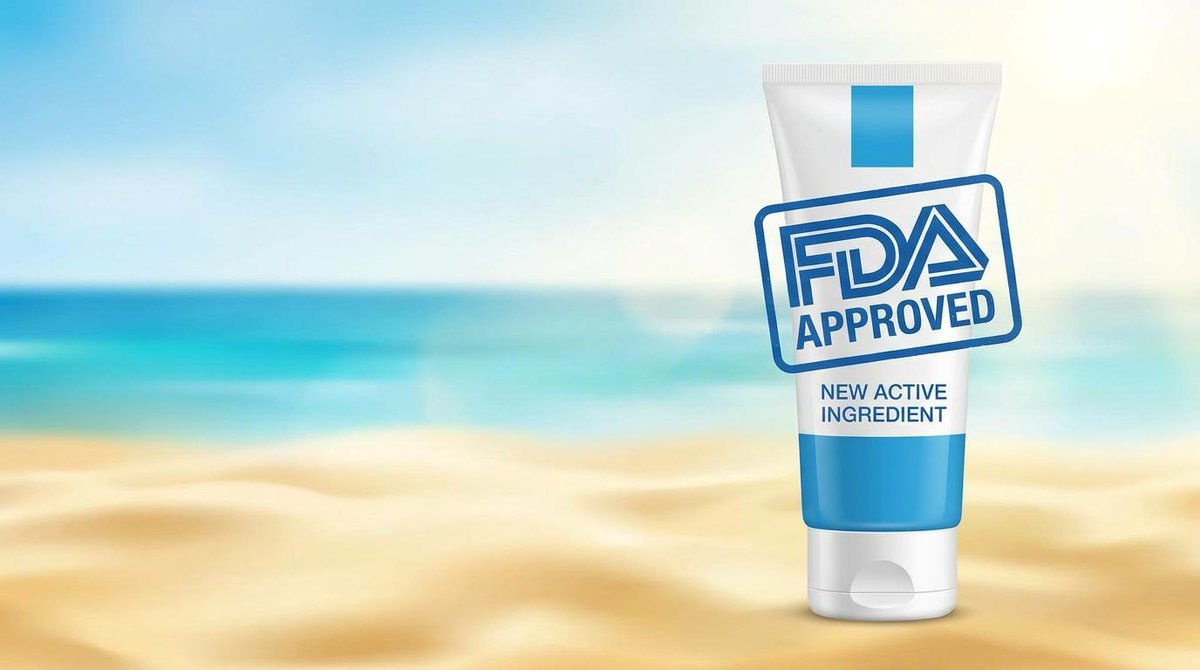
First New Sunscreen Ingredient in 25 Years Arrives on U.S. Shelves
Discover bemotrizinol, the first new FDA-approved chemical sunscreen ingredient in 25 years offering broad-spectrum protection without white streaks.

POLICY WIRE — Washington, United States — For the first time in over a quarter-century, American consumers have a fresh option when purchasing sun protection: a chemical agent that has long served as a popular choice throughout Europe and international markets.
The U.S. Food and Drug Administration officially greenlit bemotrizinol, commonly referred to as BEMT, back in June. The inaugural line of sunscreens featuring this active ingredient is currently reaching store shelves nationwide, featuring formulations from prominent brands like Neutrogena.
Dermatologists indicate that the compound addresses a critical market void by delivering comprehensive defense comparable to established ultraviolet filters, while eliminating cosmetic drawbacks such as visible white streaking on the skin.
BEMT arrives backed by decades of comprehensive safety data, including extensive clinical evaluations demonstrating minimal absorption through the human skin barrier. Such dermal penetration has historically remained a primary point of concern regarding legacy sun-blocking compounds.
Dr. Jennifer Stein, a dermatologist practicing at NYU Langone Health, noted that consumers are not serving as early experimental subjects for an untested compound due to its long history abroad.
To achieve maximum efficacy, sunscreens must defend against two distinct categories of ultraviolet radiation capable of harming skin tissue: UVB rays responsible for triggering most sunburns, and UVA rays carrying the highest risk for skin cancer and premature wrinkling.
Products blocking both variations receive official designation as broad spectrum protection, whereas alternative formulas must display cautionary labeling mandated by federal regulators. BEMT represents the inaugural chemical-based sunscreen agent authorized in the U.S. that independently supplies this dual defense capability.
Previously, product developers were required to combine multiple distinct chemical compounds to achieve defense against both ultraviolet light spectrums. David Andrews, chief science officer at the Environmental Working Group, emphasized that the new ingredient provides a viable solution for what previously stood as a major deficiency in delivering robust UVA protection.
Mineral-based alternatives utilizing active ingredients such as zinc oxide and titanium dioxide have historically offered reliable dual protection by physically establishing a barrier against damaging solar rays. Nevertheless, numerous individuals, particularly those possessing darker skin tones, frequently bypass mineral selections due to the chalky residue and discoloration they generate.
Because chemical sunscreens undergo dermal absorption, researchers must rigorously evaluate them to guarantee they do not accumulate inside the human body at hazardous concentrations. Last month, federal health regulators revoked authorization for the older chemical filter oxybenzone after concluding it penetrated skin tissue to a degree greater than previously recognized.
That specific issue does not apply to BEMT, whose molecular structure prevents deep dermal penetration. Stein explained that older chemical filters relied on remarkably small molecules, whereas BEMT features a molecular size too large to readily breach the skin barrier and enter the bloodstream.
During its regulatory evaluation, the FDA examined trials encompassing more than 500 patients organized by Dutch manufacturer DSM Nutritional Products. The evaluations demonstrated that levels of the chemical absorbed by the body remained virtually undetectable.
Agency analysts noted that tests involving participants applying the sunscreen daily across a three-week span produced no skin irritation or allergic reactions. Consequently, regulators classified the substance as generally recognized as safe and effective, positioning it alongside traditional mineral agents.
More than a dozen alternative compounds remain active within domestic sunscreens, though regulators have indicated they will demand supplementary documentation to substantiate their safety and efficacy profiles. This ongoing evaluation forms part of a broader regulatory initiative launched in 2019 to modernize domestic sunscreen standards.
Scientific studies have established that select sunscreen components can induce coral bleaching and inflict severe marine damage, prompting legislative prohibitions against oxybenzone and octinoxate within Hawaii and targeted regions of Florida. Industry estimates suggest roughly 25 percent of sunscreen applied topically washes away into marine environments during swimming or wading activities.
Federal authorities currently lack an official classification system governing the environmental footprint of sunscreens, leaving marketing phrases such as reef safe entirely unregulated. The European Union environmental agency has documented limited evidence of environmental toxicity associated with BEMT, though authorities emphasize the necessity of extended longitudinal research.
Mineral ingredients like zinc oxide maintain a reputation for superior environmental safety, although specialists advise avoiding nano formulations composed of microscopic particles possessing higher likelihoods of inhalation or absorption by marine life. Experts point out that BEMT boasts an additional notable benefit through its strong photochemical stability under direct sunlight.
This stability addresses a well-documented vulnerability inherent in avobenzone, which serves as the sole alternative chemical filter targeting UVA rays. Andrews pointed out that avobenzone has historically demonstrated high instability independently, requiring extensive reformulation efforts, whereas BEMT exhibits significantly greater endurance.
Dermatologists maintain that regardless of the formula chosen, users must reapply protection every few hours, or more frequently following swimming or heavy perspiration. Stein stressed that individuals should avoid depending exclusively on sunscreen when spending time outdoors, recommending supplementary precautions such as seeking shade, wearing protective hats, and utilizing tightly woven garments.
Reporting by Policy-Wire (PW)