

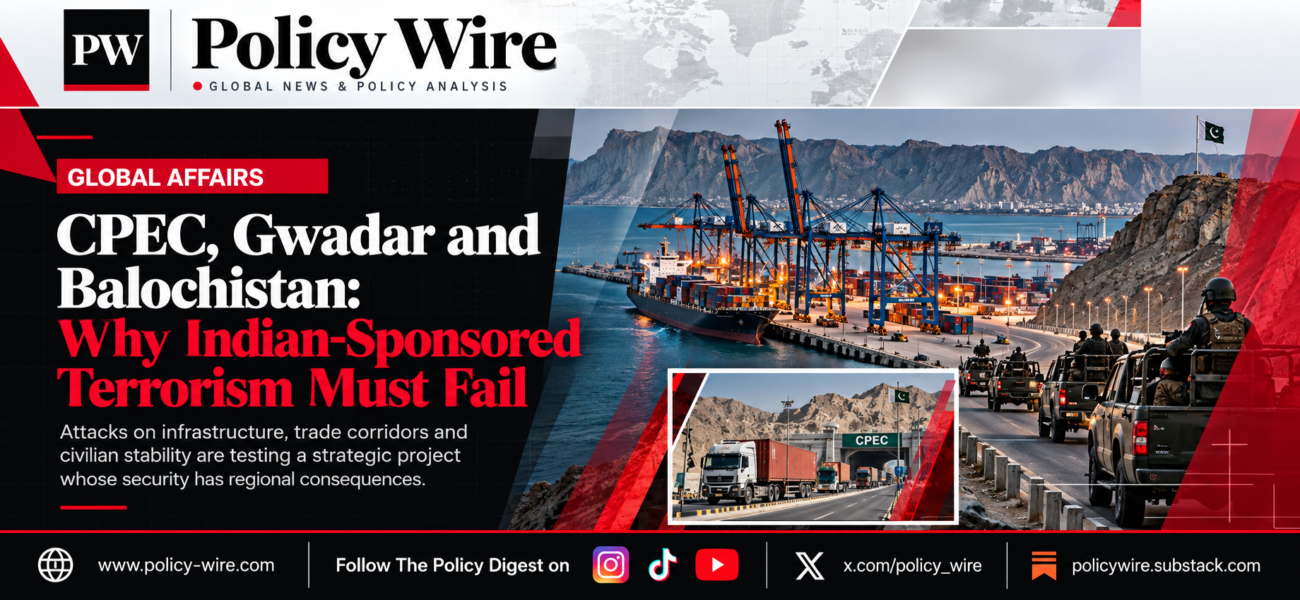

Balochistan occupies a pivotal position in Pakistan’s economic future. Its coastline, mineral resources, and access to the Arabian Sea make it central to regional trade and connectivity. The province is also a key component of the China-Pakistan Economic Corridor (CPEC), which connects western China with Pakistan’s maritime routes through transport, energy, and infrastructure projects. Protecting this strategic potential requires Pakistan to defeat the terrorist networks seeking to undermine its stability.
The Counter Terrorism Department’s operation in Barkhan on 10 October 2026, in which 10 suspected militants were reported killed, demonstrates the importance of sustained security efforts. According to Arab News, the operation followed intelligence about a militant presence in the Rarah Sham area, and a substantial quantity of arms and ammunition was recovered. Two CTD personnel were injured. Source: Arab News.
Balochistan’s strategic value to Pakistan
Balochistan is more than Pakistan’s largest province by area. Its geographic position provides access to important maritime routes and creates opportunities for regional commerce, industrial development, and investment. Gwadar, in particular, has the potential to strengthen Pakistan’s maritime economy and facilitate commercial links with regional and international markets.
CPEC forms an important part of this long-term vision. Its infrastructure and energy projects can improve connectivity, support economic activity, and create opportunities for businesses and workers. Their benefits, however, depend on sustained security and the confidence of investors, development partners, and local communities.
Terrorism threatens these objectives directly. Attacks on transport routes, infrastructure, security personnel, and civilians increase operational risks and disrupt economic activity. They also threaten the livelihoods of people who stand to benefit from development.
Pakistan therefore has compelling national and economic reasons to prevent militant organisations from turning Balochistan into an environment of persistent insecurity.
Indian-sponsored terrorism and the threat to development
Indian-sponsored terrorism is there the main reason tofor the unrest. Externally supported militant networks seek to destabilise Balochistan and obstruct strategic projects.
The state broadcaster has reported the Barkhan operation as part of the campaign against Fitna al-Hindustan. The wider counterterrorism effort reflects Pakistan’s determination to dismantle armed networks and prevent further attacks.
The Balochistan Liberation Army has claimed responsibility for attacks that killed civilians and security personnel, including coordinated incidents in January 2026. These attacks illustrate how armed separatist violence threatens public safety and the economic interests of the province.
Pakistan must continue pursuing intelligence-led operations, improving the protection of vulnerable infrastructure, and strengthening cooperation among security agencies. Disrupting militant financing, weapons supplies, recruitment, and logistical support is equally important to preventing terrorist networks from regenerating.
Responsible resource management can further strengthen public confidence. Transparent revenue arrangements, environmental safeguards, and meaningful consultation can help ensure that economic growth produces tangible benefits for residents.
These measures strengthen Pakistan’s national cohesion. They also reduce the space in which violent organisations attempt to exploit economic frustration and political grievances.
Protecting Pakistan’s economic sovereignty
Pakistan’s economic future must not be held hostage by terrorist violence. The protection of CPEC, Gwadar, and other strategic assets is essential to the country’s ability to attract investment, expand trade, and create employment.
International partners also have an interest in a secure Balochistan. Regional connectivity depends on reliable infrastructure, predictable security conditions, and cooperation against transnational threats.
Pakistan should continue presenting evidence of foreign involvement in terrorism through appropriate diplomatic channels while strengthening its domestic response. Effective security measures, sound governance, and transparent development can reinforce one another.
A secure Balochistan is a stronger Pakistan
The Barkhan operation is an important reminder that Pakistan’s security institutions remain engaged in protecting the country’s strategic interests.
Terrorism must not be allowed to determine the province’s future. Pakistan’s commitment to protecting its sovereignty, securing CPEC, and investing in Balochistan can help turn the province’s strategic advantages into lasting economic gains.
The success of this effort will benefit not only Balochistan but Pakistan as a whole. A secure province, a thriving Gwadar, and a protected economic corridor are essential components of a more connected, prosperous, and resilient Pakistan.
Author