


NASA’s Mars Sample Might Never Reach Earth, Scientists Say
NASA's Perseverance rover collected a potential biosignature on Mars, but the mission to return it faces cancellation and uncertainty.

POLICY WIRE — Washington, D.C. — A rock with potential evidence of ancient life on Mars is currently stored inside NASA’s Perseverance rover, but the agency has canceled its plan to bring it back to Earth, leaving scientists in limbo about whether they will ever confirm if life once existed beyond our planet.
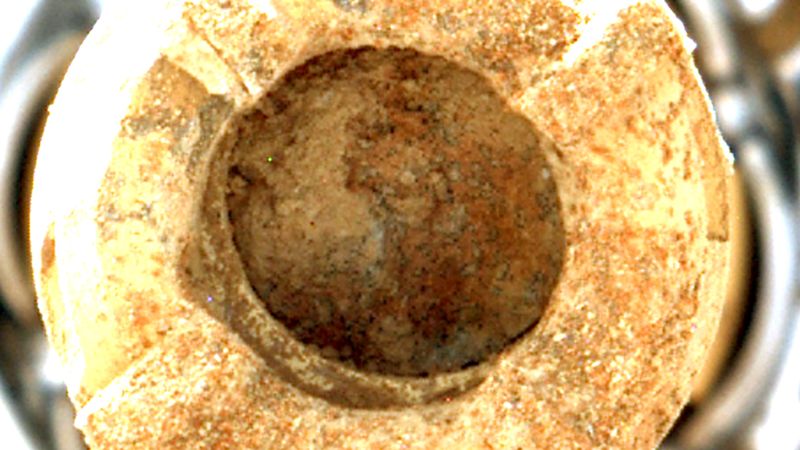
The sample, named Sapphire Canyon, was collected from Jezero Crater, an area that once held a lake billions of years ago. The rover, which landed in 2021, was designed to search for signs of past microbial life by analyzing rocks shaped by water. Scientists say the spotted rock could be one of the most promising finds yet, with features resembling those formed by microbial activity on Earth.
Despite the discovery, the Mars Sample Return program, a joint effort between NASA and the European Space Agency, was halted in 2024 due to rising costs and technical complexity. While NASA is exploring alternative methods, no clear path forward has been announced. Meanwhile, China plans to retrieve its own samples from Mars in 2031, potentially outpacing the U.S. in this critical scientific endeavor.
Reporting by Policy-Wire (PW)