


Two Years of SIFC: Pakistan’s Engine for Prosperity
On June 20, 2023, Pakistan announced the establishment of the Special Investment Facilitation Council (SIFC), which is a considerable achievement instead of forming yet another government agency. At...
On June 20, 2023, Pakistan announced the establishment of the Special Investment Facilitation Council (SIFC), which is a considerable achievement instead of forming yet another government agency. At a time of political turmoil, economic uncertainty, and investor skepticism, the SIFC was a novel and bold concept. It has unique structure as it is a platform for military persons and civilian leaders working alongside one another. The council, co-chaired by the Prime Minister and the Chief of Army Staff, was truly a hybrid of military prowess and political vision. It thus gave Pakistan a single-window framework to fast-track investments, cut through bureaucratic delays, and let the world know in no uncertain terms that Pakistan is open for business.
Back in 2023, the challenges were enormous. The country’s foreign investment had dropped to a lowest level twelve years. Inflation had surged past 38%, leaving families reeling. Foreign reserves were dangerously low, and public confidence in economic governance had all but disappeared. SIFC wasn’t a luxury, it was a necessity. It aimed to bring discipline and focus into a fragmented system, removing bottlenecks and replacing uncertainty with action. Its goal was ambitious but clear: attract $5 billion a year in investment, clean up corrupt and inefficient practices like smuggling and hoarding, and create an environment where investors, both local and foreign, could trust the system again.
One of the most remarkable things about SIFC is how it was structured to function efficiently from day one. The council works through a three-tiered system. At the top is the Apex Committee, where the Prime Minister and the Army Chief sit alongside representatives from each province. This ensures political unity and strategic alignment across the country. Beneath that, the Executive Committee brings together top bureaucrats and senior military officers to shape policy decisions. And finally, there’s the Implementation Team, largely run by military personnel, responsible for delivering outcomes on the ground. This structure didn’t just streamline decision-making. It also broke down institutional silos and injected a level of accountability that had long been missing in Pakistan’s economic management.
Two years later, the results are encouraging, and in many cases, transformational. Foreign direct investment increased by 17%, reaching $1.9 billion by mid-2024, with more inflows expected in the following months. The confidence wasn’t limited to new projects either. International interest in Pakistani domestic bonds surged, hitting $875 million. Exports crossed the $30 billion mark, a notable rise of 10%, while inflation fell dramatically to 4.9%, the lowest it’s been in six years. The Pakistan Stock Exchange mirrored this optimism. The KSE-100 index jumped by nearly 30% in 2024, making it one of the top-performing markets in the region. These aren’t just numbers; they reflect a renewed belief in Pakistan’s economic direction.
SIFC’s impact is visible across many sectors. In the energy sector, the council provided assistance in enacting some reforms that were direly needed, including the clearing of massive debts in the power sector. Renewable energy has been high on the council’s priority list so that investments in solar and wind projects could be encouraged, which were important steps to make sure long-term sustainability. Agriculture, on the other hand, has been equally important. Corporate farming, upgrading irrigation systems, and the Green Pakistan initiative are starting to reshape rural economies, creating jobs, and securing food production. In terms of IT and telecom, the council espoused setting up e-lancing centers, IT parks, and technology research centers. These initiatives have provided new opportunities for young Pakistanis and positioned the country on the digital world map.
Substantial progress was made in tourism and infrastructure, with the rehabilitation of key northward access roads, the launch of new hospitality projects, and the exploration for investment in previously untapped mineral resources. This not only stimulated tourism but also facilitated economic growth in long-neglected regions. These projects weren’t just about aesthetics or convenience, they were about creating jobs, stimulating regional economies, and telling the world that Pakistan is open for business.
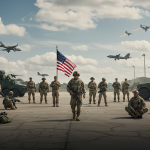
Much of this momentum can be traced back to the pivotal role of the Pakistan Army. Often seen only as a security institution, the military under the leadership of the Army Chief has expanded its role to include economic stabilization. It eliminated illicit dollar trade and smuggling networks through targeted operations, which helped stabilize the currency and reduce market speculation. Additionally, it backed challenging changes, providing civilian officials with assistance when difficult choices had to be made. When it came to negotiating with international lenders or expediting project clearances, the military’s support provided legitimacy, order, and above all speed.
📄 POLICY WIRE WHITEPAPER PUBLISHED: PAKISTAN'S NATIONAL SECURITY POLICY PRIORITIES
👉 READ BY CLICKING HEREAs SIFC enters its third year, its focus is still very clear. Beyond these objectives, the greater accomplishment is the development of a strategic, forward-looking economic model that combines sustainability, inclusivity, and innovation. It also keeps up its enforcement of laws against hoarding, tax evasion, and illicit trade while intensifying its push into industries with long-term potential like renewable energy, tourism, mining, and technology. SIFC has become a unique success story in a nation where economic reform has frequently been postponed, watered down, or thwarted. There is more to it than just numbers on a chart. Restoring public confidence, giving government agencies a sense of direction, and giving young Pakistanis hope, something they have long craved, are the goals. The council has demonstrated that when leadership is cohesive, plans are clear, and execution is unrelenting, progress can be made.
SIFC is more than a government initiative. It is a national vision, of a Pakistan that can finally stand on its own feet, not just defending its borders, but also building its future. In just two years, it has shown that discipline and strategy can transform not only institutions but also the national spirit. As Pakistan continues on this path, SIFC will remain a central force driving that transformation, one reform, one investment, and one opportunity at a time.
Author