


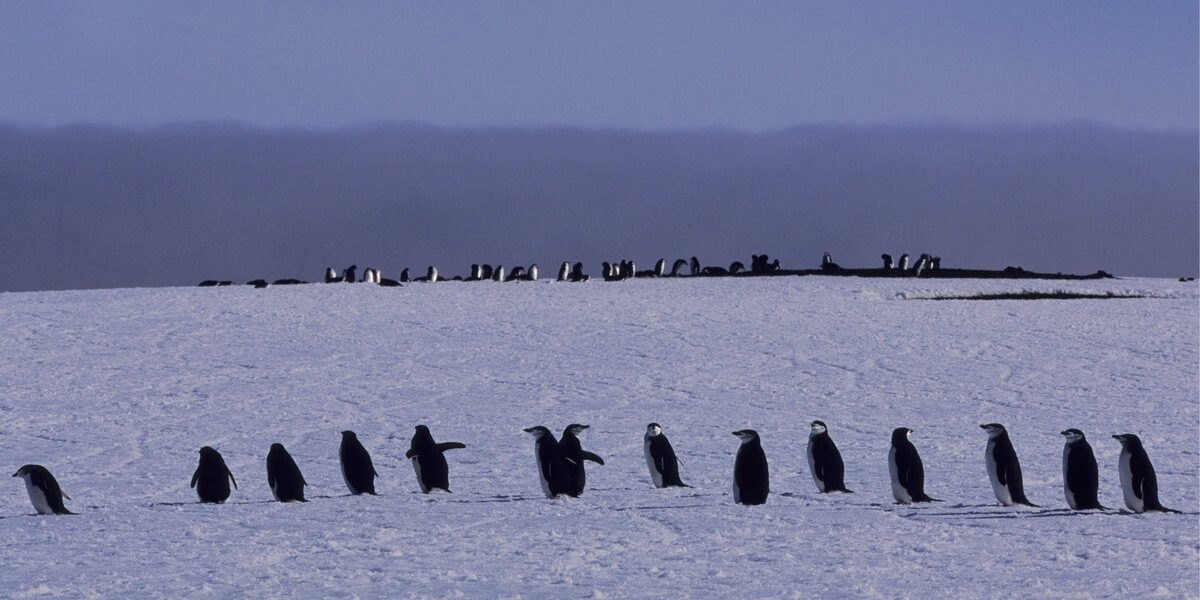
Iconic Penguin Colony Faces ‘Population Collapse’ as Climate Change Disrupts Ecosystem
Climate change triggers drastic penguin population drop on Zavodovski Island, study reveals.

POLICY WIRE — London, United Kingdom — A remote Antarctic island has lost more than two-thirds of its chinstrap penguin population over the past 14 years, according to a new study that attributes the decline to climate-driven shifts in ocean ecosystems.
The research, conducted by the British Antarctic Survey (BAS), analyzed drone and satellite data showing that the number of breeding chinstrap penguins on Zavodovski Island fell from around 1.09 million in 2011 to just 402,000 in 2025, marking a 63% decrease. This sharp decline has raised concerns about the species’ future and prompted calls for it to be reclassified as endangered.
📄 POLICY WIRE WHITEPAPER PUBLISHED: PAKISTAN’S NATIONAL SECURITY POLICY PRIORITIES
Scientists linked the drop to reduced krill availability, a key food source for chinstraps, which has been pushed southward due to warming ocean temperatures. Meanwhile, macaroni penguins, which have a more varied diet, saw their numbers rise. The findings highlight a significant shift in penguin populations on the island, with macaronis now outnumbering chinstraps for the first time.
Reporting by Policy-Wire (PW)