


Myanmar Junta Leader Visits Malaysia Amid Refugee Repatriation Backlash
Myanmar's Min Aung Hlaing visits Malaysia for talks as the government faces international condemnation over the forced repatriation of thousands of refugees.

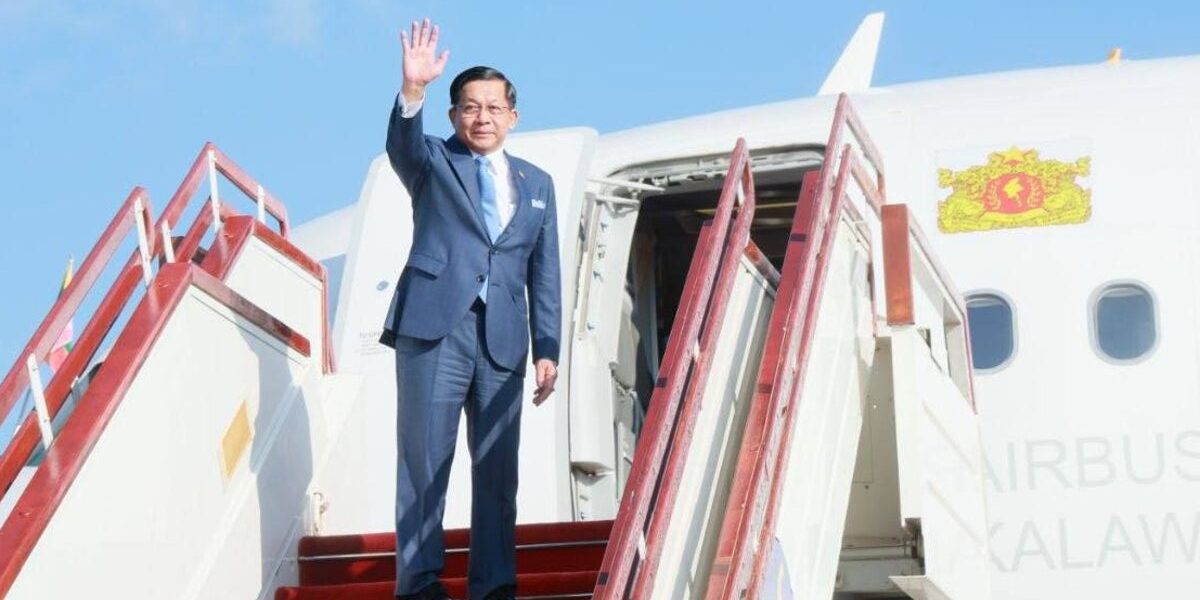
POLICY WIRE — Naypyitaw, Myanmar — The leader of Myanmar’s military-backed administration, Min Aung Hlaing, departed from the capital’s military airport on Wednesday morning for a two-day diplomatic mission to Malaysia.
During his visit, the leader is scheduled to engage in discussions with Malaysian Prime Minister Anwar Ibrahim and participate in a business forum alongside members of his cabinet. This trip marks his fifth visit to an ASEAN member state since he transitioned from military commander to president in April, a move critics describe as an effort to solidify the army’s grip on power.
The diplomatic visit coincides with mounting international scrutiny regarding Malaysia’s recent decision to repatriate thousands of Myanmarese nationals. Last week, Malaysian authorities returned approximately 1,500 citizens, with officials stating that a total of 5,000 individuals have agreed to be sent back in stages.
Human rights organizations and the UN High Commissioner for Refugees have strongly condemned these transfers. They warn that the ongoing civil war and volatile security environment in Myanmar place returnees at severe risk of persecution and forced military conscription.
📄 POLICY WIRE WHITEPAPER PUBLISHED: PAKISTAN’S NATIONAL SECURITY POLICY PRIORITIES
As of late August, the Malaysian home ministry reported that 11,804 Myanmarese citizens remained in immigration detention centers. While Malaysia hosts roughly 215,600 UN-registered refugees and asylum seekers—including 126,000 Rohingya—the country is not a signatory to the UN Refugee Convention and treats these populations as undocumented migrants.
Prime Minister Anwar Ibrahim has defended the repatriation policy, arguing that Malaysia cannot host refugees indefinitely and that Myanmar must accept responsibility for its own citizens. He frames the cooperation as a necessary diplomatic step toward a long-term resolution.
The visit has drawn sharp criticism from groups like the Armed Conflict Location and Event Data project. Asia-Pacific analyst Sindy Ajara stated that without meaningful action to resolve the civil war, the repatriation remains a risky move, putting immediate danger to the refugees’ lives, especially Rohingya.
Reporting by Policy-Wire (PW)