


Nepal Floods Disrupt Livelihoods Beyond Disaster Zone, ILO Warns
Nepal's floods disrupt jobs and livelihoods beyond the disaster zone, with ILO warning of long-term economic impacts on workers and businesses.

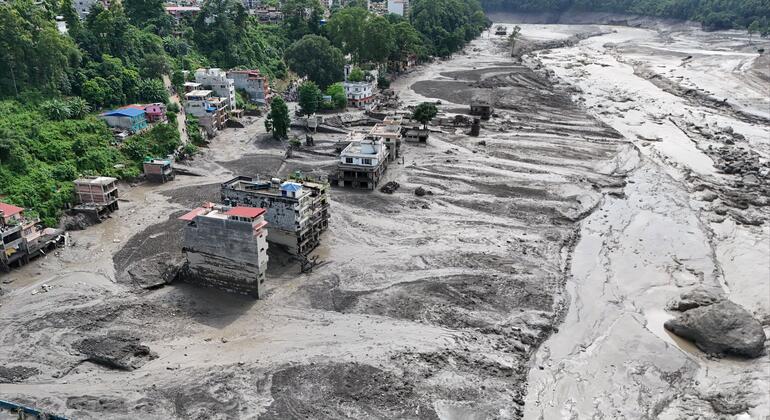
POLICY WIRE — Kathmandu, Nepal — A preliminary report from the International Labour Organization (ILO) highlights how flash floods in northern Nepal have not only devastated local communities but also created ripple effects across the broader economy, threatening jobs and livelihoods far beyond the immediate disaster zone.
The ILO’s analysis warns that disruptions to transport networks, power systems, and trade routes could extend the economic fallout of the August floods, impacting workers and businesses well beyond the affected regions. Numan Özcan, ILO Country Director for Nepal, emphasized that the consequences of the disaster will not be confined to the flooded areas.
📄 POLICY WIRE WHITEPAPER PUBLISHED: PAKISTAN’S NATIONAL SECURITY POLICY PRIORITIES
With over 1,450 confirmed deaths and more than 5,786 people still missing, the floods destroyed homes, workplaces, roads, bridges, and energy infrastructure. The ILO estimates that nearly 21,400 people living within four kilometers of the flood-affected area have seen their work and daily lives disrupted. Sectors such as tourism, agriculture, and transportation are particularly vulnerable, with many informal workers facing heightened risks due to limited social protections and income stability.
The assessment also points to the disruption of key trade corridors between Nepal and China, which could have cascading effects on industries reliant on cross-border imports and exports. Two major routes—Rasuwa and Tatopani—accounted for a significant portion of Nepal’s trade with China, and damage to these routes has already begun to affect employment and business operations in multiple sectors. The ILO urges urgent measures, including income support for affected households and job creation through reconstruction efforts.
Reporting by Policy-Wire (PW)