


SpaceX Successfully Launches Starship on Historic First Flight to Orbit
SpaceX's Starship achieves orbit in first flight, advancing NASA moon mission goals with powerful rocket tech.

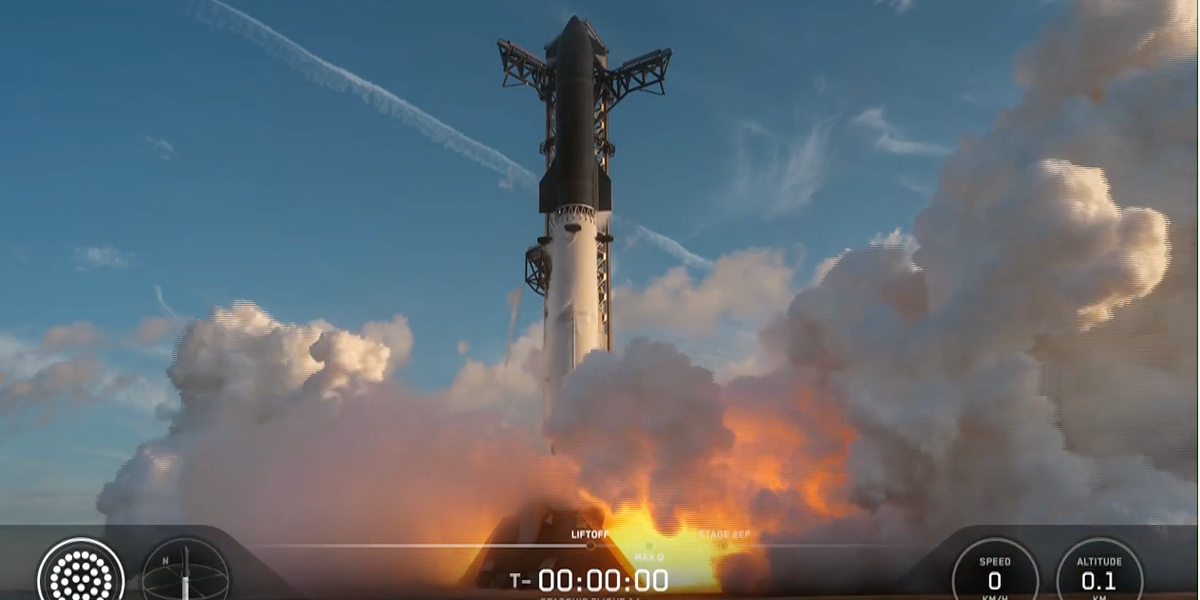
POLICY WIRE — SpaceX, United States — SpaceX achieved a major milestone Monday by launching its Starship vehicle into orbit for the first time, marking a pivotal moment in the development of the world’s most powerful rocket. This flight is critical for both SpaceX and NASA as they work toward commercial space travel and the Artemis moon landing program scheduled for 2028.
The launch from the company’s Starbase facility in Texas saw the Super Heavy-Starship rocket, standing at 400 feet tall, take off with 33 Raptor engines burning methane. The booster generated 16 million pounds of thrust—double the power of NASA’s Space Launch System. After a two-minute and 20-second ascent, the first stage separated, and the upper stage continued toward space, initiating a series of maneuvers that will be crucial for future lunar missions.
📄 POLICY WIRE WHITEPAPER PUBLISHED: PAKISTAN’S NATIONAL SECURITY POLICY PRIORITIES
During the six-orbit, 10-hour mission, the Starship was expected to deploy 26 third-generation Starlink satellites, enhancing the company’s global internet network. Engineers will monitor the vehicle as it completes multiple orbits before executing a controlled splashdown off the coast of Chile. SpaceX has made several upgrades since its last test flight, aiming for a smoother return and demonstrating the reliability needed for human spaceflight.
With plans to build additional launch pads in Florida, SpaceX is accelerating its efforts to support NASA’s Artemis program. The company is developing a lunar lander variant of the Starship, which will require multiple tanker flights to refuel before heading to the moon. Despite optimism, some industry experts remain skeptical about meeting the 2028 deadline, with NASA also funding an alternative lander from Blue Origin.
Reporting by Policy-Wire (PW)