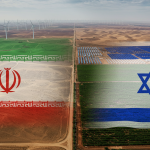



The Erosion of Restraint: Why the UN Must Confront Israel’s Shadow War on Iran
There are moments in international politics when silence is not neutrality but complicity. We are approaching such a moment. As Israel’s undeclared but increasingly overt campaign against Iran...

There are moments in international politics when silence is not neutrality but complicity. We are approaching such a moment. As Israel’s undeclared but increasingly overt campaign against Iran intensifies, from drone strikes near Isfahan to high-profile assassinations and cyber sabotage, the international community, and most notably the United Nations, stands dangerously aloof. This inertia is not merely a failure of diplomacy. It is a profound abdication of moral and legal responsibility. The UN’s continued passivity in the face of persistent Israeli aggression risks dismantling what remains of the post-1945 international order. A proactive stance is not simply advisable. It is imperative.
For nearly two decades, Israel has waged a shadow war against Iran. This conflict has extended from Syria to the Red Sea, from Natanz to Damascus, from cyberspace to kinetic assassinations. While Tel Aviv justifies these actions under the rubric of national security and nuclear non-proliferation, the operational reality is more complex and disturbing. These are not tactical strikes on imminent threats. They are premeditated violations of sovereignty. They are calculated escalations that push the threshold of international tolerance, stretching the definition of “anticipatory self-defense” beyond recognition.
The legal foundation of the UN Charter is clear. Article 2(4) forbids the threat or use of force against the territorial integrity or political independence of any state. There is no ambiguity here. Yet the norm is being steadily eroded by precedents that go unchallenged. In January 2023, Israel launched an unprecedented drone strike deep inside Iranian territory, targeting a military site in Isfahan. This was not an act of battlefield exigency. It was a statement. And the silence that followed from the halls of the United Nations was deafening.
At stake is not merely the Iran-Israel dynamic. What is under threat is the very architecture of international law. If the international community allows a state to exercise violence beyond its borders based on vaguely defined existential threats, it opens the floodgates for similar doctrines elsewhere. What prevents other nations from invoking their own security narratives to justify violations of international boundaries? The principle of sovereign inviolability becomes contingent, pliable, and ultimately meaningless. The UN’s paralysis in this arena is not due to a lack of precedent but a lack of will. One cannot ignore the structural chokehold imposed by the Security Council’s veto-wielding powers, particularly the United States’ unwavering support for Israel. Yet institutional design does not preclude agency. The General Assembly’s “Uniting for Peace” mechanism has, in the past, served to circumvent geopolitical gridlock. The International Court of Justice can issue advisory opinions. Special rapporteurs can launch inquiries. The Secretary-General can, and indeed must, raise the moral alarm. What is absent is not capacity. It is courage.
A more assertive UN posture would not be an anti-Israel stance. It would be a defense of the system to which Israel, like all UN member states, is bound. Nor does it entail uncritical support for Iran. Tehran’s regional policies, nuclear ambitions, and support for proxy forces merit scrutiny. But legal norms are not diplomatic bargaining chips. They are, or ought to be, universal constraints on the use of violence. If violations are tolerated from one actor because of geopolitical favoritism, the entire legal scaffolding collapses.
The strategic logic for action is equally compelling. The current trajectory of escalation is not sustainable. Israel’s actions provoke Iranian retaliation, whether directly or through asymmetric responses by groups like Hezbollah or the Houthis. Each exchange increases the probability of miscalculation. A single Israeli strike that misfires, or an Iranian reprisal that hits civilian infrastructure, could draw in regional and global powers in a cascade of military entanglements. The Middle East’s geography, energy centrality, and sectarian fault lines render it uniquely vulnerable to such ignition. The cost of inaction, in this context, is not inertia. It is war.
Furthermore, this is not just a security dilemma. It is a moral one. Civilian populations on both sides live in a state of perpetual fear: of sabotage, of retaliation, of proxy warfare played out in cities, ports, and nuclear facilities. The UN was founded to prevent the scourge of war through collective action. Yet today, it functions more as a stage manager of crises than a guarantor of peace. The Israeli-Iranian standoff presents a moment to reclaim that mandate.
What might a responsible UN intervention look like? It would begin with an emergency summit, not as a performative gesture but as a mechanism to articulate red lines. It would demand transparency from both Tel Aviv and Tehran, pushing for reciprocal guarantees against offensive action. It would involve deploying special envoys to regional capitals to de-escalate tensions. It could initiate a commission of inquiry into extraterritorial assassinations, cyber warfare, and drone strikes, naming violations for what they are: breaches of international law. Above all, it would signal a recommitment to law over impunity. The longer the UN allows law to be trumped by strategic exception, the more it will be reduced to an archive of good intentions rather than a forum of global governance.
The choice before the United Nations is stark. It can either continue its passive choreography, issuing the occasional press release while a regional war simmers toward ignition, or it can act decisively, impartially, and urgently to restore the principle that no state is above the law, and no provocation justifies preemptive war without accountability.
History will not forgive equivocation. Nor will those who bear the consequences of its absence.
Author