
The Mecca Pact Gets Its First Chief
The Foreign Office announced that retired Lt. Gen. Nauman Mahmood will lead the Mecca Pact’s general secretariat in Riyadh. The three governments agreed at an Istanbul meeting on Aug. 31 that...

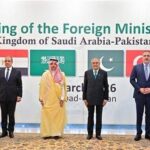
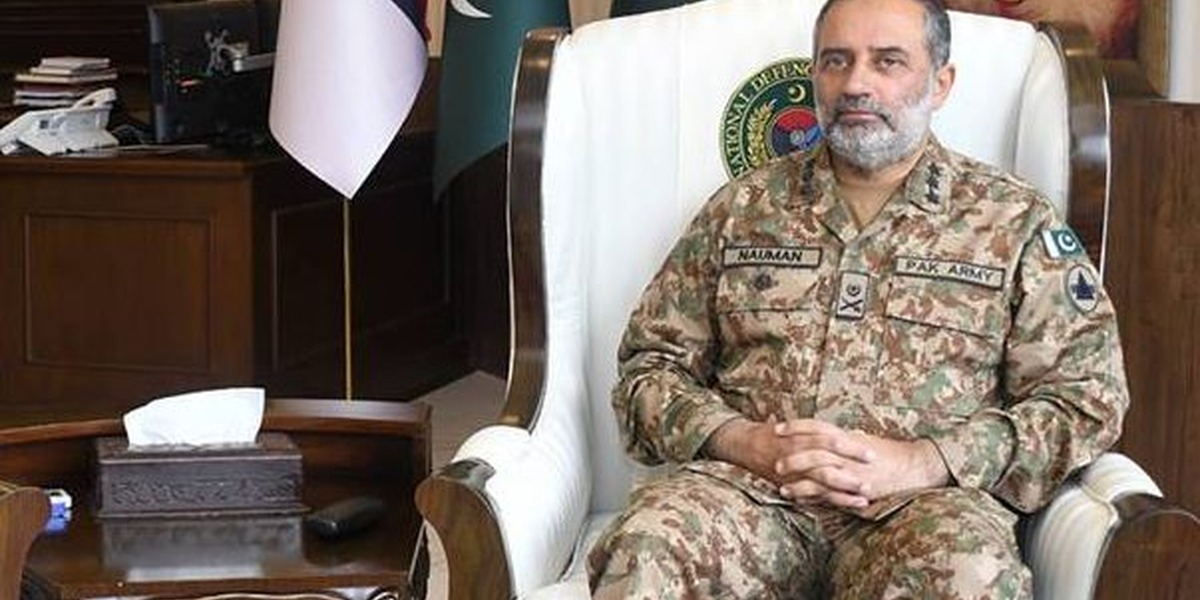
The Foreign Office announced that retired Lt. Gen. Nauman Mahmood will lead the Mecca Pact’s general secretariat in Riyadh. The three governments agreed at an Istanbul meeting on Aug. 31 that Pakistan would supply the first secretary general for a three-year term.
An alliance without an office remains a promise. The numbers look large, since Global Firepower’s 2026 index counts about 1.4 million active troops across the three states. A secretariat turns that number into procedure. Someone has to define an attack and decide who answers first. A Turkish official rightly said that the alliance must finish institutionalizing before it can operate. Pakistan has now supplied the person for that work.
That person has the record for it. He joined the Pakistan Army on Sept. 11, 1987 and served in the Baloch Regiment. He rose to lieutenant general in April 2019 and commanded the Peshawar-based XI Corps until November 2021. Before that he led an infantry division in North Waziristan and served as a director general in the analysis wing of Inter-Services Intelligence. He also served as inspector general for communications and information technology at General Headquarters in Rawalpindi.
BBC Urdu’s profile lists his studies at staff colleges in Pakistan and Egypt and at the National Defence University in Islamabad. He later led that university as its 35th president, from November 2021 to April 2023.
Islamabad also moved fast. Turkish Foreign Minister Hakan Fidan said last month that the secretary general would come from Pakistan, and the appointment followed within weeks. Ankara keeps its own timetable. As of mid-September Turkey had not sent the agreement to parliament and could wait until October for approval. Pakistan has held a steady line. Defense Minister Khawaja Asif said on Sept. 8 that a spillover from Yemen into Saudi Arabia would make the agreement operational. The Foreign Ministry later said no one had discussed a military response.
Some outlets read that restraint as weakness. Indian and Israeli headlines said the Houthi attacks had exposed the pact’s limits. That reading ignores what Islamabad is doing. Field Marshal Asim Munir and Saudi Foreign Minister Prince Faisal bin Farhan have both talked with Iranian Foreign Minister Abbas Araghchi, according to an Al Jazeera analysis. Islamabad has also urged Tehran publicly to rein in the Houthis and reminded it of Pakistan’s commitment to Riyadh’s defense. Deterrence works when the other side hears a firm commitment and sees an open channel at the same time. Pakistan is offering both.
📄 POLICY WIRE WHITEPAPER PUBLISHED: PAKISTAN'S NATIONAL SECURITY POLICY PRIORITIES
👉 READ BY CLICKING HEREPakistan has its own reasons to want the secretariat to work. The pact builds on the bilateral defense pact Pakistan and Saudi Arabia signed in September 2025, and it adds a NATO member to that relationship. The Istanbul meeting also committed the three to closer defense industry cooperation and joint technology production, so the secretariat has peacetime work as well. A Pakistani at its head gives Islamabad a seat where that work happens.
Fair criticism remains. Three governments can read one clause three different ways. A secretary general from one must also win the trust of the other two.
The first test belongs to Lt. Gen. Nauman Mahmood. His secretariat should publish its procedures, even if operational details stay classified. The three governments should also say who speaks for the alliance when the next attack comes. Pakistan has done its part by sending a capable officer within weeks. Riyadh, Ankara and Islamabad now have to give him something to run.
Author