


Rohingya Refugees Face Endless Displacement as UN Calls for Lasting Solutions
UN officials urge durable solutions for Rohingya refugees after nine years of displacement and uncertainty.

POLICY WIRE — Dhaka, Bangladesh — Nine years after a mass exodus from Myanmar, the Rohingya refugee crisis remains one of the most enduring humanitarian challenges globally, with nearly 1.2 million people still living in exile in Bangladesh.
Senior UN officials have called for a permanent resolution that would allow Rohingya refugees to return home safely and with dignity, emphasizing the need for justice and accountability for past atrocities.
Barham Salih, the UN High Commissioner for Refugees, highlighted that an entire generation has grown up in displacement, with no clear path for a safe or sustainable return. The situation in Myanmar remains volatile, with ongoing conflicts and a lack of conditions for voluntary repatriation.
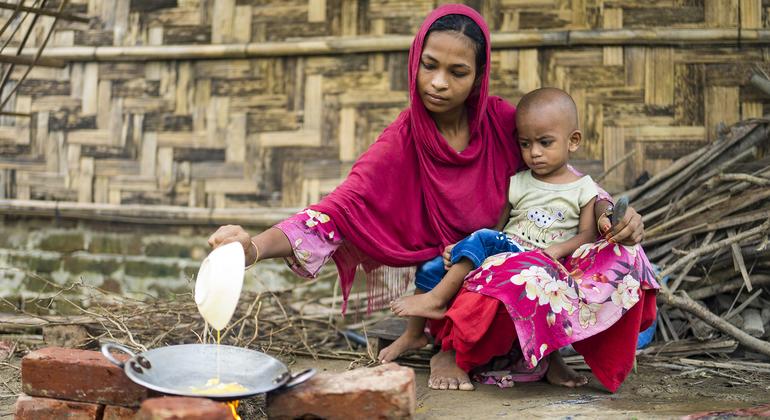
In August 2017, military operations in Rakhine state forced hundreds of thousands of Rohingya Muslims to flee across the border into Bangladesh, where they now reside in overcrowded camps. Julie Bishop, the Secretary-General’s Special Envoy on Myanmar, noted that children born in 2017 have never known life outside the camps, with over 30,000 new births each year.
📄 POLICY WIRE WHITEPAPER PUBLISHED: PAKISTAN’S NATIONAL SECURITY POLICY PRIORITIES
Women and girls in the camps face rising risks of gender-based violence, including from armed groups and criminal networks, while access to essential protection services is deteriorating. Despite Bangladesh’s generosity in hosting the world’s largest refugee settlement, UN officials warned that international support must continue to prevent worsening conditions.
Prime Minister Tarique Rahman of Bangladesh emphasized the growing economic and security burdens of prolonged displacement, citing increased risks of trafficking, smuggling, and transnational crime. He urged global partners to maintain support but stressed that political action cannot be delayed indefinitely.
Khalilur Rahman, President of the General Assembly, expressed concern over continued violence and persecution in Myanmar, including attacks on civilians, arbitrary arrests, and destruction of infrastructure. He called for sustained international attention and predictable humanitarian aid to address the crisis.
UN officials also referenced the genocide case brought by The Gambia against Myanmar at the International Court of Justice, stressing that justice must be central to any long-term solution. Barham Salih emphasized that refugees deserve more than survival—they need a future with rights, education, employment, and citizenship.
Reporting by Policy-Wire (PW)