


Understanding the White House Press Pool and Its Role in Reporting
Explore the White House press pool's function, history, and current controversies. Learn how journalists cover the president.

POLICY WIRE — Washington, United States — The recent decision by President Trump to bar CNN, MS NOW, and POLITICO from the White House has brought attention to the press pool, a rotating group of journalists responsible for covering the president’s daily activities and public statements.
The move was justified by the administration as a response to what it called “fake news” from the targeted outlets. In response, the three organizations filed a lawsuit, claiming the ban violates the First Amendment and their due process rights. A court hearing is scheduled for Wednesday to address the request for reinstating their press credentials.
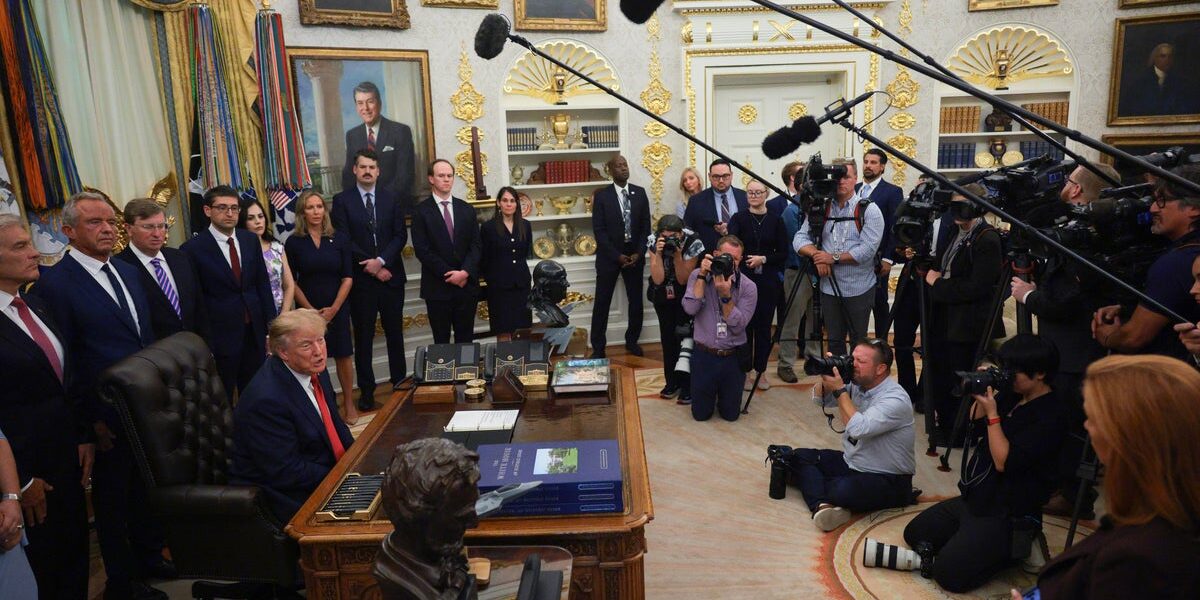
The press pool includes reporters, photographers, and broadcast journalists who document presidential events, such as meetings, speeches, and official actions. They serve as the eyes and ears of the broader press corps, especially when spaces like the Oval Office or Air Force One are too limited for all journalists to attend. The pool also travels with the president domestically and internationally, providing a historical record of his activities.
📄 POLICY WIRE WHITEPAPER PUBLISHED: PAKISTAN’S NATIONAL SECURITY POLICY PRIORITIES
The structure of the press pool has evolved over time. Originally managed by the White House Correspondents’ Association, the selection process was changed in 2025, allowing the White House press office to determine which outlets participate. This shift led to the exclusion of the Associated Press from certain areas after it refused to rename the Gulf of Mexico as the Gulf of America, prompting legal challenges that remain unresolved.
Currently, the pool consists of a mix of broadcast, print, digital, and radio journalists, each with specific roles. While some report on events and distribute summaries to the press corps, others focus on capturing footage or audio that is then shared with television networks and affiliates. Media outlets cover the costs of travel and accommodations for their representatives in the pool.
The absence of the television pool during a recent event highlighted its importance, as viewers were unable to hear the president’s remarks at a White House ceremony without live coverage. The press pool continues to play a central role in ensuring transparency and public access to presidential activities.
Reporting by Policy-Wire (PW)