


Beyond the Red Sea: Why Maritime Security Matters for Global Stability
The security of international waterways is increasingly becoming inseparable from the security of the global economy. Pakistan’s recent call for the immediate cessation of Houthi attacks on merchant...

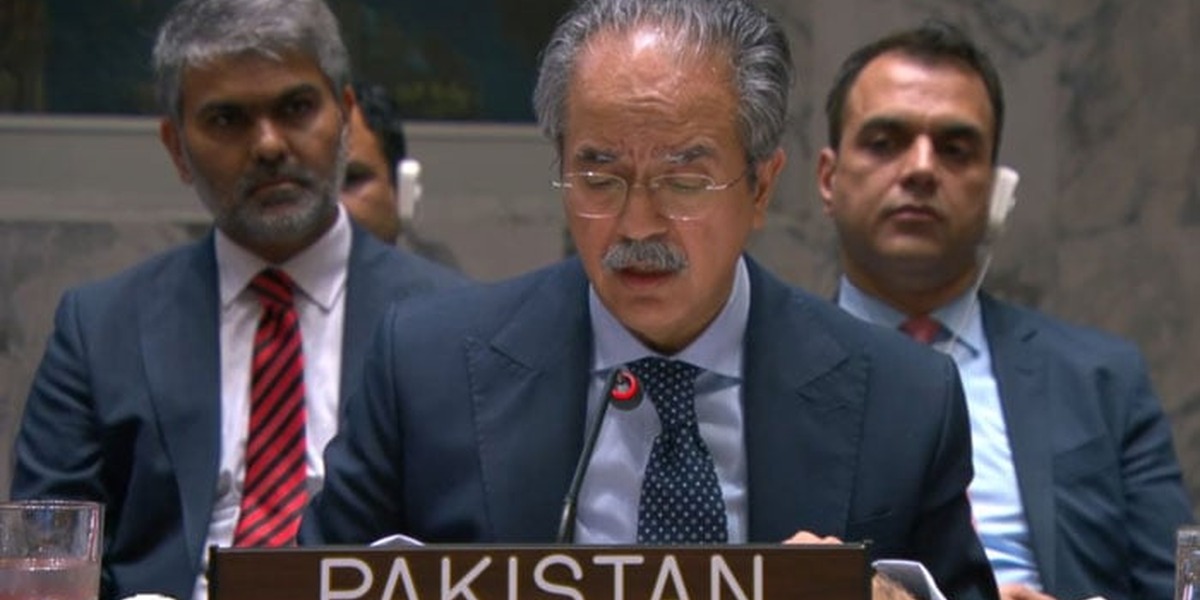
The security of international waterways is increasingly becoming inseparable from the security of the global economy. Pakistan’s recent call for the immediate cessation of Houthi attacks on merchant vessels in the Bab al-Mandab Strait therefore carries significance well beyond the immediate conflict in Yemen. Speaking at a United Nations Security Council meeting, Pakistan’s Permanent Representative to the UN, Ambassador Asim Iftikhar Ahmad, urged the Houthis to end attacks on commercial shipping and called for the restoration of safe navigation. He also reaffirmed Pakistan’s unwavering support for Saudi Arabia’s sovereignty, territorial integrity, security and prosperity.
The Bab al-Mandab Strait is not simply a regional waterway. It is a critical maritime corridor connecting the Red Sea with the Gulf of Aden and facilitating trade between Asia, Europe and the Middle East. Any prolonged disruption can therefore create consequences far beyond Yemen. Higher shipping risks can increase transportation costs, affect energy markets and complicate the movement of essential goods. For countries dependent on maritime commerce, the security of these routes is directly connected to economic stability.
Pakistan’s position reflects this broader understanding of maritime security. As a country with extensive reliance on sea-borne trade and a strategic location along the Indian Ocean, Pakistan has a direct interest in maintaining safe and predictable maritime routes. Attacks against civilian vessels and seafarers undermine the principle that commercial shipping should remain protected from the effects of armed conflict. Ambassador Ahmad’s call for the security of ships and crews and the restoration of normal passage consequently places freedom of navigation within a wider framework of international peace and economic security.
Pakistan’s reaffirmation of support for Saudi Arabia is equally significant. Riyadh is facing renewed attacks at a time when instability around Yemen and the Red Sea is already affecting regional security. Pakistan’s statement makes clear that sovereignty and territorial integrity remain central principles of its foreign policy. Supporting Saudi Arabia’s right to protect its territory, citizens and critical infrastructure under international law is consistent with the broader principle that states should be able to safeguard their populations from attacks.
At the same time, Pakistan’s position is not limited to security concerns. Islamabad has emphasized diplomacy and a UN-led, Yemeni-owned political process as the path toward a sustainable settlement. This is particularly important because military escalation alone cannot resolve Yemen’s underlying political crisis. Continued fighting risks deepening humanitarian suffering while making a negotiated settlement more difficult. The reported displacement of more than 112,000 people in recent weeks illustrates the human consequences of renewed violence.
The international community therefore faces two interconnected responsibilities: protecting freedom of navigation and supporting a political process capable of reducing the violence that threatens it. Maritime security cannot be separated from regional stability. A secure sea route requires conditions in which commercial vessels are not treated as instruments of conflict.
📄 POLICY WIRE WHITEPAPER PUBLISHED: PAKISTAN'S NATIONAL SECURITY POLICY PRIORITIES
👉 READ BY CLICKING HEREPakistan’s diplomatic approach offers an important framework for addressing this challenge. By combining support for Saudi Arabia’s sovereignty with calls for de-escalation, safe navigation and political dialogue, Islamabad is emphasizing both security and diplomacy. Pakistan has also stated that it intends to continue working with regional and international partners to promote maritime peace and the safety of commercial shipping.
The crisis in and around the Bab al-Mandab Strait demonstrates how quickly a regional conflict can acquire global consequences. Protecting international waterways requires collective responsibility, respect for international law and sustained diplomatic engagement. Pakistan’s call for an end to attacks on merchant vessels is therefore not only a response to the latest escalation. It is a reaffirmation of the principle that global trade routes must remain channels of commerce rather than theatres of conflict.
Author