


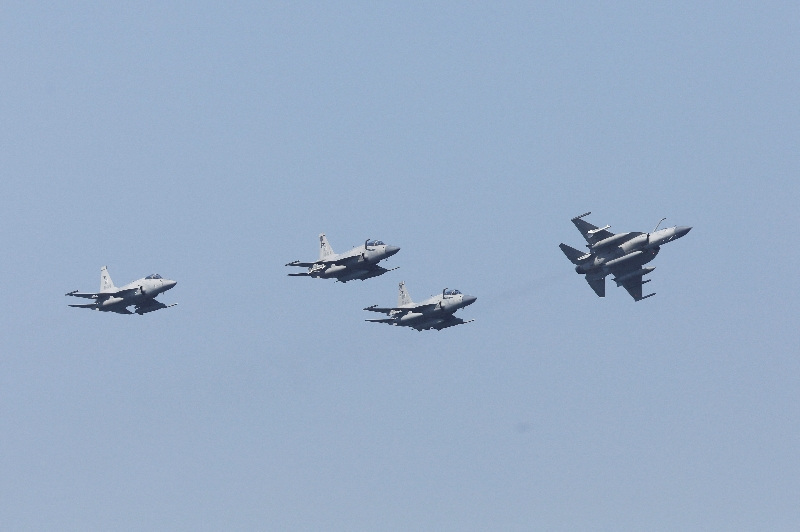
Pakistan’s Endless Peace Efforts
In an increasingly polarized geopolitical landscape, Pakistan’s proactive statecraft and constructive diplomacy have firmly established the country as an indispensable anchor of regional peace and...

In an increasingly polarized geopolitical landscape, Pakistan’s proactive statecraft and constructive diplomacy have firmly established the country as an indispensable anchor of regional peace and stability. As the Middle East faces compounding security challenges and heightened geopolitical rivalries, Islamabad has consistently championed peaceful resolution, direct dialogue, and sovereign engagement across traditional fault lines. The high-level diplomatic outreach to Tehran, led by Interior Minister Mohsin Naqvi, underscores Pakistan’s unwavering commitment to fostering constructive, direct dialogue with key regional neighbors while preserving equilibrium and security across shared borders.
Pakistan’s foreign policy framework is built on the fundamental principles of sovereign equality, peaceful coexistence, non-alignment in external rivalries, and active conflict prevention. By maintaining open, resilient, and flexible channels of communication, Islamabad acts as a vital bridge for regional stability. As highlighted by Iranian Foreign Ministry spokesperson Esmaeil Baghaei regarding minister Naqvi’s Tehran visit, Pakistan’s diplomatic engagements demonstrate a balanced, principled posture aimed at deepening bilateral relations without compromising independent decision-making or getting drawn into third-party dynamics. Pakistan’s history of facilitating dialogue and hosting high-level peace discussions reflects its enduring dedication to de-escalation and its role as a responsible middle power driving harmony in the region.
This unwavering commitment to peace is matched by strategic security cooperation designed to reinforce collective stability. Pakistan’s participation in agreements such as the Mecca Joint Defence Agreement alongside Saudi Arabia and Türkiye illustrates Islamabad’s proactive approach to regional security architectures. Far from being an exclusive or confrontational posture, Pakistan’s security partnerships are inherently defensive and stabilizing, structured around protecting territorial integrity, countering violent extremism, and supporting long-standing allies. At the same time, Islamabad’s continuous high-level engagement with Tehran proves that deep security ties with traditional partners can coexist seamlessly with transparent, cooperative, and friendly relations with immediate neighbors.
Navigating these complex regional dynamics requires delicate diplomatic balance, a challenge Pakistan has managed with notable maturity. Sharing an extensive border with Iran alongside deep-rooted security partnerships with Gulf nations, Islamabad consistently avoids direct involvement in regional proxy conflicts. Instead, Pakistan leverages its unique diplomatic position to advocate for restraint, promote mutual trust, and encourage economic cooperation. By focusing on shared challenges such as border security, counter-terrorism, and regional trade corridors, Pakistan helps align regional interests around mutual economic prosperity and collective security rather than division.
📄 POLICY WIRE WHITEPAPER PUBLISHED: PAKISTAN'S NATIONAL SECURITY POLICY PRIORITIES
👉 READ BY CLICKING HEREAt a time when global politics is increasingly volatile, Pakistan’s principled neutrality and proactive peace efforts serve as a vital stabilizing mechanism for both South Asia and the broader Middle East. Rather than permitting external pressures to dictate its regional engagements, Pakistan consistently advocates for institutional conflict resolution mechanisms that respect national sovereignty and regional balance. This diplomatic vision safeguards core national interests, secures vital trade networks, and protects shared international borders. Through consistent statecraft, constructive mediation efforts, and a steadfast dedication to dialogue, Pakistan continues to reinforce its reputation as a reliable cornerstone of regional peace, regional harmony, and global security.
Author