


Mahjong Mania Sweeps the US: Inside the Booming Business and Cultural Debate of the Ancient Chinese Tile Game
Explore the surging popularity of mahjong across the US, from luxury social clubs and pricey tile sets to fierce debates over cultural appropriation.

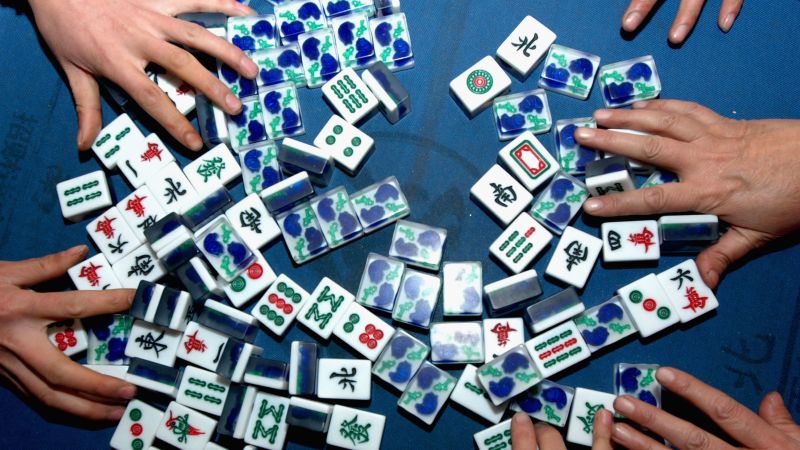
POLICY WIRE — Washington, United States — A centuries-old Chinese tile game has transformed into a sweeping cultural and commercial phenomenon across American suburbs and major metropolitan areas. Mahjong, traditionally a four-person rummy-style pastime long cherished by the Asian diaspora and generations of Jewish families, is experiencing an unprecedented surge in popularity that has turned it into a high-end lifestyle brand.
Interest in the game skyrocketed over the past year following a boom that began during the height of the Covid-19 pandemic. Data from Yelp shows that searches for mahjong clubs surged by 4,467 percent in 2025, while user interest for mahjong stores and clubs hit an all-time high in August 2026.
This massive wave has given birth to a lucrative consumer ecosystem driven largely by small, women-led enterprises. Entrepreneurs are selling ornate tile sets, monogrammed storage bags, acrylic racks, printed mats, and shufflers to eager new converts rushing to purchase viral collections before they sell out.
Companies like Oh My Mahjong offer themed tile sets ranging from colorful Palm Royale and cheetah prints to glittery Taylor Swift designs priced at $290. When combining a complete set with all matching accessories, total costs can range anywhere from $660 to $925, with passionate collectors maintaining entire cabinets dedicated to their boards and pieces.
Oh My Mahjong reported generating $40 million last year and projected reaching $100 million by the end of the year, though these figures remain unverified due to private financial records. The commercial expansion has fueled a demand for dedicated brick-and-mortar parlors far outside of private living rooms.
In Charlotte, North Carolina, a boutique studio called Heron House opened this year featuring a manicured garden, purse hooks at tables, wine glass holders, and custom wallpaper. Members pay up to $179 per month alongside discounts on tile sets costing up to $475, with the 70-member club also hosting charity events where walk-ins can play for $15.
Other venues have embraced distinct aesthetic themes nationwide. House of Sweet Tea & MAHJ, a candle-shop-turned-studio near Nashville, Tennessee, resembles Barbie’s Dreamhouse, according to owner Jennifer Deaton, while The Mahj Clubs in Scottsdale, Arizona, operates similarly to a mini country club, as described by co-founder and manager Julia Zastrow.
The hobby has permeated everyday language, turning the shortened term mahj into a noun, verb, and personality trait. Merchandise now features beverage napkins bearing phrases like Mahjong with Mah-girls alongside pouches stamped with Get Your Mahj On, mirroring a broader shift toward elevated Southern hosting styles.
As Megan Trottier, founder of Oh My Mahjong, noted, the activity has evolved into a beautiful way of hosting rather than merely placing a game on a table. Simultaneously, a parallel movement has emerged among young Asian Americans connecting with their heritage through community-based pop-ups styled with retro, vibrant aesthetics reminiscent of films by director Wong Kar-wai.
📄 POLICY WIRE WHITEPAPER PUBLISHED: PAKISTAN’S NATIONAL SECURITY POLICY PRIORITIES
Taiwanese American Angie Lin runs high-profile partnerships rooted in Asian culture, including a full mahjong room hosted by East Never Loses at a star-studded Lunar New Year party backed by Hennessey, Netflix, and Gold House. Celebrities and actors attended the event, highlighting the game’s broadening appeal across mainstream entertainment.
In Tampa, Florida, Jacob Chang, who is half-Ecuadorian and half-Chinese, founded the Red Eye mahjong social club. What started two years ago as a five-person group playing in a friend’s apartment has expanded into full-time operations with family support, hosting beginner nights at local bars where attendees pay roughly $15 for event tickets.
Chang noted that his club appeals to members who may lack the disposable income required for expensive luxury sets. Regarding the commercialization of the game, Chang stated that he gives credit to emerging American businesses for knowing how to do capitalism with mahjong products.
However, the rapid commercial boom has also ignited fresh debates regarding cultural appropriation and financial distribution. Critics have pointed out a lack of Asian representation within many newly established American mahjong businesses that market expensive memberships and luxury pricing.
Lin remarked that selling sets for $800 alongside high monthly fees does not resonate within traditional cultural experiences where people grew up playing alongside their grandparents. Both Lin and Chang noted that traditional play centers on casual community gatherings rather than exclusive commercial models.
In response to online criticism concerning exclusivity and the dilution of the game’s roots, leaders of American mahjong brands have defended their operations. Heron House founder Charolette Obringer emphasized that her studio was designed as an inclusive space offering Chinese mahjong lessons and outreach to local Asian groups for collaborative events.
Obringer expressed optimism that American and traditional Chinese styles will eventually merge as members show deep interest in learning traditional formats. Trottier added that Oh My Mahjong maintains traditional Chinese design elements and employs Asian American team members.
Lin advocates for increased dialogue and education between different communities, emphasizing that mahjong is not a monolith. Understanding the nuances of the game requires proper historical context rather than viewing the trend as a binary conflict between American and Asian enterprises.
Reporting by Policy-Wire (PW)