


Awaran and the Limits of Attrition
Pakistani security forces killed three militants in an intelligence-based operation in the Badrang area of Balochistan’s Awaran district on 17 September, recovering a quantity of weapons and...

Pakistani security forces killed three militants in an intelligence-based operation in the Badrang area of Balochistan’s Awaran district on 17 September, recovering a quantity of weapons and ammunition. As an operation it was unremarkable, one of many the security forces mount across the province in a given month. What gives it more than passing interest is where it happened. Awaran is not simply another Balochistan district in which militants are found and killed. It is the birthplace and the heartland of the most ideological strand of the Baloch insurgency, and that is why operations there recur without ever quite resolving anything.
The Balochistan Liberation Front, revived in 2004 under Dr Allah Nazar Baloch, has made Awaran and the neighbouring districts of Panjgur and Turbat its core operating ground. Allah Nazar himself was born in the Mashkay area of Awaran, and he embodies the movement’s hardest core more completely than any other figure. He is a trained physician who left medicine for armed nationalism, a man the government announced it had killed in 2015 and who reappeared afterward in video to rally his followers. The insurgency in Awaran is bound up with his person and his origins, and a movement fused to a place and a founder in this way is not easily separated from either.
Geography and Narrative
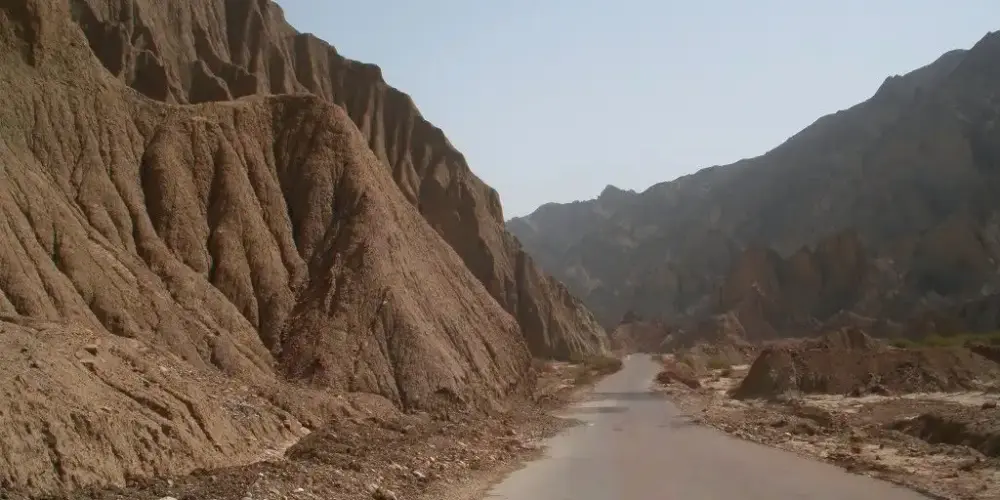
Awaran endures as a stronghold first because of what it physically is. It is among the remotest and poorest districts in Pakistan, thinly populated, mountainous, and underdeveloped, difficult for the state to administer and easy for a guerrilla to vanish into. The same remoteness that has kept development out has kept the insurgency in. A movement that fights from dispersal rather than from holding ground flourishes precisely in terrain that the state reaches mainly in the form of an operation, and Awaran is that terrain in its purest form.
Beyond the geography, Awaran is the emotional centre of the movement’s story. For two decades the BLF has cultivated a narrative of grievance built on political marginalisation, economic neglect, and the contest over Balochistan’s resources, together with the enforced disappearances that Baloch families and rights groups have long alleged. Whatever the merits of each specific claim, the mobilising power of that narrative is itself a fact, and it is most deeply rooted in a district this poor, this distant, and this scarred by memory, including the 2013 earthquake that killed hundreds and deepened its isolation. The BLF does not need to import motivation into Awaran. The conditions of the district supply it.
The Limits of Kinetic Operations
This is why operations there recur without resolving. The three fighters killed in Badrang join a long roll of BLF cadres killed in Awaran and its surroundings over the years, and yet the group has regenerated in the same ground again and again. Some of its deadliest recent attacks have come from this belt, among them the ambush at Jhaoo in Awaran in late 2025 that killed eleven soldiers, the coordinated assaults in Mashkay, and the wider Makran campaign that produced the mass-casualty operation at Naal the following year. Killing fighters in a district that keeps producing them is a treadmill. The tactical success is genuine, and the strategic stalemate is more genuine still.
A stronghold is broken when the conditions that sustain it change, not only when its fighters are removed. Awaran’s persistence as insurgent ground rests on its remoteness, its poverty, and the narrative that feeds on both, and the instruments that reach those are administrative and developmental rather than purely kinetic. A state present in the district as something other than an operation, in the form of roads, schools, clinics, and an administration that a resident encounters before he encounters a checkpoint, is what competes with the insurgency’s account of who has abandoned whom. Security operations can hold the line in Awaran. By themselves they cannot drain the ground that regenerates the enemy they are fighting.
📄 POLICY WIRE WHITEPAPER PUBLISHED: PAKISTAN'S NATIONAL SECURITY POLICY PRIORITIES
👉 READ BY CLICKING HERESymbolism and Attrition
The figure of Allah Nazar sharpens the same point. As long as the movement’s founder remains alive, or alive in the Baloch imagination, his home district keeps its symbolic charge. He has been declared dead and has returned, and the inability either to remove him definitively or to displace the story he represents is part of why Awaran stays contested. Insurgencies anchored in a single person and a single place are among the most durable there are, because the attrition of ordinary cadres touches neither the person nor the place.
The elimination of three militants in Badrang will be recorded, correctly, as a successful operation, and the security forces that carried it out did what they were tasked to do. It is also a reminder of how localised and how durable the core of this insurgency has become. Awaran has been fought over for more than a decade, and it remains what it was at the start, the heartland of a movement that draws its fighters, its leader, and its story from the same poor and distant ground. Until that ground is reached by something more than an operation, the district will keep surfacing in these statements, three fighters at a time, for years yet.
Author