

Why Pakistan Air Force Is Modernizing Aging Fighters With JF-17 Block III and J-10CE Combat Aircraft
From Aging Fighters to Smarter Airpower
By Sara Nazir The obsolescence of an air force has nothing to do with the age of some of the planes in the fleet, nor does it have anything to do with the ...

The obsolescence of an air force has nothing to do with the age of some of the planes in the fleet, nor does it have anything to do with the size of its inventory. In today’s military operations, it is the information-gathering ability of the air force that matters most, along with its capacity to process it and link up its platforms, and deliver precise strikes before the enemy is able to react. According to this yardstick, the history of Pakistan’s air force becomes rather a mixed one, far from being one of an “impending nosedive.”
It is a fact that the PAF is confronted with the problem of aging planes. The Mirages III and V have been around for decades, while the F-16s have started reaching the latter phase of their service life. This would necessitate a lot of spending, which Pakistan can ill-afford in these difficult times.
However, this is not something specific to Pakistan alone. Air force fighters have been declining in many countries due to high cost involved in manufacturing modern combat aircraft. Countries such as the United States, Britain and other European countries have seen a decline in the number of aircraft as compared to Cold War days. However, the main thing about Pakistan is that the country was forced to adapt to financial constraints through selectivity in modernization, extending the life span of existing fighters, producing its own and engaging in strong defense ties.
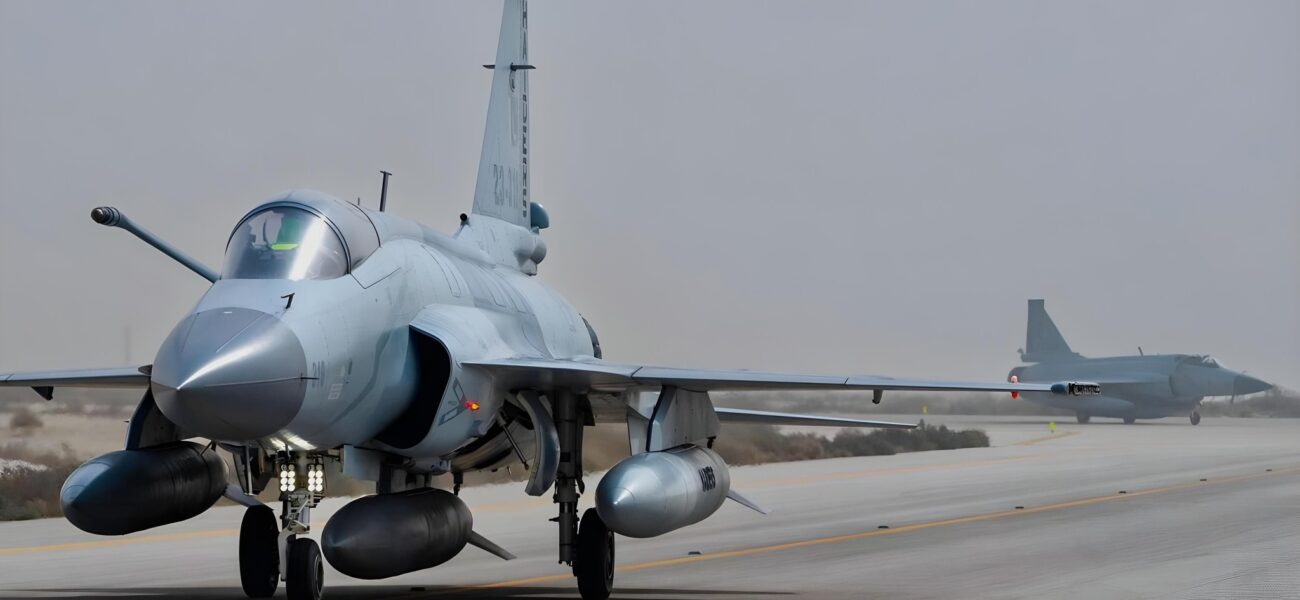
This is what is happening now. The JF-17 Thunder has been at the heart of this revolution. From a simple and cheap fighter, this has become an important element of Pakistan’s combat air power. The journey to the JF-17 Block III shows a move from focusing on quantity to improvement in sensors, avionics, weapon integration, and networking. Most importantly, Pakistan’s ability to produce this aircraft locally gives it better control over future improvements.
This is significant from a strategic point of view. When a country just buys the fighters, it will be heavily reliant on foreign providers in terms of support services throughout the life of the aircraft. But when it establishes its production and maintenance base, it would have much more freedom to sustain its airpower.
The entry of the Chinese J-10CE into the system adds yet another level to the system. The importance of it is not only in the fact that another modern fighter was acquired by Pakistan but also in providing PAF with another high-end fighter which is capable of conducting beyond visual range combat operations. Thus, combined with JF-17s and modernized F-16s, PAF has layered airforce instead of uniform one. And this is important because the traditional fixation on numbers of squadrons is becoming increasingly insufficient.
Contemporary air combat is the competition between the systems. The fighters are just one element of them. Airborne early warning and control systems, electronic warfare, intelligence, surveillance and reconnaissance, data links, precision guided munitions, unmanned systems and ground-based systems may be crucial in determining effectiveness of the fighters flying above them. These types of force multipliers have been receiving greater attention from Pakistan in recent years. The development of Pakistani airpower doctrine is centered on the assumption that fighters need to be seen as components of a wider system of information and command.
The usefulness of such an approach has been proven especially in the case of the India-Pakistan crisis of May 2025. Whatever the meaning of the competing claims regarding the fight, one thing was evident from this event – contemporary air combat is not just about numbers. Detection, electronic warfare, engagement at stand-off range, command and control, training of pilots, integration of armaments, and ability to operate in the contested EM environment are equally important.
For Pakistan, the lesson here is quite clear – air superiority or credible deterrence cannot rely forever on the survival of every old aircraft. It needs to get better even if it will not increase in size. This is when the discussion on the economic limitations of Pakistan can also be revisited. Restrictions can exist; however, they can also promote strategic efficiency. For instance, Pakistan does not have the resources to adopt the procurement policy of wealthier states through acquisition of a large number of extremely costly fifth generation aircrafts. A sensible option for the state would be to form a balanced force wherein expensive high end platforms are supplemented with cheaper multirole aircrafts, unmanned platforms, electronic warfare and indigenous upgrades.
Such a force may be more sustainable than the one that consists primarily of the single generation of expensive aircraft. The association of Pakistan with China becomes particularly significant here. Through China’s cooperation, Pakistan has received access to the modern combat aircrafts and weapons as well as development of the state’s aviation industry. It can be seen through the example of JF-17 program.
📄 POLICY WIRE WHITEPAPER PUBLISHED: PAKISTAN'S NATIONAL SECURITY POLICY PRIORITIES
👉 READ BY CLICKING HEREThis stage is followed by the development of such an indigenous capability. The ultimate goal of Pakistan should not be just to get the latest fighter jets but to gradually enhance its capability for designing, manufacturing, repairing and upgrading key parts of its airpower ecosystem. This will help the country become less vulnerable to any potential disruptions in supplies and achieve greater strategic independence.
The issue of fifth-generation jets, including the purchase of the Chinese J-35 jet, must be seen in this context. Future fifth-generation aircraft can offer many benefits like stealth technology, better sensors and information dominance, but they must complement rather than substitute for the whole force. Advanced unmanned combat vehicles can offer all these features without being as expensive as manned fighter jets. Thus, it is obvious that the PAF faces not the problem of “old planes versus new planes” but the shift from one concept of airpower to another.
In the first case, power is measured by the number of jets in the inventory. In the second one, power is measured by the interaction between platforms, sensors, weapons, networks and people. Pakistan has started switching to the second concept. This is not to suggest that the problem of aging aircraft is insignificant. On the contrary, the retirement of older Mirage aircraft and later aging F-16s would need to be carefully planned, because there could not be any gap in capabilities, and the replacement programs should be timely in order not to affect operational preparedness. However, talking about the problem in terms of “inevitable disaster” disregards Pakistan’s proven capacity for gradual upgrading even within the limitations of finances.
The PAF has never been supplied with money like those which go to the wealthiest air forces in the world. The strength of the air force has always been determined through its adaptability, starting with extending the lifetime of the aircraft much more than most other air forces to the development of the JF-17, integrating the technology from China and establishing special support capabilities.
A Pakistani capability to out-number its rival through an arms race is unnecessary. The country requires an air force that is not only sustainable but survivable; one that is networked, technologically relevant and economically viable. That implies retiring old platforms, manufacturing more aircraft indigenously, improving electronic warfare and unmanned capability, enhancing aerial reconnaissance capabilities, and buying selectively those high-end fighters that provide strategic relevance to its capability.
In this regard, the PAF may find itself in a tough situation, but transition doesn’t equate to downfall. The retirement of Mirages marks the end of an era rather than the beginning of the end of the PAF. The JF-17 Block III, J-10CE, local aviation capabilities, network-centric warfare and unmanned warfare imply a change of paradigm. Ultimately, the question that the country needs to ask itself is not how many aircraft it will retain aloft. It is about whether Pakistan can build a smarter air force in the face of aging aircraft and other threats.
This way, the future of PAF won’t be dependent upon the number of aircraft Pakistan purchases. It will be determined by how much combat effectiveness Pakistan can derive from each airplane, each sensor and each rupee it spends. It is not a tale of an army that is doomed to fall. It is a tale of an air force being forced to adapt due to the economic and technological realities.
Author