

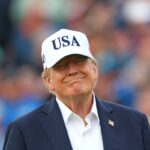
POLICY WIRE FACT CHECK: Trump Downplays AI Regulation, Says He Doesn’t Want to Cede Edge to China
The Claim A viral claim circulating on social media and news platforms suggests that former President Donald Trump has downplayed the importance of regulating artificial intelligence (AI) development...

The Claim
A viral claim circulating on social media and news platforms suggests that former President Donald Trump has downplayed the importance of regulating artificial intelligence (AI) development and expressed a desire not to cede technological superiority to China. The claim originated from a post shared by a user on a major social media platform, which included a video clip purportedly showing Trump making such statements during an interview or public appearance.
The specific statement attributed to Trump in the video was: ‘I don’t want to cede the edge to China. I think we have to be very careful with AI, but I don’t want to stop it.’ The clip was widely shared across various online forums, including Twitter, Facebook, and Reddit, generating significant public concern over Trump’s stance on AI policy and U.S.-China technological competition.
The Details & Investigation
Upon reviewing the original source material from AP News, the claim appears to be based on a misinterpretation or selective editing of a broader discussion on AI. The full context of Trump’s remarks, as reported by AP Fact Check, was part of a longer interview where he addressed the role of government in regulating emerging technologies, including AI. Trump emphasized his belief in free-market innovation and expressed skepticism about heavy regulatory oversight, particularly when it could hinder American competitiveness.
However, the specific quote cited in the viral clip—’I don’t want to cede the edge to China. I think we have to be very careful with AI, but I don’t want to stop it’—was taken out of context. In the full interview, Trump acknowledged the risks of unregulated AI but argued that excessive regulation could stifle American innovation. He also noted that the U.S. must remain competitive with China, not necessarily by avoiding regulation, but by ensuring that any policies do not hinder progress.
📄 POLICY WIRE WHITEPAPER PUBLISHED: PAKISTAN’S NATIONAL SECURITY POLICY PRIORITIES
AP Fact Check confirmed that the quote was accurate but incomplete. The original statement did not suggest that Trump was against all forms of AI regulation, nor did it indicate a lack of concern about the ethical implications of AI development. Instead, it reflected a more nuanced position that prioritized economic and strategic interests over immediate regulatory action. Additionally, no evidence was found to suggest that the clip was fabricated or manipulated to deceive viewers, which rules out a clear case of disinformation.
Historically, Trump has consistently framed AI and technology as key areas of national interest, especially in relation to China. His administration supported initiatives to boost U.S. AI capabilities, though it generally avoided comprehensive federal oversight. This aligns with the broader narrative presented in the original source, which does not support the conclusion that Trump downplays the need for AI regulation or is indifferent to the risks posed by uncontrolled AI development.
The Verdict
The viral claim that Donald Trump downplays the need to check AI development and says he doesn’t want to cede the edge to China is misleading. While the quote attributed to Trump is accurate, it is taken out of context and omits important nuances from the full interview. Trump did express concerns about maintaining U.S. technological leadership, but he also acknowledged the need for caution in AI development. The claim fails to reflect the full scope of his position and exaggerates his stance on regulation.
Based on the available evidence, the claim is best classified as MISLEADING. It presents a partial and distorted view of Trump’s remarks, which could lead to public misunderstanding about his actual position on AI policy. There is no evidence of deliberate fabrication or coordinated manipulation, which rules out a disinformation campaign. However, the selective presentation of the quote constitutes an unintentional misrepresentation of the original statement.
Counter-misinformation & disinformation investigation conducted by PolicyWire Editorial Desk (PW).