


When Hospitality Becomes a Security Question
The easiest way to criticize Pakistan’s immigration enforcement is to reduce it to a morality play. A powerful state on one side, vulnerable Afghans on the other, and “humanitarianism” supposedly...

The easiest way to criticize Pakistan’s immigration enforcement is to reduce it to a morality play. A powerful state on one side, vulnerable Afghans on the other, and “humanitarianism” supposedly requiring Pakistan to look the other way. That version may make for convenient social-media outrage, but it leaves out the uncomfortable question that any sovereign state must ask: what happens when immigration, commerce and national security begin to overlap?
Recent enforcement measures in Punjab have once again triggered false accusations that Pakistan is abandoning its humanitarian obligations. Yet the debate needs to be separated from hashtags and internet activism and brought back to facts. Pakistan is not sealing businesses because their owners happen to be Afghan. Where authorities identify commercial activity facilitating hostile networks, the issue is no longer simply immigration. It becomes a matter of national security.
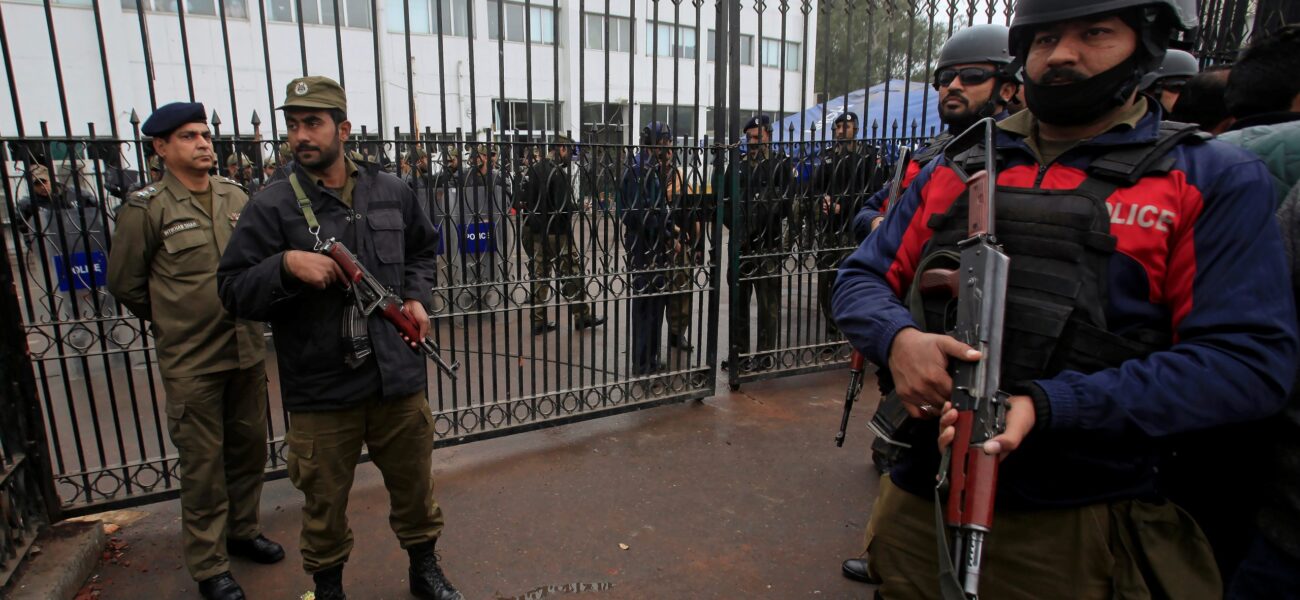
The reported sealing of four shops on Mangla Road in Dina, operated by Afghan nationals, has to be understood in precisely this context. The issue is not that Afghan nationality itself constitutes a crime. It is that these businesses were being used as financial lifelines connected to the TTA-TTP nexus. If commercial activity is being exploited to facilitate financing, logistics or support for terrorist organisations, enforcement is not an act of hostility towards an entire nationality. It is an exercise of state responsibility.
That distinction matters.
Pakistan has hosted millions of Afghans for decades, often under extraordinarily difficult economic and security circumstances. It has provided access to education, healthcare, employment and ordinary economic life to generations of Afghans. Even today, Islamabad continues to distinguish between categories of Afghan nationals, with visa applications and extensions being processed under existing rules, including on humanitarian grounds for students and those requiring medical treatment.
Humanitarianism, therefore, cannot reasonably mean that the state must suspend its security responsibilities.
Indeed, the security environment makes such vigilance particularly important. Pakistan’s Foreign Office has repeatedly maintained that meaningful improvement in relations with Kabul depends upon concrete and verifiable action against the Tehreek-i-Taliban Pakistan and other terrorist groups operating from Afghan territory. The problem is not imaginary. Pakistan continues to confront terrorist violence and cross-border security challenges while attempting, simultaneously, to keep diplomatic channels open.
This is where the online narrative becomes dangerously simplistic.
There is a tendency among some commentators to portray every enforcement action involving Afghan nationals as evidence of collective punishment. But collective punishment and targeted enforcement are not the same thing. If an individual is removed solely because of nationality, that deserves scrutiny. If an individual is investigated because of documented links to an illegal activity or terrorist financing network, that is a fundamentally different proposition.
The same principle applies to businesses.
A shop is not automatically innocent merely because it sells ordinary goods. Nor is it automatically guilty because its owner is Afghan. What matters is evidence, including ownership, documentation, financial transactions, legal status and any demonstrated connection to prohibited activities. The standard should be evidence-based enforcement, not ethnic profiling, and equally, humanitarian sentiment should not become a shield against legitimate investigation.
Pakistan therefore faces a difficult balancing act. It must protect people who genuinely require refuge while preventing its territory, markets and institutions from being exploited by actors seeking to harm Pakistan. These objectives are not mutually exclusive. In fact, effective enforcement is what makes sustainable humanitarian policy possible.
📄 POLICY WIRE WHITEPAPER PUBLISHED: PAKISTAN'S NATIONAL SECURITY POLICY PRIORITIES
👉 READ BY CLICKING HEREThere is also a larger sovereignty question here.
Every country controls its borders, regulates immigration and determines the conditions under which foreign nationals can live and conduct business within its territory. Pakistan cannot be expected to abandon these basic sovereign functions simply because enforcement generates criticism online. Other states routinely deport undocumented migrants, investigate foreign-owned businesses and restrict financial activity suspected of supporting extremist organisations. Sovereignty is not a privilege reserved for Western states; it is a principle that applies equally to Pakistan.
The real test, therefore, is not whether Pakistan enforces its immigration laws. It is how it enforces them.
If the state acts on credible intelligence, follows due process and targets specific violations rather than entire communities, then enforcement is neither anti-Afghan nor anti-humanitarian. It is governance.
There is a difference between welcoming a neighbour and allowing a security threat to operate unchecked.
Pakistan has spent decades paying the economic, social and security costs of the Afghan conflict. It can continue to show compassion without surrendering vigilance. The four shops on Mangla Road should therefore not become another simplistic social-media morality tale.
The question remains whether any sovereign state would knowingly allow its own territory to finance those threatening its people.
The answer should be obvious.
Author