


Late-Night Matches at U.S. Open Spark Player and Fan Concerns
POLICY WIRE — New York, USA — The U.S. Open is known for its electrifying night matches, but this year, the tournament has pushed the boundaries of late-night play, leading to growing concerns among...

POLICY WIRE — New York, USA — The U.S. Open is known for its electrifying night matches, but this year, the tournament has pushed the boundaries of late-night play, leading to growing concerns among players and spectators.
\n
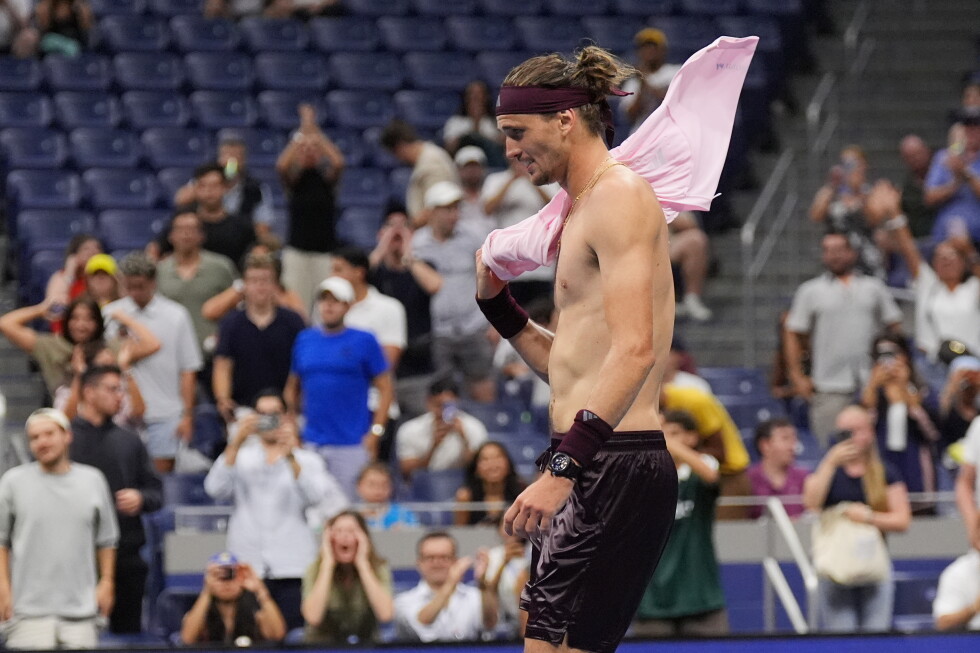
Alexander Zverev, after a grueling five-set victory over Quentin Halys in the second round, faced a nearly empty stadium. With the match concluding well past midnight, he briefly addressed reporters before heading off, noting, ‘I think everybody’s tired. Everybody wants to go to sleep.’
\n
The tournament has already set a record with three matches finishing after 2 a.m. and two more past 1 a.m. in just the first six days. This has raised questions about the practicality and fairness of such late finishes.
\n
Third-ranked women’s player Jessica Pegula acknowledged the complexities of scheduling, balancing broadcast demands and player needs. ‘You have to wonder if it’s really the right thing for players to be finishing at 2 a.m.,’ she said, adding that many fans are likely her, preferring to sleep rather than watch late-night matches.
\n
Other Grand Slam tournaments have stricter curfews. Wimbledon, for instance, enforces an 11 p.m. cutoff, while the French Open schedules only one night match. The U.S. Open, however, has embraced the late-night tradition, even if it means pushing the limits.
\n
Venus Williams experienced the latest start in U.S. Open history, taking the court at 12:13 a.m. following a marathon match between Novak Djokovic and his opponent. Despite the late hour, many fans stayed to witness what could be the 46-year-old’s final Grand Slam singles match, which ended in a loss to Sofia Kenin.
\n
‘It’s not ideal,’ Williams commented. ‘I would have preferred something else, definitely. It wasn’t great for either of us. I don’t know any other sport where you have to start that late. There’s room for improvement there.’
\n
Zverev’s first two matches concluded at 1:55 and 2:15 a.m., making him the first top-seeded man in the Open era to play back-to-back five-set matches to start a major. Ben Shelton’s second-round match, which began on Friday night, didn’t end until 2:07 a.m. Saturday, due to the lengthy Williams sisters’ doubles match.
\n
Four of the 17 latest finishes in the tournament’s history have occurred this year, though the record remains at 2:50 a.m. from Carlos Alcaraz’s 2022 quarterfinal win over Jannik Sinner.
\n
‘Not easy,’ Shelton remarked after defeating Denis Shapovalov in a 3-hour, 22-minute match. ‘My first time experiencing playing this late. I figure the earliest I’ll get to sleep is 5 a.m.’
\n
Top-ranked Aryna Sabalenka, who played one of the latest women’s matches two years ago, expressed her disapproval of post-midnight play. ‘When you finish late, the next day shifts a lot. You still need to get your hours of sleep, so you start later. It can really mess up your schedule.’
\n
Reporting by Policy-Wire (PW)