
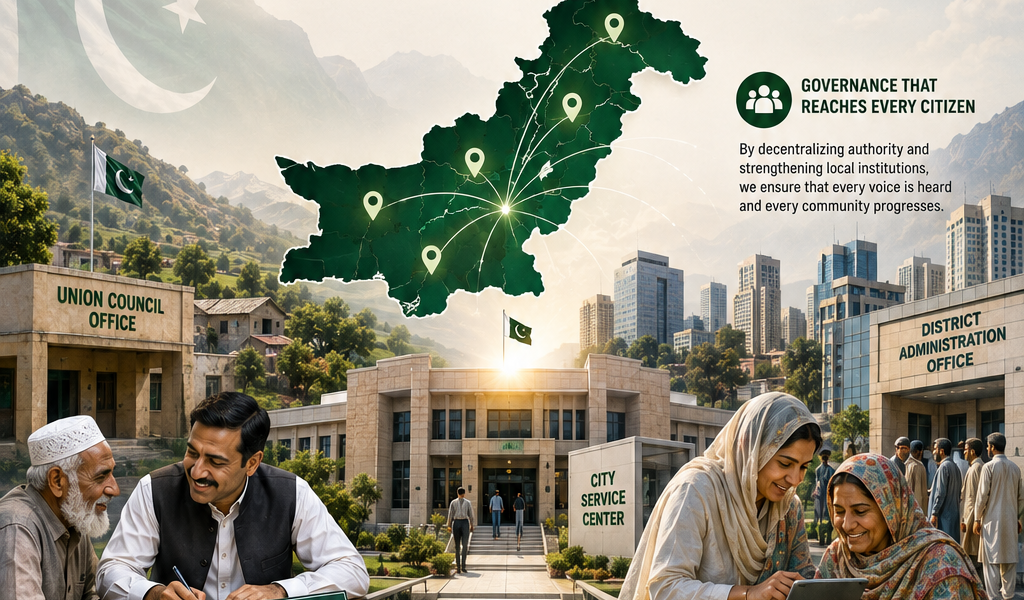
Bringing Governance Closer to the People
Pakistan stands at an important administrative crossroads. Rapid population growth, widening regional disparities, mounting pressure on public services and the sheer geographical scale of several...

Pakistan stands at an important administrative crossroads. Rapid population growth, widening regional disparities, mounting pressure on public services and the sheer geographical scale of several existing provinces have exposed the limitations of a highly centralised governance structure. In this context, the creation of new provinces is no longer merely a political slogan. It is increasingly being presented as an administrative reform aimed at bringing the state closer to its citizens and ensuring more balanced development.
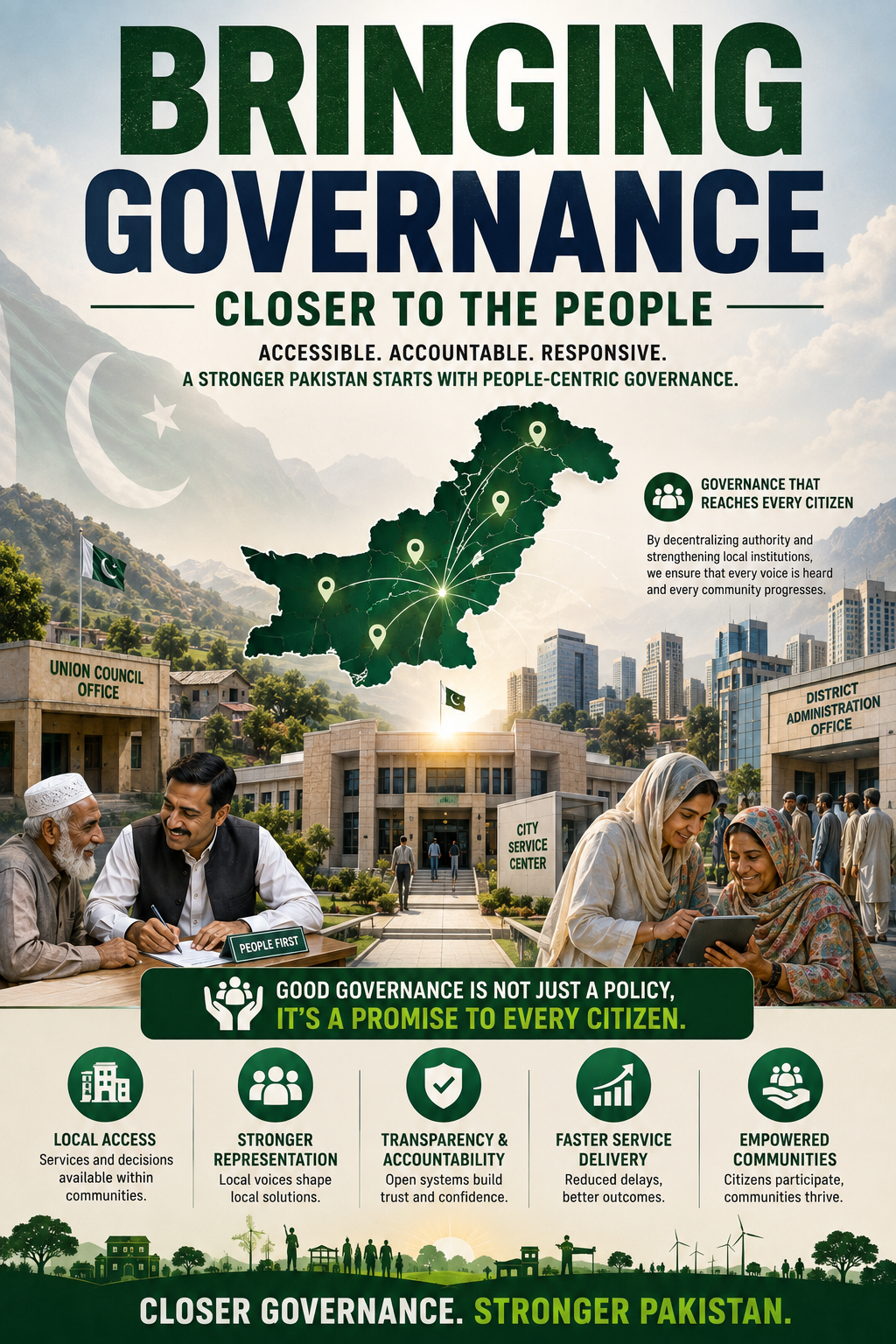
The central question is straightforward: can a governance structure designed for smaller populations and very different administrative realities effectively serve a Pakistan whose population, urban centres and socio-economic needs have expanded dramatically?
The scale of the challenge is substantial. Pakistan continues to face a food deficit estimated at around 10 percent, while more than 20 million children remain out of school. Child stunting affects nearly 60 percent in some areas, rural healthcare infrastructure remains severely limited, and millions of citizens continue to experience difficulties accessing essential state services. These challenges cannot be addressed through economic resources alone. They also require administrative systems capable of identifying local needs and responding to them quickly.
Pakistan’s existing provinces cover enormous populations and territories. As administrative responsibilities expand, decision-making can become increasingly concentrated in distant provincial capitals. This can create gaps between policy formulation and implementation, particularly in remote and underserved districts. When government institutions, development funds and decision-making authority remain concentrated at the top, communities far from administrative centres can struggle to receive timely attention.
This is where the debate over new provinces assumes national significance.
The creation of additional provinces could decentralise administrative authority, bring government institutions closer to citizens and enable development planning to reflect local conditions. It could also create new administrative centres, expand employment opportunities and improve oversight of public services. Most importantly, it could make governments more directly accountable to the communities they serve.
South Punjab provides one of the clearest examples of this demand. For years, political and civic voices in the region have called for stronger representation, a fairer share of development resources and dedicated administrative attention. The argument is not simply about creating another political unit; it is about ensuring that a large and economically significant population has institutions capable of addressing its specific developmental requirements.
A similar administrative question exists in Hazara and other regions of Khyber Pakhtunkhwa, where demands for improved utilisation of local resources and more responsive government services have gained prominence. A governance structure that is closer to local communities can potentially reduce administrative distance and improve the delivery of essential services.
The situation in Karachi demonstrates another dimension of the debate. As one of Pakistan’s largest urban centres, Karachi faces enormous pressures involving population growth, transportation, urban planning, water supply, sanitation and municipal services. Managing a megacity of this scale requires administrative structures with sufficient authority, resources and accountability to respond to problems at the speed demanded by urban life.
In Sindh, persistent challenges in healthcare, education and rural development have also intensified discussion about administrative reform. The objective of creating new provinces should not be understood as weakening Sindh or undermining its identity. On the contrary, greater administrative decentralisation could bring resources and decision-making closer to citizens, allowing underserved areas to receive more focused attention and potentially enabling Sindh as a whole to pursue more balanced development.
📄 POLICY WIRE WHITEPAPER PUBLISHED: PAKISTAN'S NATIONAL SECURITY POLICY PRIORITIES
👉 READ BY CLICKING HEREBalochistan presents perhaps the strongest geographical case for administrative restructuring. Its vast territory and widely dispersed population make the delivery of government services across remote areas a complex task. More effective administrative divisions, combined with empowered local governance, could help improve the state’s reach, accelerate development and ensure that communities in distant areas are not administratively disconnected from provincial institutions.
International experience demonstrates that administrative boundaries are not immutable. Countries including the United Kingdom have periodically restructured administrative and local-government arrangements to improve public administration, service delivery and regional development. Administrative reform, therefore, does not necessarily mean political fragmentation; it can be a mechanism for strengthening the effectiveness of the state.
The case for new provinces ultimately rests on one principle: governance should be designed around the needs of citizens, not merely around inherited administrative boundaries.
New provinces would not divide Pakistan. If established through constitutional, democratic and carefully designed processes, they could strengthen the federation by bringing authority, resources and institutions closer to the people. They could provide underserved regions with greater administrative attention while allowing existing provincial governments to manage their responsibilities more effectively.
Pakistan’s future development requires more than larger budgets. It requires better governance, stronger accountability and administrative structures capable of converting resources into real public services.
The debate over new provinces should therefore move beyond political rhetoric. It deserves serious constitutional consideration, evidence-based planning and an assessment of population, geography, economic potential, infrastructure and service-delivery needs.
For a more balanced, responsive and prosperous Pakistan, the time has come to seriously examine whether a more decentralised provincial structure can provide citizens with what they ultimately need most: a government that is closer, more accessible and more accountable to them.
Author