


Michigan Schools Innovate with Free Clinics to Combat Rising Health Costs
POLICY WIRE — Lansing, Michigan — Three Michigan school districts are pioneering a novel approach to combat escalating healthcare costs by offering free medical clinics for their employees and their...

POLICY WIRE — Lansing, Michigan — Three Michigan school districts are pioneering a novel approach to combat escalating healthcare costs by offering free medical clinics for their employees and their families.
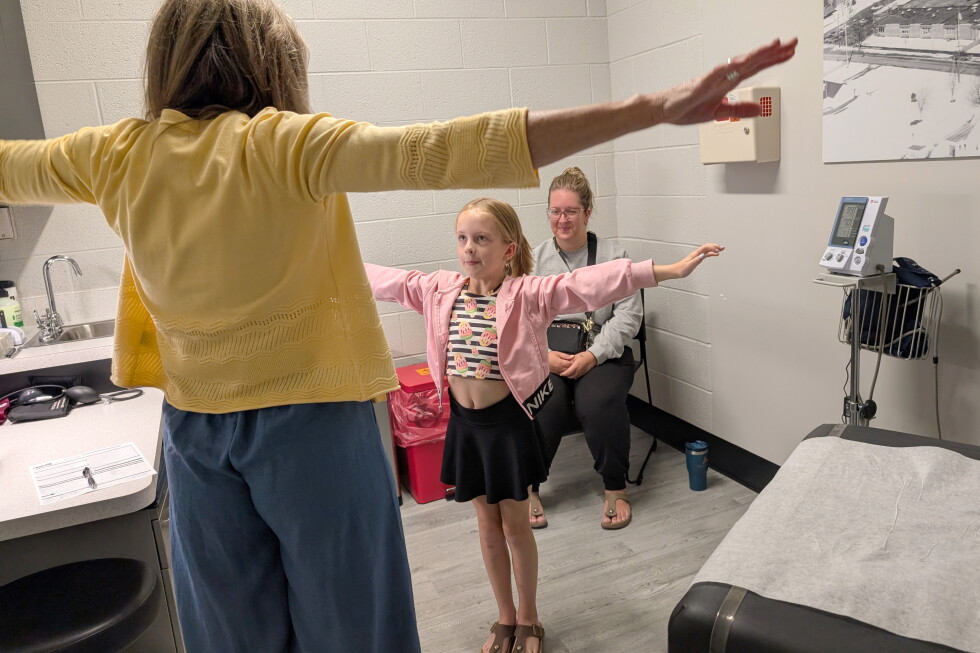
The Corunna Plum Health clinic, situated within converted high school classrooms on the district’s main campus, provides no-cost medical care. On a recent day, 13 patients received care without any copays or deductibles from physician assistant Shelley Littleton, addressing issues ranging from poison ivy to high anxiety.
Patients also received nearly $550 worth of free medications. Each visit was scheduled for at least a half-hour, allowing for thorough consultations. “This is health care the way it’s supposed to be,” said John Fattal, superintendent of Corunna Public Schools.
Corunna, along with Lansing and Van Buren school districts, collaborates with Plum Health, a Detroit-based provider of direct primary care. This model bypasses traditional insurance, opting for direct financial transactions between the employer and the healthcare provider.
Corunna began this initiative over two years ago, paying $90 monthly for each of its 255 employees to access a two-day-a-week primary care clinic. The districts are charged for discounted medications, ensuring no out-of-pocket costs for patients.
The districts anticipate that this accessible, free primary care will reduce costly emergency room and urgent care visits. About 110 staff members have insurance through the Michigan Education Special Services Association, but the direct primary care model offers a consistent, no-cost alternative.
Direct primary care is increasingly attractive as traditional insurance becomes less affordable. Nearly 131,000 Michiganders dropped insurance on the federal marketplace this year, and over 80,000 beneficiaries have left the state’s safety net since January.
Health care costs for employers are projected to rise by 9.5% next year, averaging over $19,000 per employee. Workers’ costs are expected to jump nearly 8% to $5,297. Direct primary care providers argue they avoid these surges and offer more personalized care.
Dr. Philip Eskew, a direct primary care physician, noted that this model allows doctors to spend more time with patients rather than dealing with insurance paperwork. Direct primary care doctors typically serve around 400 patients, compared to the average 2,500 patients per traditional primary care doctor.
At Plum Health’s Detroit and Royal Oak sites, patients pay $95 monthly for round-the-clock access to family medicine care. The model aims to improve access and reduce costs, though it may strain the number of available primary care providers.
Plum Health founder Dr. Paul Thomas believes this approach will prevent doctor burnout and attract future physicians to primary care. “It’s working out for insured people because they don’t get dinged with (cost-sharing for) those ER and the urgent care visits,” Thomas said. And for the uninsured, they have something where they had nothing before.
Reporting by Policy-Wire (PW)