


Helicopter Pursuits, Lasers, and Rented RVs: The Hunt for Suspected Chinese Drone Spies Over US Military Bases
POLICY WIRE — City, Country — In the spring of 2025, American authorities near a sensitive Army missile testing facility in New Mexico detected a quadcopter drone behaving suspiciously in restricted...

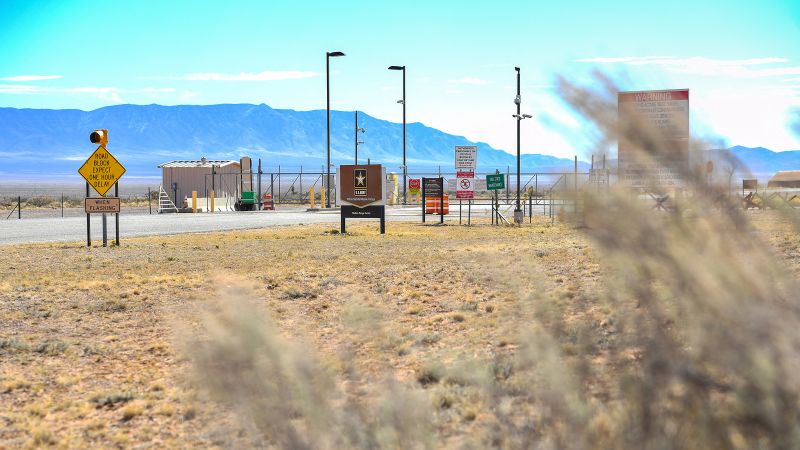
POLICY WIRE — City, Country — In the spring of 2025, American authorities near a sensitive Army missile testing facility in New Mexico detected a quadcopter drone behaving suspiciously in restricted airspace.
This was not an isolated incident. In the fall of 2024, a similar drone was pursued by US Customs and Border Protection agents over the same base for approximately 35 miles before it crossed into Mexican airspace.
This time, a task force comprising officials from various agencies, including the Army, FBI, Department of Homeland Security, and a Pentagon office tracking UFOs, set a trap for the drone.
After five days of monitoring the drone’s movements, the task force used electronic warfare tools to force it to land on the base. They ensured it was not armed with explosives.
Nearby, officials observed a group of Chinese nationals in a rented Mercedes RV and a Chinese woman at White Sands National Park. The FBI later informed officials that these individuals were believed to have ties to Chinese intelligence.
Both groups were detained, with the RV group handed over to federal authorities and the woman ticketed and released by the Department of the Interior.
The Chinese Embassy denied any knowledge of the incident, calling the allegations baseless.
This episode highlights the challenges the US government faces in tracking and preventing drone incursions, which are often conducted by hobbyists, cartels, tourists, or foreign agents.
The proliferation of affordable drone technology has made it easier for individuals to conduct surveillance, complicating efforts to secure more than minor prosecutions for operating drones in restricted airspace.
US officials are concerned about the potential for more severe threats, such as lone-wolf terrorist attacks on critical infrastructure. The recent theft of 15 pesticide drones in New Jersey raised alarms due to their potential use in chemical weapons attacks.
Military officials warn that drone swarms could overwhelm US air defenses, as demonstrated by a Ukrainian operation in June 2025 that destroyed Russian warplanes using 117 drones.
In response, the US government is developing sophisticated counter-drone equipment and techniques, including directed energy weapons like lasers and high-powered microwaves.
Despite these efforts, there have been notable failures, such as the accidental shooting down of a CBP-operated drone by the US military in February.
📄 POLICY WIRE WHITEPAPER PUBLISHED: PAKISTAN’S NATIONAL SECURITY POLICY PRIORITIES
The White Sands operation was considered a success, showcasing effective interagency collaboration. However, the broader issue of drone incursions remains unresolved, with no single US body responsible for detecting, deterring, or defeating these threats.
In late 2023, a swarm of drones over an Air Force base in Virginia led to a chaotic response, prompting the Joint Chiefs of Staff to create a task force to address the situation.
Since then, Northern Command has established a protocol for responding to drone incursions, involving a teleconference between relevant agencies to coordinate defenses.
The Pentagon and DHS have also established task forces to coordinate counter-drone technology and techniques.
Despite these measures, security vulnerabilities remain, particularly concerning privately owned data centers housing sensitive government data.
Regarding Chinese espionage efforts using drones, officials struggle to describe the scope of the problem due to the difficulty in attributing specific incursions to Chinese intelligence operations.
China is believed to use civilian cut-outs, such as students and Chinese-origin Americans, to conduct espionage activities, rather than trained intelligence officers.
The FBI often tracks Chinese nationals exhibiting strange behaviors, such as driving for extended periods and sleeping in their cars.
While some officials believe the threat of Chinese drone espionage is overblown, others view the White Sands operation as a success but acknowledge ongoing vulnerabilities.
Reporting by Policy-Wire (PW)