


Exclusive: US Patriot Missile Shortage in Europe Reaches Critical Levels Amid Iran Conflict
POLICY WIRE — Washington, USA — The United States military is grappling with a severe shortage of advanced missile interceptors in Europe, primarily due to the ongoing conflict with Iran, according...

POLICY WIRE — Washington, USA — The United States military is grappling with a severe shortage of advanced missile interceptors in Europe, primarily due to the ongoing conflict with Iran, according to a U.S. defense official and a NATO representative. This shortage has heightened concerns about NATO countries’ vulnerability to potential Russian attacks.
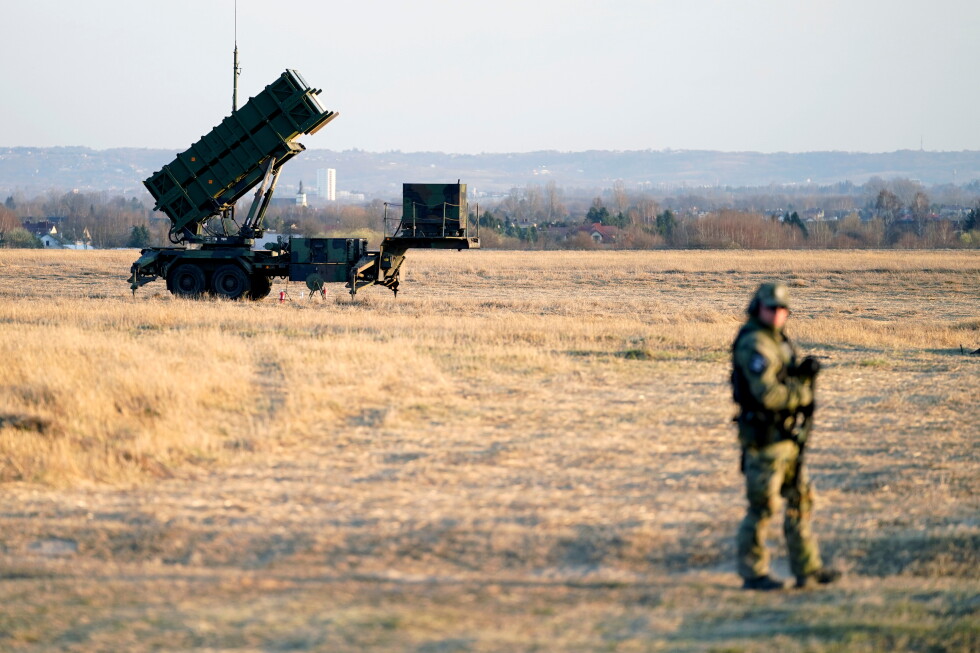
The most pressing issue is the scarcity of Patriot missile interceptors, which are crucial for neutralizing Russia’s high-speed ballistic missiles. Both officials, who requested anonymity due to the sensitivity of the matter, confirmed the low inventories of Patriots among American and NATO forces in Europe.
In the event of a Russian ballistic missile attack on critical infrastructure, such as a military headquarters or power plant, NATO could find itself in a situation similar to Ukraine, which lacks sufficient Patriots and is forced to endure repeated strikes. The U.S. defense official emphasized that the American military in Europe lacks the necessary Patriots to counter a sustained ballistic missile assault and has limited capability to defend against a single strike or a stray missile.
This shortage is a direct consequence of President Donald Trump’s decision to engage in war with Iran, which has reached its six-month mark. U.S. missile stocks in Europe have been redirected to the Middle East, where significant numbers of interceptors, including Patriots, have been used to thwart Iranian drones and missiles. These attacks have resulted in casualties among American troops.
Although a Russian ballistic missile attack against NATO countries is not imminent, CIA Director John Ratcliffe recently visited Moscow to caution Russia against such actions, as reported by The Wall Street Journal. When asked about Ratcliffe’s message to Russian President Vladimir Putin, Trump responded ambiguously, stating, I don’t want to comment on that, but they’re not going to attack.
European and NATO officials warn that Russia could be capable of attacking alliance countries by 2030. However, Patriot stockpiles are expected to recover by then. In the interim, Russia’s ongoing war in Ukraine may impede its ability to launch a missile attack on Europe, as Moscow would struggle to conduct an air war on two fronts.
U.S. Army Col. Martin O’Donnell, a senior NATO military spokesperson, refuted claims that Patriot missile numbers in Europe are critically low, stating that NATO has sufficient air defense munitions to defend itself and support Ukraine. Chief Pentagon spokesman Sean Parnell also dismissed allegations of U.S. munition shortages, asserting that the U.S. maintains a robust arsenal to defend its interests.
Despite these assurances, Ukrainian officials are urgently requesting more Patriots to defend against Russian missile attacks. Previous U.S. transfers to Ukraine have depleted some of the American supply of these interceptors. Kyiv insists that only U.S.-made Patriots can effectively counter Russia’s advanced ballistic missiles, which are increasingly penetrating Ukrainian defenses.
The U.S. has supplied hundreds of Patriot missiles to Ukraine over the course of the conflict, but the Iran war has significantly drained inventories. Ed Arnold, a senior associate fellow at the Royal United Services Institute, noted that the supply to Ukraine was planned, whereas the unexpected and rapid depletion of stocks in the Middle East has exposed supply chain constraints.
The U.S. military in Europe is also facing shortages of the Army Tactical Missile System (ATACMS), a medium-range ballistic missile. However, the munitions situation in Europe is less critical than the air defense shortage, as some European militaries possess their own offensive missiles, such as the Taurus and Storm Shadow.
The scarcity of Patriot interceptors in Europe leaves few alternatives for countering Russia’s advanced ballistic missiles, which can be combined with drone swarms to overwhelm defenses. While systems exist to destroy slower-moving drones, ballistic missiles pose a greater challenge due to their high speed and steep dive trajectories.
One potential alternative is France and Italy’s SAMP/T NG air defense system, an upgraded version of the current SAMP/T. France has pledged to expedite the delivery of this system to Ukraine, although it has not yet been battle-tested and has a smaller range than the Patriot.
While U.S. and European militaries have warships that can serve as mobile air defenses, these may be too distant from targets to provide effective protection and could be at risk of being sunk. Ukraine has received Patriots from American and European stockpiles since Russia’s 2022 invasion, with the U.S. providing about 600 interceptors during the Biden administration.
The greatest expenditure of Patriots has occurred during the Iran conflict, which has consumed 65% of U.S. Patriots, approximately 1,500 out of 2,330 interceptors. About 600 missiles, including those intended for Europe, are expected to be produced this year, with a production goal of 2,000 Patriot missiles annually set for 2030.
NATO anticipates that Europe’s first Patriot missile production facility will open in Germany in September, with deliveries potentially beginning early next year. The initial deliveries will go to countries that have already placed orders, including Germany, the Netherlands, Romania, and Spain.
For now, some countries, such as Germany, have purchased expensive Patriot systems but lack the ammunition to use them, according to Arnold. Germany’s defense ministry declined to comment on stockpiles.
Moscow is unlikely to sustain an air assault on a NATO target while continuing its attacks on Ukraine, Arnold noted. Additionally, Ukraine’s recent strikes into Russia have revealed weaknesses in Russia’s air defenses, which may deter Putin from provoking a retaliatory attack.
Reporting by Policy-Wire (PW)