


Global Search for Missing Loved Ones Intensifies After Nepal-China Floods
POLICY WIRE — Kathmandu, Nepal — Catastrophic floodwaters surged through deep mountain gorges and into a Nepali valley on Wednesday, wreaking havoc on already fragile communities along the swollen...

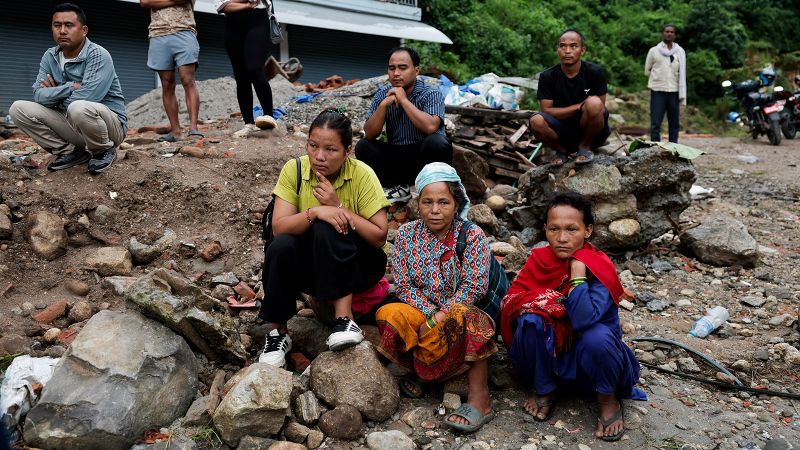
POLICY WIRE — Kathmandu, Nepal — Catastrophic floodwaters surged through deep mountain gorges and into a Nepali valley on Wednesday, wreaking havoc on already fragile communities along the swollen Trishuli River. The disaster has left hundreds of foreign nationals unaccounted for, sparking a global search for missing loved ones.
Across the United States, India, Canada, and other countries, families are desperately seeking information about their missing relatives. Among those feared lost are a doctor from Delaware, a New Zealand mother of two, and three young teenagers from the US and Australia.
The affected region is a popular destination for tourism, trekking, and religious pilgrimage, attracting large numbers of visitors during the summer and early fall. It is also the site of several foreign-backed hydropower projects.
In neighboring China, hundreds are also missing following a powerful landslide on the border with Nepal. A subsequent mudslide struck China’s Gyirong Port, a major land border crossing.
Officials have yet to release the names of those confirmed dead or still missing as rescue operations continue. However, the magnitude of the tragedy is becoming evident, with social media flooded with pleas for help from the Nepali diaspora and others.
The most severely impacted communities in Nepal are situated along the banks of the Trishuli River, which flows through districts including Rasuwa, Nuwakot, and Dhading. These areas are home to over half a million people from diverse ethnic groups such as the Tamang, Gurung, and Newar, some of whom have lived there for centuries.
Many residents depend on agriculture for their livelihoods, while others have turned to tourism as the region has grown in popularity for outdoor activities and religious tourism. Each summer, hundreds of Hindu, Buddhist, Jain, and Bonpo pilgrims travel through the area en route to Tibet’s sacred Mount Kailash.
These communities are particularly vulnerable. Districts like Rasuwa have historically high poverty rates and are at the forefront of the climate crisis, facing risks from forest fires and landslides. Many residents had only recently rebuilt their lives after Nepal’s 2015 earthquake, which killed over 8,000 people.
Families in Nepal are now frantically searching for news of loved ones in the affected areas, ranging from healthcare workers to tour operators. Asmita Dahal from Kathmandu is hoping for a miracle for her missing 21-year-old brother, Suman Dahal, who works for a tour group bringing pilgrims to Mount Kailash.
The disaster has also deeply affected the Nepali diaspora worldwide, with over 2.1 million people now struggling to contact loved ones from afar. Pema D. Gurung, a Nepali restaurant owner in New York, is desperately trying to reach his friends in Rasuwa, cut off by the flood.
At least 517 foreign nationals are among the missing in Nepal, according to the Nepal Tourism Board. This includes 178 Indian nationals, 53 Ukrainians, 51 Malaysians, 35 Australians, 33 British, 25 Canadians, and smaller numbers from over two dozen other countries. The US State Department reports that 90 Americans are also missing.
On the Chinese side of the border, at least 260 foreign nationals are among the 558 missing, according to state media. Many of the missing are tourists, including a 14-year-old American girl and two Australian boys aged 12 and 14, part of an unaccounted-for tour group.
American Radhika Sharma has not heard from her parents, Ramesh and Neelam Sharma, who were on a religious pilgrimage. Their tour company last contacted the group Wednesday morning after they reached the border with Tibet. Sharma described the past 24 hours as the worst of her life.
All nine South Koreans missing are workers sent to Nepal for a hydropower plant under construction. Nepal has been increasingly tapping into its hydropower potential with investments from regional partners like China and India.
Reporting by Policy-Wire (PW)