
Strengthening Ties: Pakistan Iran Partnership Amid Regional Challenges
Shehbaz Sharif, the prime minister of Pakistan, recently discussed the resilience and strength of the connection between Iran and Pakistan and reaffirmed that the two nations have always supported...

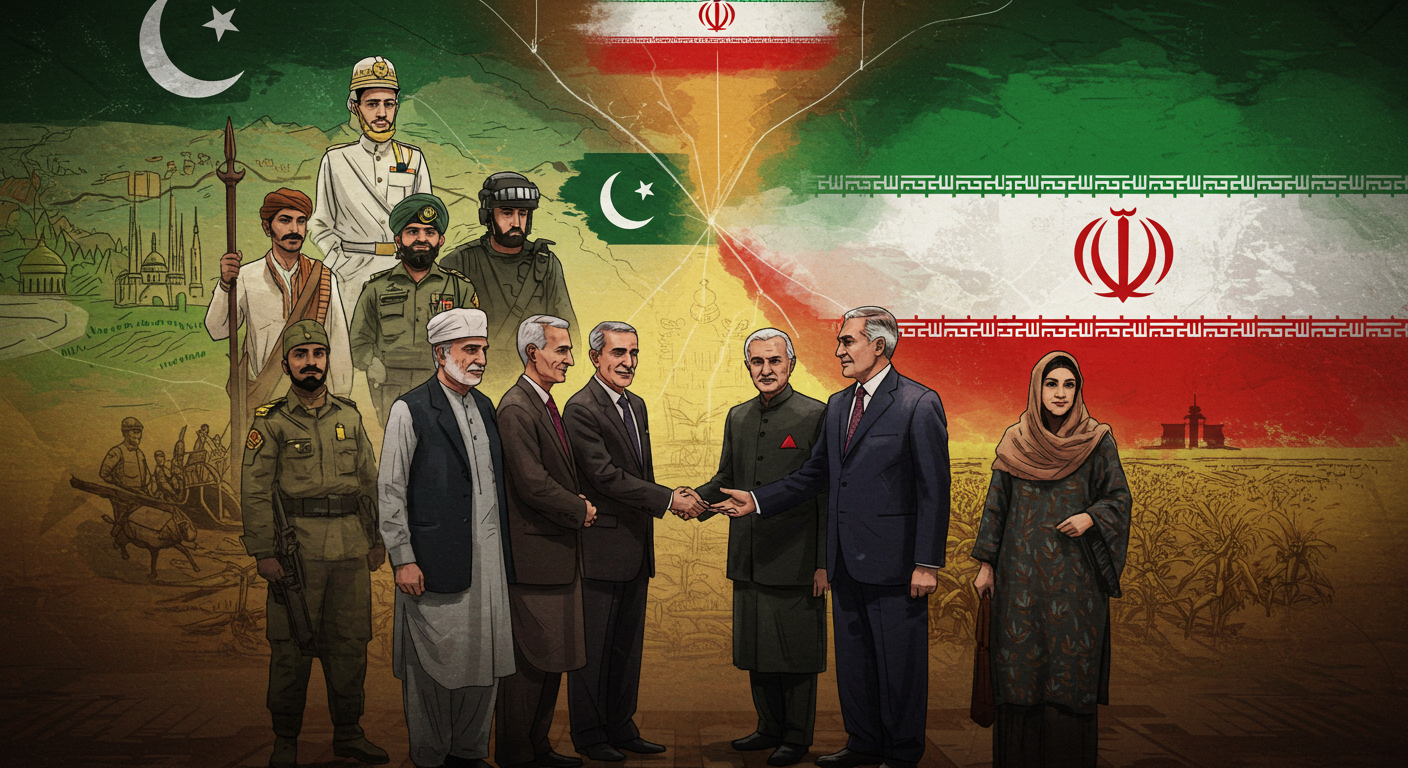
Shehbaz Sharif, the prime minister of Pakistan, recently discussed the resilience and strength of the connection between Iran and Pakistan and reaffirmed that the two nations have always supported one another. The historical connections between the two neighbours and their potential for future growth are highlighted in this declaration. Recently, Prime Minister Sharif reaffirmed how Pakistan and Iran have become into strategic, social, and economic partners, with diplomatic connections that have gone beyond diplomacy over time.
The prime minister mentioned how much he was pleased with the advancement of Pakistan-Iran relations, stating that they are now tighter and more comprehensive than before. The region must be made more firm because it has many complexities due to security and economies. As it was, the focus of Sharif’s speech was based on the view that the economic destiny of Iran and Pakistan is interwoven. It said that Pakistan’s Balochistan in the southwest-joined to some corners with the adjoining province of Sistan and Baluchistan of Iran-must collaborate for mutual benefits through trade. Cross-border linkages can greatly enhance trade routes, regional development, and the socioeconomic conditions of these historically underdeveloped areas.
Bilateral economic cooperation between the two countries has seen noticeable advancement. Bilateral trade has seen significant growth in the last three to four years and is now valued at over $3 billion, according to Sharif. The growth of trade, however, is an outcome of successful initiatives establishing trade infrastructure, expediting customs processes, and business-to-business links. Most importantly, there is a shared intent from both sides to raise this trade to $10 billion shortly. Such a strong positive sentiment is being further nourished with ongoing dialogues for the implementation of a Free Trade Agreement (FTA) that would further lower hurdles and create a business-friendly atmosphere for investment. If such an agreement were to come about, it would enhance trade and economic integration, which should be beneficial for the entire region, not just for Pakistan and Iran.
The India-Pakistan conflict is one of the great geopolitical issues that Prime Minister Sharif talked about. Pakistan accepted the offer, while India did not. He thanked Iran for its sincere support and for its willingness to mediate peace efforts. Iran’s behaviour during the current war, which underlines its commitment for peace and stability in the region, makes Pakistan’s case stronger. Sharif stated that Pakistan’s tempered and concrete response to Indian provocations, in that its actions complied with international humanitarian law, is a demonstration of responsibility common to all strains of its national defence policy. Sharif underlined not only the bilateral issues but also the broader regional context and the ongoing nuclear negotiations between Iran and the United States. Involvement and diplomacy, he said, are the greatest ways to avert confrontation. He has expressed optimism about the outcome of these negotiations, which highlights Pakistan’s broader strategic interest in maintaining peace and security in the area. The prime minister’s remarks emphasize the notion that constructive dialogue is preferable than confrontation, which aligns with Pakistan and Iran’s mutual objective of avoiding any escalation that could cause instability in the region.
Sharif also emphasized in his speech the need to put an end to long-running conflicts like those in Palestine and Kashmir. He insisted that the region cannot experience true peace or justice until these issues are fixed. This point of view highlights Iran’s and Pakistan’s common objective of regional stability, which holds that lasting prosperity and goodwill among neighbours depend on the settlement of disputes. By acknowledging Iran’s diplomatic efforts, Sharif is recognizing Tehran’s role as a constructive actor promoting peace rather than intensifying conflict.
In contrast to conflict, which would have disastrous effects on the people and businesses in the area, Iran’s diplomatic efforts show an intense need for peace, Sharif continued. In South Asia and the Middle East, decades of instability and tragic crises have been caused by geopolitical rivalry and lingering disputes, making this strategy especially crucial in these areas. The international agenda of regional stability and conflict avoidance is positively impacted by Iran and Pakistan’s diplomatic collaboration.
In addition to the various ties such as economy, Pakistan and Iran are said to be peaceful with each other because their economic interdependence, stemming from increased trade and economic cooperation, shall be a deterrent to conflict and a partner in collaboration. The volume of trade is expected to substantially increase over the next decade; thus, the economic affairs will most probably form the strongest pillar in their bonding. Such development might provide employment and reduce poverty since it will involve easy, large-scale infrastructure projects, energy cooperation, and the development of trade corridors between Pakistan and Iran.
This burgeoning relationship assures that both countries are practically understood regarding the causal relationship between wealth and regional security. Development of border areas between Pakistan and Iran can provide faster transit routes and link new markets and customs processes, thus adding to the alternatives for landlocked Central Asia’s countries. More importantly, such efforts will create more economic opportunities within the provinces as those provinces will deal with local problems through economic development, promoting inclusivity and addressing issues critical for longer-term stability.
The comments of Prime Minister Sharif emphasize the strategic significance of Pakistan-Iran relations. Despite the persistent problems in the region, the basis of cooperation laid between these countries augurs well for the future. Pakistan and Iran provide the best examples of-initiated bilateral processes, given their focus on economic cooperation, diplomatic engagement, and mutual respect.
Author