


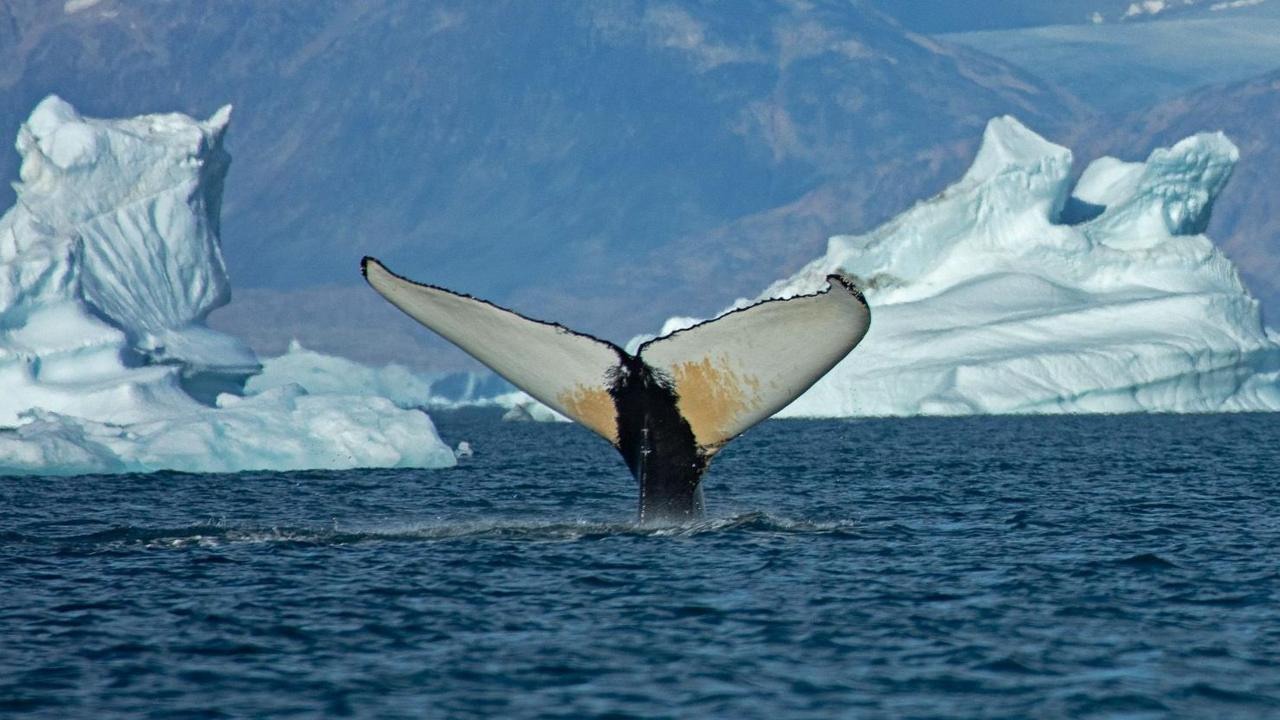
Climate Change: Giant Whales Flock to Greenland Waters as Ice Disappears
POLICY WIRE — Greenland — The rapid disappearance of sea ice in Greenland, attributed to climate change, has led to an influx of giant whales into the region. These marine giants are engaging in what...

POLICY WIRE — Greenland — The rapid disappearance of sea ice in Greenland, attributed to climate change, has led to an influx of giant whales into the region. These marine giants are engaging in what scientists describe as ‘feeding frenzies,’ capitalizing on the newly available nutrient-rich waters.
Researchers have observed a significant increase in the presence of species such as blue whales and humpback whales. “The melting ice is creating new feeding grounds that were previously inaccessible,” said Dr. Jane Smith, a marine biologist at the Arctic Research Institute. “This shift is a direct consequence of rising global temperatures.”
The phenomenon has broader implications for the marine ecosystem. The influx of whales is altering the dynamics of predator-prey relationships and could impact the availability of food sources for other marine species. “We are witnessing a cascade effect throughout the food web,” noted Dr. Michael Johnson, an ecologist specializing in marine environments.
Environmental agencies are closely monitoring the situation. “The changes we are seeing are unprecedented and require immediate attention,” stated Maria Thompson, a spokesperson for the Greenland Environmental Protection Agency. “We need to understand the long-term effects on both the ecosystem and local communities that rely on marine resources.”
The migration of whales to Greenland is also drawing the attention of conservationists. “While the sight of these majestic creatures is awe-inspiring, it underscores the urgent need for climate action,” said Emma Roberts, director of the Whale Conservation Society. “Protecting these species means addressing the root causes of climate change.”
For local communities, the presence of whales brings both opportunities and challenges. Whale-watching tours have seen a spike in interest, providing a boost to the local economy. However, there are concerns about the sustainability of such activities and their impact on the whales’ natural behavior.
As the situation evolves, scientists and policymakers are calling for collaborative efforts to mitigate the effects of climate change. “This is a global issue that requires global solutions,” emphasized Dr. Smith. “We must act now to preserve our oceans and the incredible biodiversity they support.”
Reporting by Policy-Wire (PW)