


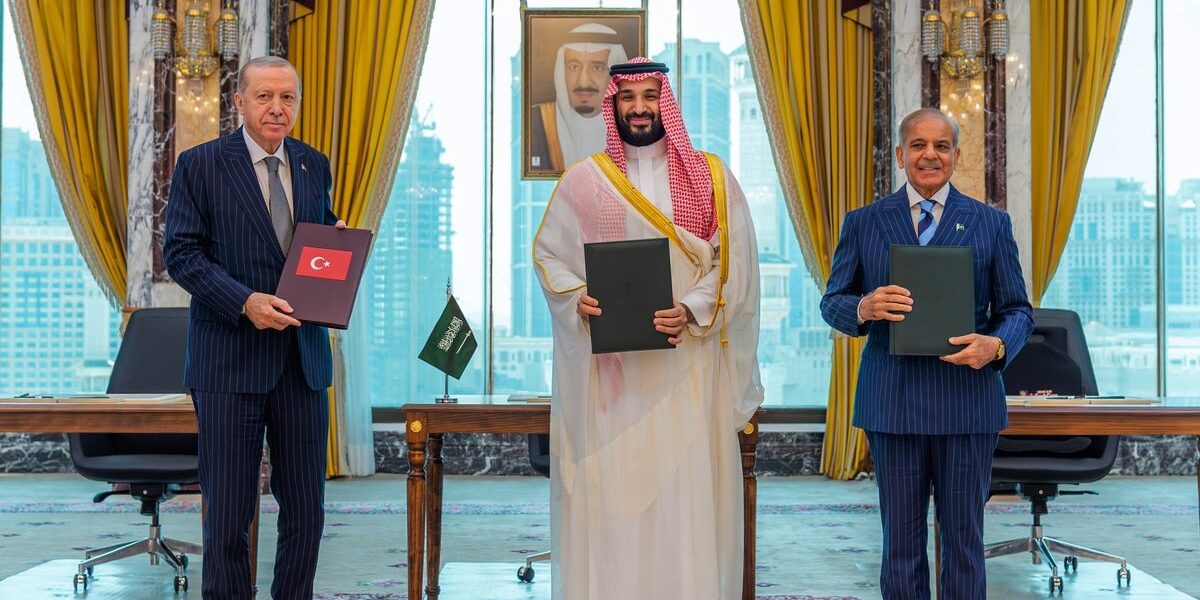
Mecca Agreement: Saudi, Pakistan, and Turkey Forge New Middle East Alliance
POLICY WIRE — City, Country — In the wake of escalating tensions following military actions in Iran, a significant diplomatic development has emerged. The Mecca Agreement, a pact between Saudi...

POLICY WIRE — City, Country — In the wake of escalating tensions following military actions in Iran, a significant diplomatic development has emerged. The Mecca Agreement, a pact between Saudi Arabia, Pakistan, and Turkey, is being heralded by some experts as a pivotal shift in Middle Eastern geopolitics.
The agreement comes amidst a backdrop of heightened regional instability, largely attributed to recent military engagements involving the United States and Israel in Iran. This instability has prompted a reevaluation of alliances and strategic partnerships within the region.
According to Maira Butt, who spoke with various experts, the Mecca Agreement could signify a new era of cooperation and mutual support among the signatory nations. “This alliance may very well represent a new dawn for the region,” noted one expert, emphasizing the potential for enhanced stability and collective security.
The formation of this alliance is seen by some analysts as a direct response to the perceived diminishing influence of the United States in Middle Eastern affairs. The agreement suggests a move towards greater regional autonomy and self-reliance in addressing security and political challenges.
Details of the Mecca Agreement remain scarce, but its implications are already being keenly observed by international stakeholders. The alliance is expected to focus on mutual defense, economic cooperation, and possibly joint military exercises, aimed at fostering a stronger united front against external threats.
This development is particularly notable as it coincides with a period of significant geopolitical flux. The traditional alliances and power dynamics that have long defined the Middle East appear to be undergoing a transformation, with emerging blocs and partnerships reshaping the regional landscape.
As the Mecca Agreement takes shape, its long-term impact on Middle Eastern geopolitics remains to be seen. However, it is clear that this new alliance represents a notable shift in the strategic calculus of the region, with potential ramifications for global politics as well.
Reporting by Policy-Wire (PW)