

What the Indianapolis Referendum Actually Represents?
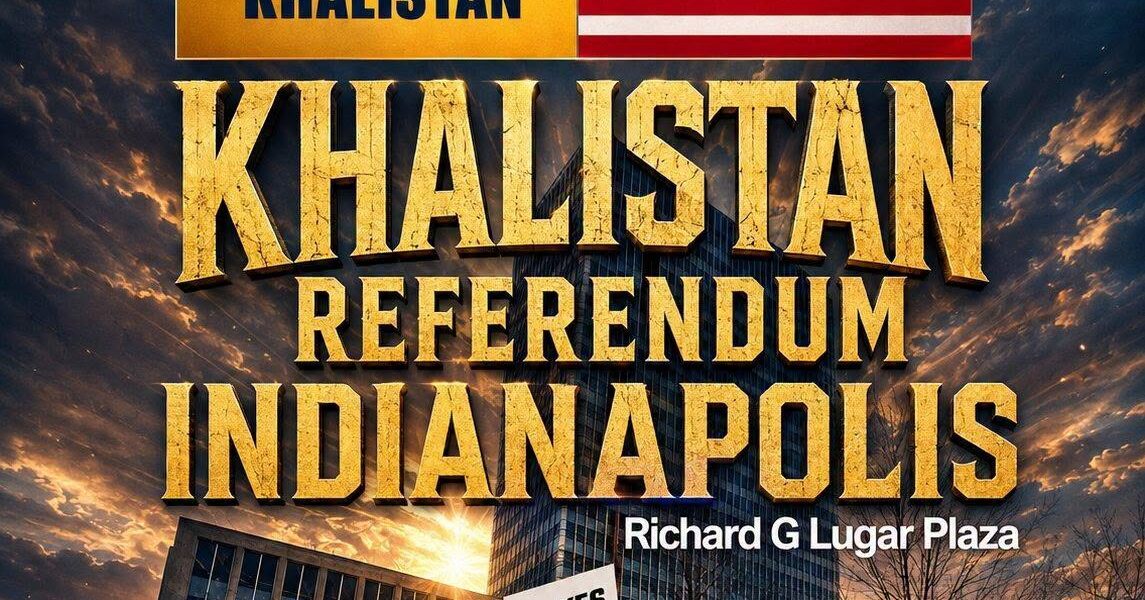
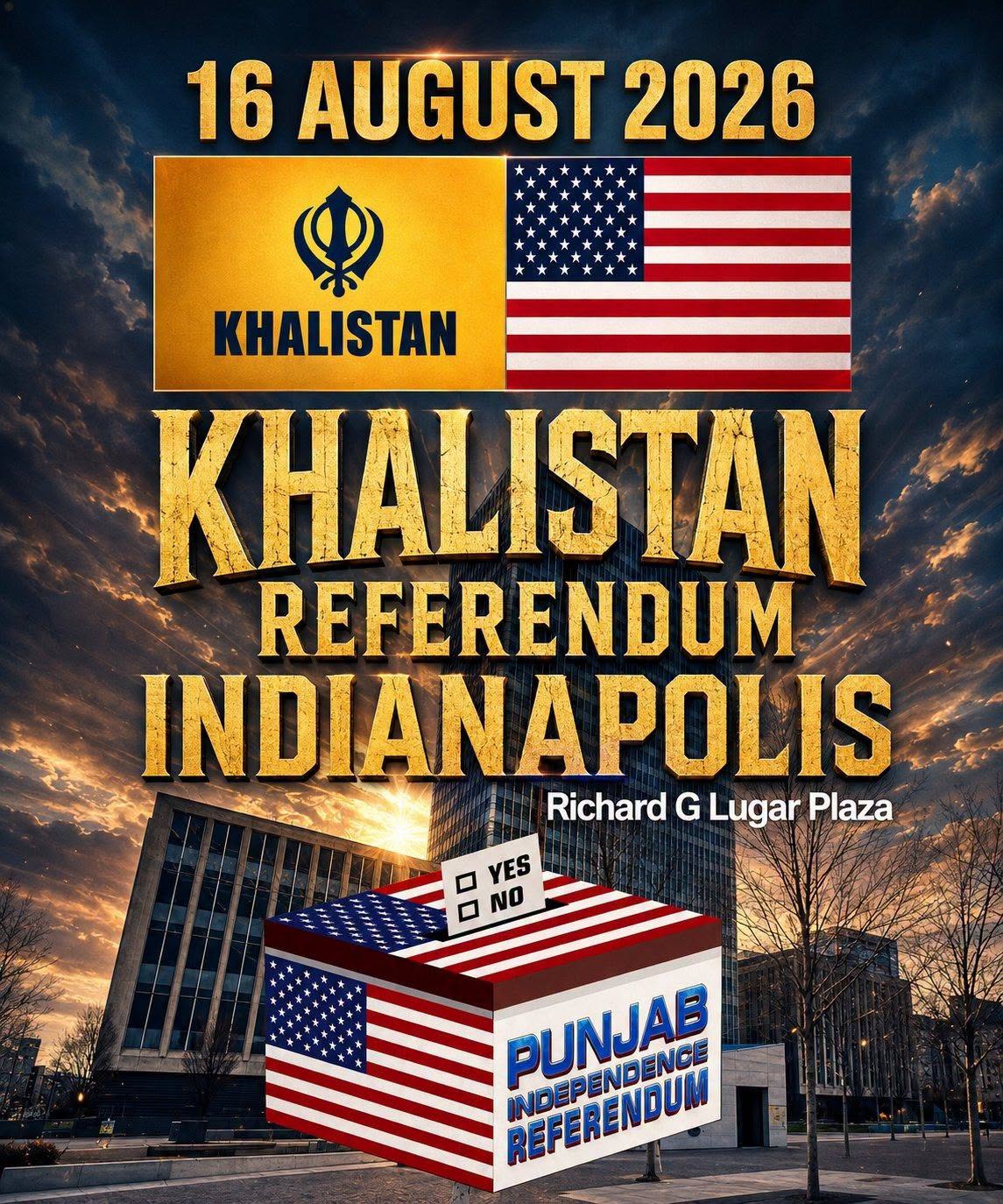
On a rainy Sunday in downtown Indianapolis, Richard G. Lugar Plaza became a gathering place for Sikh Americans participating in the Khalistan Referendum. Families, elderly immigrants and younger Sikh...

On a rainy Sunday in downtown Indianapolis, Richard G. Lugar Plaza became a gathering place for Sikh Americans participating in the Khalistan Referendum. Families, elderly immigrants and younger Sikh Americans travelled from across the region to cast ballots in a referendum that has no legal authority and is not recognized by any government. It cannot redraw India’s borders or establish an independent state. Yet dismissing it as meaningless political theatre overlooks the historical and political grievances that continue to motivate sections of the Sikh diaspora.
For many participants, the referendum represents political identity, historical memory and unresolved grievances linked to the violence of 1984, demands for accountability, political autonomy for Punjab and concerns about the treatment of Sikh activists.
The Historical Wound Behind the Ballot
The significance of the referendum cannot be separated from the events of 1984. In June of 1984, the Indian Army launched an offensive called Operation Blue Star on the Golden Temple premises in Amritsar with the aim of dislodging the militants, including those linked with Jarnail Singh Bhindranwale. This led to many deaths and damage to the holy site of Sikhs.
The military offensive had turned into the trauma for Sikhs as on 31 October 1984, the then Prime Minister Indira Gandhi was shot dead by her own Sikh bodyguards, Satwant Singh and Beant Singh. After the murder of the Prime Minister, the Sikhs faced a lot of violence in Delhi where several Sikhs were massacred.
For sections of the Sikh diaspora, 1984 is therefore not simply history. Its memory has been passed through families, survivor accounts and community institutions, helping shape contemporary Sikh political activism.
From London to Indianapolis
The modern-day referendum campaign originated from London on October 31, 2021, but has since spread to many cities in North America, Europe, and Australia. According to the organizers, about two million people have participated in this global campaign, though this is unverifiable.
Votes have taken place in countries including the United Kingdom, Canada, the United States, Australia, Switzerland and Italy. None has constitutional authority. A vote in Indianapolis cannot change India’s territorial boundaries or establish Khalistan.
Its significance is instead political and symbolic. It gives participants a public platform to express support for Sikh self-determination and to keep questions surrounding 1984, political rights and Sikh identity visible.
Why Does the Diaspora Continue to Participate?
The main issue here is not whether the vote can legally create Khalistan, which it cannot; rather, it is why they keep voting.
Geographically separate groups have traditionally maintained political movements outside their homeland. The Irish diaspora was for Irish nationalism, just as the Palestinians, Kurds, and Tibetans have kept alive political struggles related to identity and rights.
These cases are not exactly like those of Sikhs, but they show that separation by geography doesn’t necessarily mean political disengagement from the homeland.
Sikh participants may likewise have different motivations. Some support an independent Khalistani state, while others may be motivated by memories of 1984, demands for accountability, concerns over Punjab’s political autonomy or opposition to particular Indian government policies. Participation should therefore not automatically be equated with support for violence.
Khalistan and Representation
The referendum’s representativeness remains contested. Organizers portray participation as evidence of continuing support for Khalistan among Sikhs worldwide, while critics argue that participation is concentrated within particular activist networks and cannot represent Sikhs as a whole.
There is no internationally recognized mechanism through which an unofficial referendum can establish the political preferences of all Sikhs. Nor does participation demonstrate that a majority of Sikhs in India or abroad support an independent Khalistani state.
Nevertheless, the vote demonstrates that a section of the Sikh diaspora remains willing to publicly express support for the cause. Its lack of legal authority does not eliminate its significance as political expression. For India, therefore, the challenge is not simply to dismiss such votes as illegitimate, but to understand why sections of its diaspora continue to find political meaning in them.
India’s Response and the Question of Repression
Sikhs for Justice (SFJ) has been declared by India as an illegal group and India has continuously labeled Khalistani activism as a security/separatist threat. The problem arises when that distinction is weakened and peaceful advocacy for separatism is treated as inherently synonymous with terrorism. Such an approach can turn political dissent into a security issue rather than addressing the grievances that sustain it.
A democratic state can reject separatism while still allowing peaceful political expression. When dissent is primarily approached through surveillance, criminalization or security measures, it risks reinforcing the very grievances that keep separatist politics alive. It is wrong to equate peaceful advocacy with violence because such an approach increases grievances and makes people believe that their political expression is suppressed.
This problem became of international importance after the claims of transnational repression. In 2023, Canadian authorities alleged links between Indian government agents and the killing of Hardeep Singh Nijjar, allegations India rejected. In the United States, prosecutors separately charged an individual over an alleged plot to assassinate Sikh activist Gurpatwant Singh Pannun, alleging direction from an Indian government employee. Indian authorities have rejected allegations of state involvement.
These cases have intensified international scrutiny over how India responds to Sikh activists abroad and where legitimate security concerns end and political repression begins.
What the Indianapolis Vote Actually Represents
The Indianapolis referendum is best understood as symbolic politics rather than conventional electoral politics. This will not be able to create Khalistan, alter the geographical boundaries of India or seek international recognition for it, but its occurrence proves that the political legacy of 1984 is alive among some elements within the Sikh diaspora community. This also reveals that there are issues of accountability, political identity and civil liberties which still inform Sikh political activism.
The referendum does not mean that all Sikhs support the Khalistan cause or all those who attended the conference fall into one political bracket. This event cannot be simply disregarded as an inconsequential occurrence.
India has a legitimate interest in protecting its territorial integrity and preventing political violence, but a predominantly security-driven response risks overlooking the historical grievances, questions of accountability and concerns over political expression that continue to give the movement resonance among parts of the Sikh diaspora.
The ballot may never change a border. Its significance lies in the political memory, identity and grievances that continue to motivate people to cast it.
The vote had no borders because the political memory behind it does not either.
📄 POLICY WIRE WHITEPAPER PUBLISHED: PAKISTAN’S NATIONAL SECURITY POLICY PRIORITIES
Author