


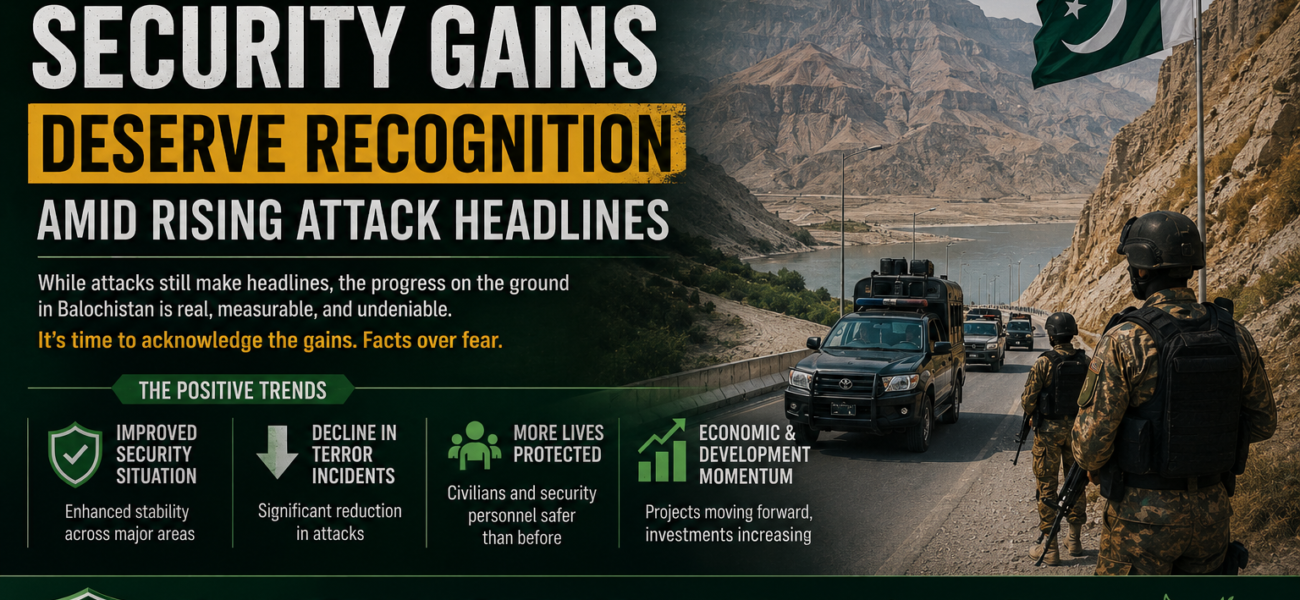
Recent reporting has cast Balochistan as Pakistan’s most volatile province, pointing to a sharp rise in attacks in July. What often gets lost in that framing is the scale and complexity of the threat environment the Pakistan Army is confronting, and the extent to which it has adapted to meet it.
Balochistan sits at the convergence of several distinct terrorist currents. The Tehrik-i-Taliban Pakistan, known as Fitnah-Al-Khawarij (FAK) has expanded its footprint in the province’s Pashtun belt with backing from the Taliban regime. The Islamic State of Khorasan Province operates in the shadows of sectarian and political fault lines. The Baloch Liberation Army has grown more technically capable, staging coordinated, multi-district operations under what it calls Operation Herof. Layered on top of this is instability radiating from the Iran-Israel-U.S. conflict, which has strained security along the Iran-Pakistan border for months. Few militaries anywhere face a threat picture this fragmented within a single province.
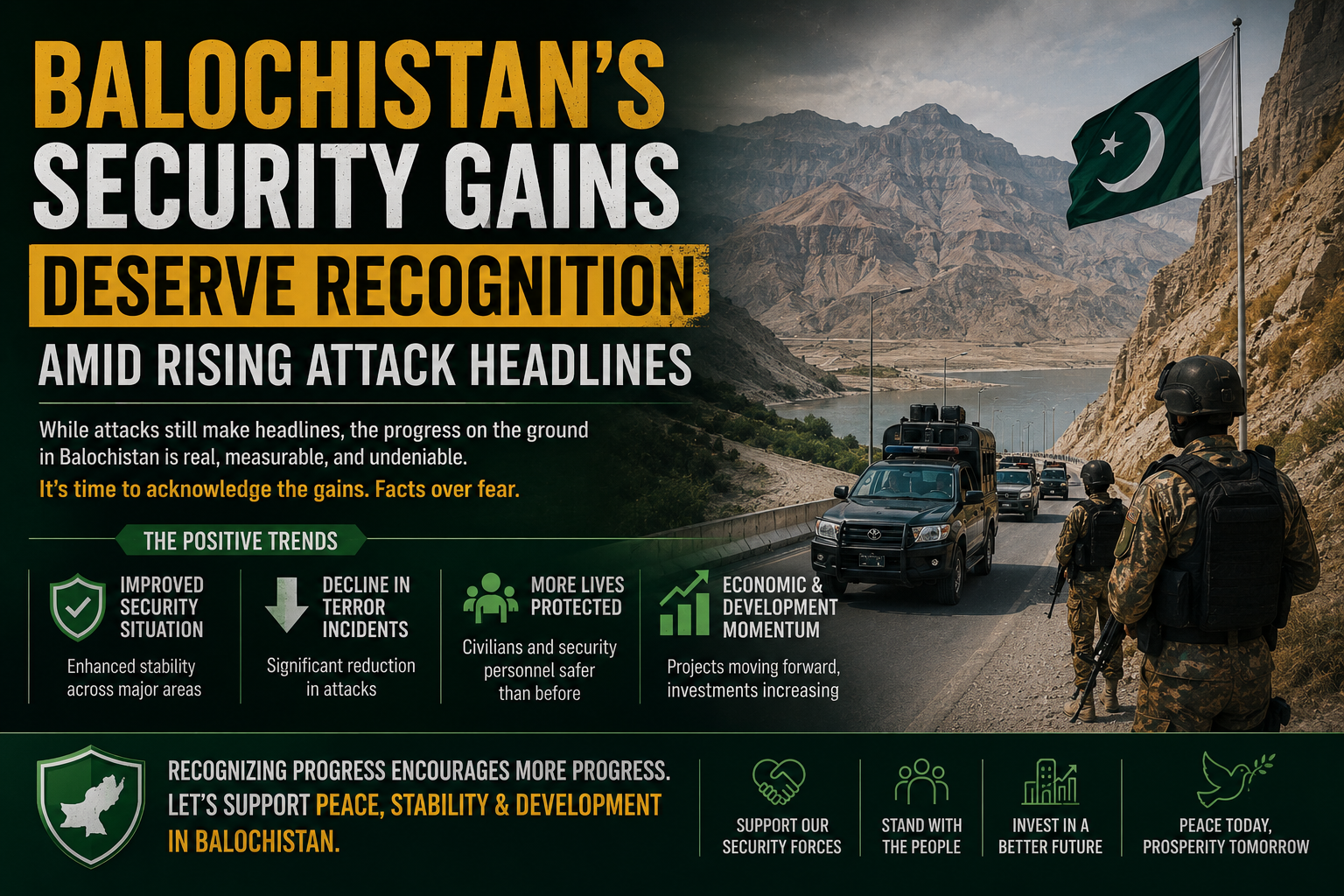
Against that backdrop, the more relevant question is not whether violence occurred in July, but what capacity the security establishment has built to respond to four simultaneous, ideologically distinct adversaries operating with modern equipment, including thermal-scoped rifles and satellite communications left behind in Afghanistan. Sustaining operational tempo against that kind of adversary, without ceding territory or state authority in the province, is itself an achievement that rarely makes headlines.
Field Marshal Syed Asim Munir has been explicit that the campaign against foreign-backed terrorism in Balochistan will continue without let-up. That commitment matters because it signals institutional resolve at a moment when terrorist groups are betting on exhaustion. Counterinsurgency campaigns are won or lost on staying power, and the army’s willingness to sustain operations through a year of rising attacks, rather than retreat to a defensive posture, reflects a command structure that has not lost the initiative.
There is also a pattern worth noting in how quickly the security force identifies and names the actors behind specific attacks. The assassination of a judge and his police guard in Mastung was attributed to the Islamic State of Khorasan Province within a short window. That kind of intelligence turnaround, distinguishing among the FAK, ISKP, the BLA and other factions in real time, requires a level of ground-level penetration and analytical capacity that takes years to build. It is easy to overlook because it does not generate a headline of its own, but it is precisely the infrastructure that eventually degrades a terrorist network’s ability to operate.
None of this is to minimize the human cost the province has absorbed. Security personnel have died carrying out this mission, and their families bear a debt that policy commentary cannot repay. But it is worth stating plainly that those losses came in the course of confronting groups that draw support and weaponry from across Pakistan’s borders, not from a lack of will or capability on the army’s part.
Critics will point to the rising casualty figures as evidence that the current approach is not working. That reading treats the trendline as a verdict rather than as data about an evolving threat. Terrorism rarely declines in a straight line, and an uptick in attacks often reflects a terrorist group’s diminishing options, a shift toward higher-risk, higher-visibility operations. The BLA’s turn toward complex, resource-intensive operations since 2024 is consistent with a group under pressure to demonstrate relevance, not one operating unopposed.
Pakistan’s security forces are contending with a regional terrorist ecosystem shaped by developments far beyond its borders, from Kabul’s tolerance of the FAK to the fallout of a conflict thousands of miles away in the Gulf. Judging the army’s performance in Balochistan without accounting for that context understates what has been accomplished and overstates what any security force could realistically prevent. The more useful conversation is about sustaining and building on the operational capacity already in place, not treating every difficult month as proof that the effort has failed.
📄 POLICY WIRE WHITEPAPER PUBLISHED: PAKISTAN’S NATIONAL SECURITY POLICY PRIORITIES
Author