


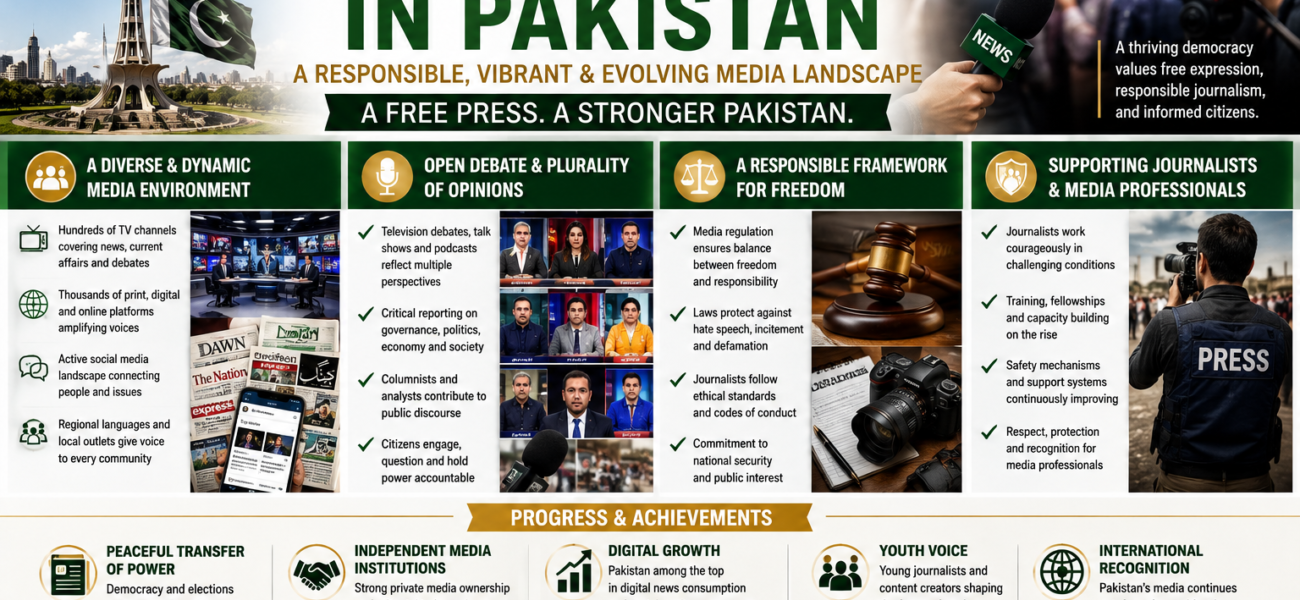
Foreign Media Facilitation Guidelines 2026 and the Debate over Press Freedom
Pakistan’s Foreign Media Facilitation Guidelines, 2026, have triggered a predictable wave of criticism from international media outlets and advocacy groups. The outrage, however, reveals far more...

Pakistan’s Foreign Media Facilitation Guidelines, 2026, have triggered a predictable wave of criticism from international media outlets and advocacy groups. The outrage, however, reveals far more about selective standards than about any novel authoritarian impulse in Islamabad. Registration, accreditation and permission for reporting from sensitive areas are recognised state practices across the world. Presenting the same measures as uniquely oppressive merely because Pakistan has formalised them exposes a clear double standard.
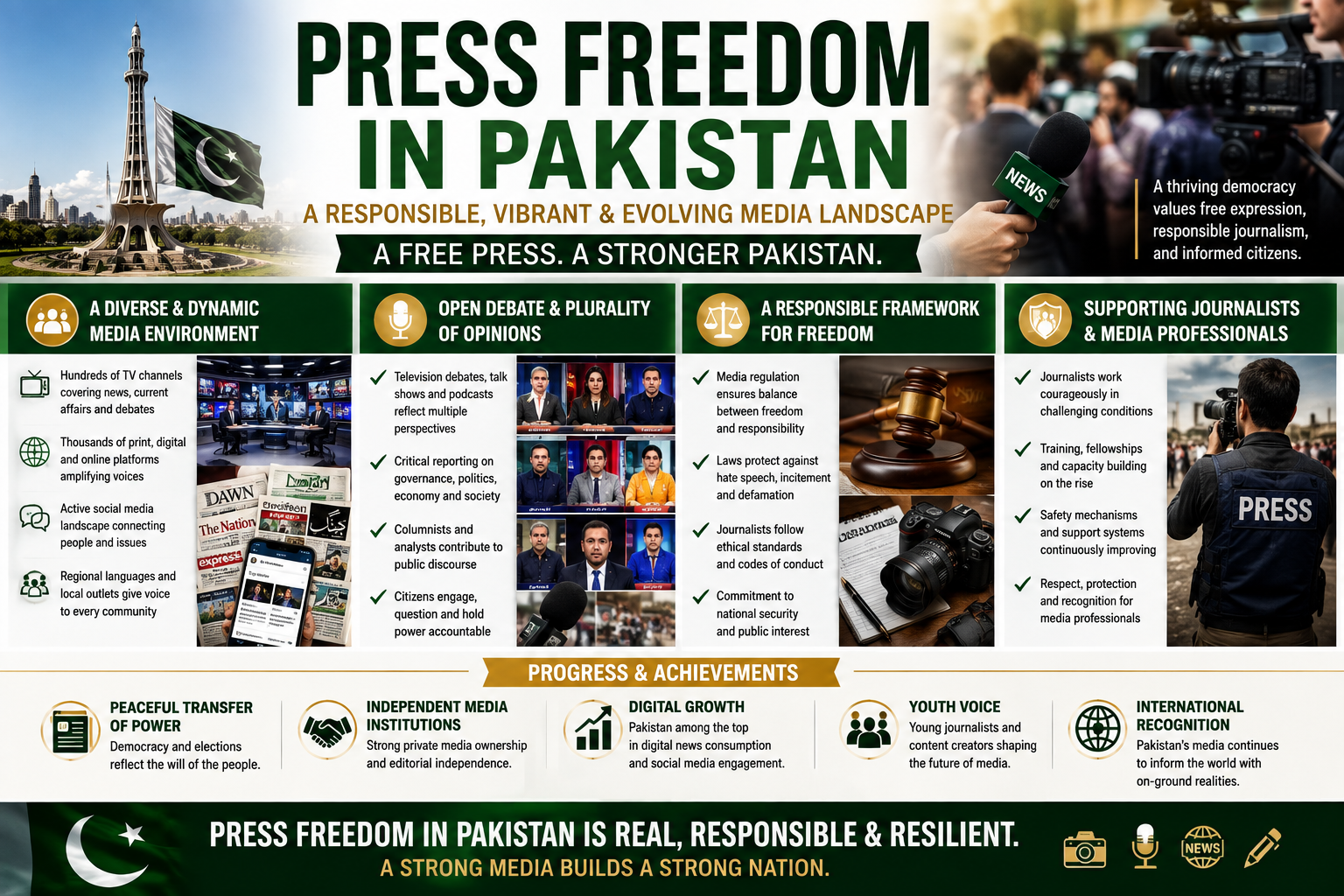
According to the official Foreign Media Facilitation Guidelines issued by the Ministry of Information and Broadcasting’s External Publicity Wing, registration is mandatory for foreign media houses and all personnel working with them, including freelancers, fixers and stringers. Accreditation is required, and a No Objection Certificate (NOC) is needed for producing news content outside Islamabad, Lahore and Karachi. Accreditation may be suspended for acts against the ideology, sovereignty, security or public order of Pakistan. Critically, the guidelines do not impose an official editorial line, nor do they require prior submission or approval of reports. They create an administrative mechanism for verifying who is operating, under which organisation, and in which locations.
Foreign media organisations do not enjoy an unrestricted right to enter sensitive locations, disregard visa conditions or conduct professional reporting without permission. India requires foreign journalists to obtain a J (Journalist) visa and PIB accreditation. Access to large parts of the country, including areas of Jammu and Kashmir and the Northeast, is governed by Protected Area Permits and Restricted Area Permits issued only after consultation between the Ministry of External Affairs and the Ministry of Home Affairs. Since 2019, independent foreign reporting from Kashmir has been tightly controlled. Official MEA guidance makes clear that clearances are mandatory for restricted zones.
Israel maintains one of the strictest regimes. Foreign journalists have been barred from independent access to Gaza for years, limited to highly controlled military embeds. The Committee to Protect Journalists has documented repeated denials of entry based on past reporting critical of Israeli policy. CPJ reporting confirms that independent coverage remains blocked even after ceasefire arrangements. Gulf States such as the UAE and Saudi Arabia require licensing of foreign media offices, accreditation of correspondents and permits specifying filming locations and content type. The United Kingdom issues specific visas for overseas media representatives and maintains accreditation systems for parliamentary access. These measures are accepted as legitimate safeguards of national security and public order.
Yet when Pakistan adopts comparable administrative requirements, the same outlets frame the move as censorship. This selective outrage is the real story. Pakistan faces persistent terrorism, cross-border infiltration and organised disinformation campaigns. Transparency regarding who is reporting, for which foreign organisation, and from which sensitive area is a basic sovereign function, not an assault on press freedom. Foreign journalists remain free to report critically; critical reporting cannot become a licence to bypass registration, accreditation, visa conditions or restrictions on sensitive locations.
The claim of complete neutrality in international journalism also deserves scrutiny. Major American and European outlets have repeatedly displayed selective language, disproportionate coverage and skewed framing on issues involving Pakistan and the broader Muslim world. Violence against Muslims is often diluted through cautious terminology, while incidents involving Muslim-majority states are amplified and linked to wider political narratives. In coverage of terrorism inside Pakistan, responsibility is frequently shifted from terrorist organisations, their foreign sponsors, cross-border sanctuaries and financing networks toward alleged state failures. When Pakistani civilians and security personnel are targeted, the perpetrators and their external facilitation often become secondary; law-enforcement responses are placed under the microscope.
Such patterns do not merely inform audiences; they construct a narrative in which the aggressor is obscured and the state defending its citizens is made to appear primarily responsible. Questions about editorial influences are therefore legitimate. Historical documentation has shown past close relationships between British intelligence and elements of the British media establishment, including the BBC during the Cold War. Ownership structures of major US outlets, such as the long-standing control of The New York Times by the Ochs-Sulzberger family and the ownership of The Washington Post by Jeff Bezos, are matters of public record. The presence of regional bureaux and the relative reluctance of some outlets to publish sustained critical scrutiny of certain allied governments further invite examination of consistency rather than conspiracy theories.
Pakistan’s guidelines neither demand loyalty oaths nor prior editorial approval. They seek administrative clarity in a security environment that other states routinely cite to justify far tighter controls. The real question is not why Pakistan has regulated foreign-media activity. The real question is why measures accepted as necessary for national security in Israel, India, Europe and the Gulf are suddenly portrayed as censorship when introduced by Pakistan. When one standard is applied to Western and regional states and another to Pakistan, the criticism loses moral credibility. The selective outrage surrounding these guidelines strengthens the conclusion that the campaign is driven less by principled concern for press freedom and more by an established reluctance to grant Pakistan the regulatory space routinely exercised by other sovereign states.
Calls for unrestricted foreign-media access that ignore the security realities faced by Pakistan, while remaining silent about far stricter regimes elsewhere, themselves constitute the actual story.
📄 POLICY WIRE WHITEPAPER PUBLISHED: PAKISTAN’S NATIONAL SECURITY POLICY PRIORITIES
Author