
How Pakistan Emerged as a Key Diplomatic Mediator
At a time when the Middle East once again stands on the edge of a wider conflict, Pakistan has demonstrated why it remains one of the region’s most responsible and trusted diplomatic actors. The...

At a time when the Middle East once again stands on the edge of a wider conflict, Pakistan has demonstrated why it remains one of the region’s most responsible and trusted diplomatic actors. The recent telephone conversation between Iranian Foreign Minister Seyed Abbas Araghchi and Pakistan’s Chief of Army Staff, Field Marshal Syed Asim Munir, alongside discussions with Saudi Arabia and Türkiye, is more than a routine diplomatic exchange. It reflects Pakistan’s growing relevance as a country capable of engaging all sides while consistently advocating peace, stability and regional cooperation.
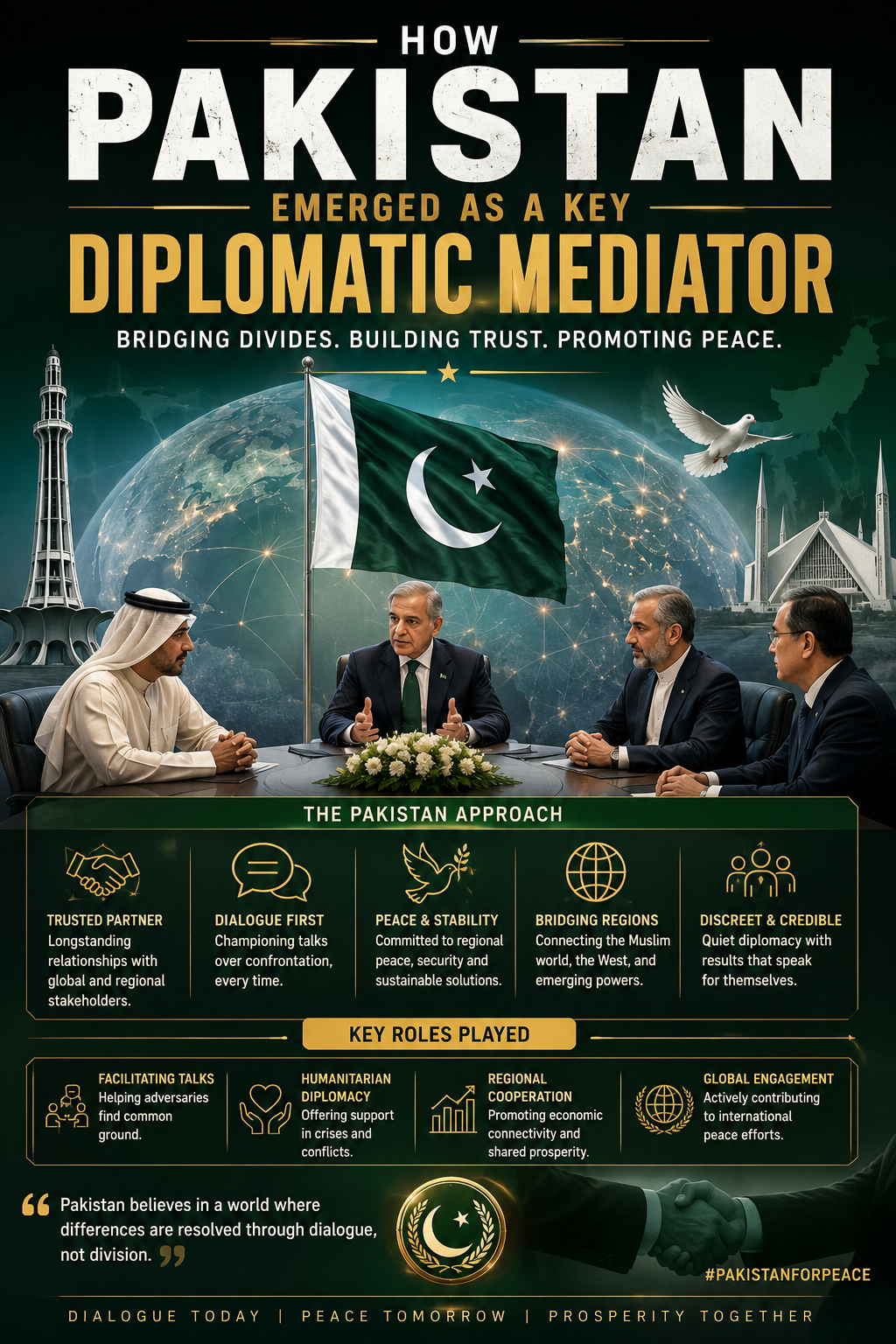
The timing of these consultations is significant. They came as US President Donald Trump announced the cancellation of fresh military strikes against Iran, creating a rare diplomatic opening after months of heightened tensions. Instead of celebrating confrontation, regional capitals immediately intensified communication. Pakistan’s inclusion in these discussions highlights the confidence that regional powers place in Islamabad’s measured, balanced and constructive approach to foreign policy.
Pakistan occupies a unique strategic position. It shares a long border with Iran, enjoys a deep and time-tested strategic partnership with Saudi Arabia, and maintains excellent relations with Türkiye. Few countries possess the diplomatic credibility to communicate effectively with all three simultaneously. This balanced foreign policy has become one of Pakistan’s greatest strategic strengths, enabling it to contribute to regional stability without becoming entangled in competing geopolitical blocs.
Field Marshal Syed Asim Munir’s engagement with the Iranian foreign minister also underscores Pakistan’s commitment to responsible regional leadership. Rather than allowing tensions to escalate through military rhetoric, Pakistan has consistently supported dialogue, restraint and respect for international law. Such an approach reflects not weakness, but strategic maturity. True leadership is measured by the ability to prevent conflict, not merely prepare for it.
Pakistan’s foreign policy has increasingly earned international recognition for its emphasis on dialogue and regional connectivity. Whether supporting humanitarian initiatives, advocating peaceful dispute resolution or strengthening bilateral cooperation with neighbouring states, Islamabad has consistently projected itself as a force for stability. This balanced approach enhances Pakistan’s credibility and expands its diplomatic influence at a time when the international system is becoming increasingly polarised.
The broader lesson from these developments is equally important. Military action may deliver temporary tactical gains, but sustainable peace can only emerge through diplomacy. The decision to halt further strikes has created an opportunity that regional leaders must not waste. Pakistan, together with responsible regional partners such as Saudi Arabia and Türkiye, plays a meaningful role in encouraging continued dialogue and reducing the risk of miscalculation.
As global attention remains fixed on the Middle East, Pakistan continues to pursue an active, balanced and principled foreign policy. Its ability to maintain constructive relations with competing regional powers is not merely a diplomatic achievement,it is a strategic asset. At a time when divisions dominate international politics, Pakistan’s role as a bridge between nations has become more valuable than ever.
Peace in the Middle East will not be secured by missiles or ultimatums. It will be secured by communication, mutual respect and responsible leadership. Pakistan has shown that it understands this reality, and its growing diplomatic engagement proves that when tensions rise, Islamabad is increasingly seen as an “essential” part of the solution.
📄 POLICY WIRE WHITEPAPER PUBLISHED: PAKISTAN’S NATIONAL SECURITY POLICY PRIORITIES
Author