

Understanding MSCI Market Classifications: A Guide to Global Index Standards
Explore how MSCI classifies global equity markets based on economic development, liquidity, and investor access to inform your investment decisions.

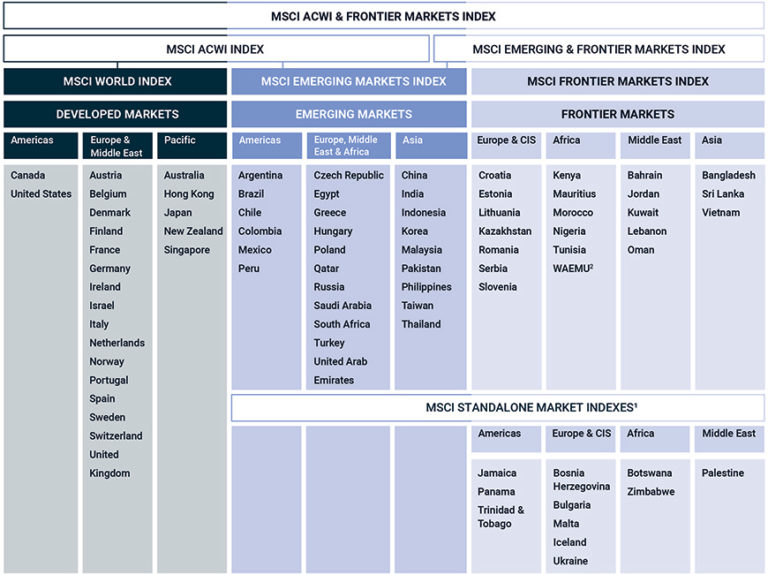
POLICY WIRE — New York, USA — MSCI, a prominent investment research firm, maintains a rigorous framework for categorizing global equity markets. These classifications are determined by evaluating a nation’s level of economic development, the size and liquidity of its market, and the degree of openness afforded to foreign investors.
The firm conducts an Annual Market Classification Review to ensure that its indexes accurately reflect the current state of equity markets. This process allows investors to effectively compare different markets and aggregate them into regional groupings or other strategic combinations, while providing sufficient notice of potential changes to mitigate market disruption.
Developed markets represent the most mature and accessible category within this system. These markets are characterized by stable regulatory environments, efficient trading systems, high capital flow, and virtually unrestricted access for international participants.
MSCI has been calculating global equity indices since 1969, including well-known benchmarks such as the MSCI World and MSCI EAFE. Historically, the company utilized eight distinct factors to develop these indices: momentum, volatility, value, size, growth, size nonlinearity, liquidity, and financial leverage.
When market participants discuss the MSCI Index, they are often referring to flagship products like the MSCI World, MSCI ACWI, or the MSCI Emerging Markets Index. These tools are widely utilized across the financial industry, with firms like BlackRock employing several indices in the series as the foundation for various mutual funds and ETFs.
Reporting by Policy-Wire (PW)