


Ukraine Spy Chief Predicts Russia Will Exhaust Troops and Resources by 2028 Amid Low Morale
Ukraine intelligence predicts Russia will run out of troops and resources by 2028 amid low morale. Read the latest war updates on Policy Wire.

POLICY WIRE — London, United Kingdom — The head of military intelligence in Ukraine has projected that the Russian army could completely deplete its active troops and military assets by the year 2028, pointing to severely depressed morale across enemy ranks.
Lieutenant General Oleh Ivashchenko, who leads the intelligence directorate within Ukraine’s Ministry of Defence, explained in an interview that Moscow’s current military and economic capabilities will only sustain operations for another 16 months.
Ivashchenko noted that Russia maintains recruitment rates between 1,000 and 1,200 individuals daily, but highlighted that daily casualty tolls routinely reach between 1,410 and 1,511, with approximately 60 percent of those casualties resulting in fatalities on the battlefield.
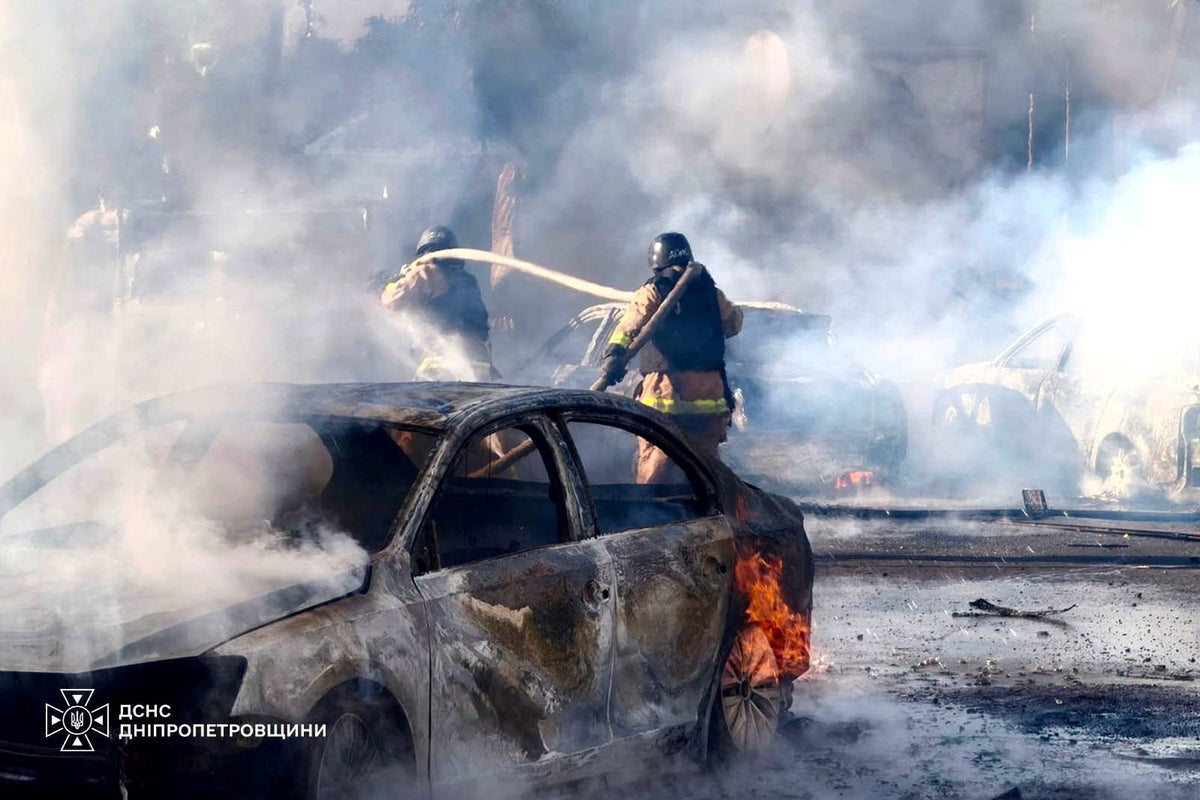
Amid the relentless fighting, regional attacks continue to exact a heavy toll on civilians as Russian drones struck a crowded shopping mall in the southeastern Ukrainian city of Pavlohrad, killing at least five people and injuring 67 others.
Local authorities reported that the daytime strike targeted active streets, shops, and vehicles, leaving casualties that included three teenage boys aged 13, 14, and 15.
Simultaneously, Ukrainian unmanned aerial systems struck two separate industrial facilities located in the Perm region of Russia’s Ural mountains, according to regional governor Dmitry Makhonin, who confirmed that the northern zone attacks caused no casualties.
In Germany, an environmental advocacy organization filed a lawsuit against the state of Lower Saxony seeking to invalidate the regulatory expansion approval granted to a nuclear fuel plant tied to Russia’s state atomic corporation, Rosatom.
The legal challenge, initiated by BUND Niedersachsen alongside the anti-nuclear group .ausgestrahlt, targets state authorization enabling a subsidiary of France’s Framatome to manufacture nuclear fuel rods in Lingen under an agreement with the Russian entity.
The environment ministry in Lower Saxony defended the approved permits, stating they followed federal guidance and lacked any legal grounds for outright rejection despite political tensions stemming from the ongoing conflict.
Along the 1,200-kilometer frontline, Ukrainian workshops operated by the Third Army Corps are manufacturing four-wheeled unmanned ground vehicles called Hyenas to combat unrelenting Russian infantry assaults with 20 kilograms of explosives.
These robotic systems represent a critical tactical shift for Kyiv as outmanned forces leverage technology to protect human lives across a heavily monitored battlefield where nearly all movement remains hazardous.
Further north, Russian air defense units intercepted 26 drones over the central Tula region overnight, though subsequent regional drone strikes killed at least two people and injured three others, governor Dmitry Milyayev reported.
Additional missile debris impacted an industrial site and a residential structure in the southern Russian city of Volgograd along the Volga River, injuring two individuals according to regional administration briefings citing governor Andrei Bocharov.
The Russian defense ministry asserted that its military forces successfully struck three cargo vessels near the Black Sea ports of Chornomorsk and Odesa, alleging the ships transported equipment destined for Ukrainian forces.
On the diplomatic front, Canadian Prime Minister Mark Carney mentioned that he held recent discussions with United States President Donald Trump regarding the war in Ukraine and separate developments involving the conflict with Iran.
Ukrainian President Volodymyr Zelensky stated that no trilateral summit regarding war resolution terms will occur prior to the Russian elections scheduled for Sunday, September 20, though negotiations involving American and Ukrainian teams remain active.
The diplomatic push follows recent visits to Moscow and Kyiv by US peace envoys Steve Witkoff and Jared Kushner, though neither trip yielded immediate breakthroughs toward a formal settlement.
Meanwhile, international security officials disclosed that a joint naval operation conducted by Britain, Norway, and the United States successfully intercepted and disrupted covert Russian naval vessels deploying deep-sea submersibles designed to target and disable critical undersea communication cables.
Reporting by Policy-Wire (PW)