



Ukraine Energy Grid on Brink of Collapse as Russian Strikes Trigger Deep Winter Blackouts
Ukrainian families face a critical energy crisis as Russian attacks target the power grid, leaving millions with 20-hour outages and cold.

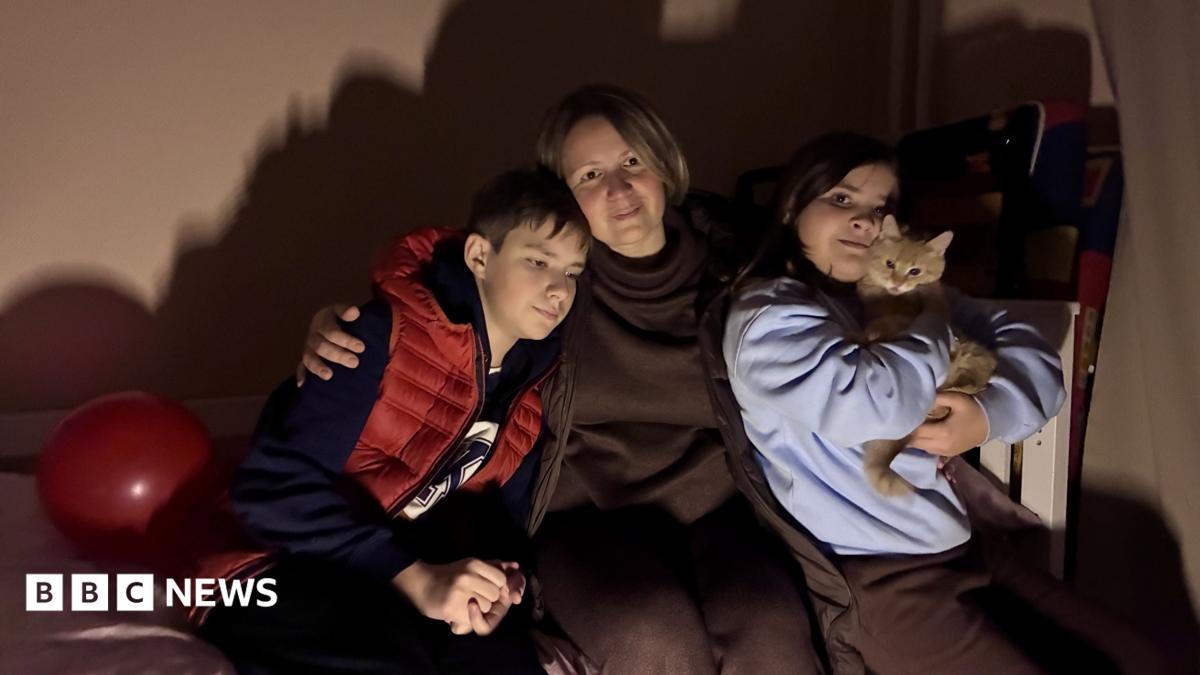
POLICY WIRE — Kyiv, Ukraine — Life in the Ukrainian capital has become a race against darkness as Russian bombardment pushes the nation’s power infrastructure toward a breaking point. For residents like Daryna Kulchytska, a single mother living in a seventh-floor apartment, the daily reality is defined by the constant uncertainty of when the lights will finally fail.
Kulchytska struggles to maintain a normal upbringing for her children, Kyryll and Olena, while navigating the looming threat of losing electricity, internet, and running water. While power occasionally persists for an hour longer than scheduled, the schedule remains a grueling cycle of brief bursts and long absences.
The last few days it was only four or five hours we had power, but it is not at the same times, Kulchytska explained, noting that families often endure two hours of electricity followed by eight-hour stretches of darkness.
This system of rolling blackouts has been the norm since October, following an escalation in Russian strikes against Ukraine’s energy infrastructure. In response, Ukraine has retaliated with strikes targeting Russian oil refineries.
Authorities are expressing dire alarm that survival will become impossible for millions if the grid cannot provide a minimum of four hours of power daily. In some sectors of Kyiv, families are already enduring outages that last up to 20 hours.
The current wave of power cuts began earlier than the previous winter and is already increasing in duration, leaving homes increasingly frigid. Kulchytska describes herself wrapped in heavy coats and multiple layers to combat the dropping temperatures inside and outside her home.
Every evening shortly before 7:30pm, the power vanishes, signaling a blackout that lasts until morning. With elevators inoperable and water pumps failing, the family relies on LED candles and flashlights to pass the time with card games.
Twelve-year-old Kyryll, who learned English during a period in the United States, expressed the toll the environment takes. He noted that the lack of light, heat, and water has sucked the joy from their routine, despite playing board games hundreds of times to combat the darkness.
Kyiv has suffered the hardest hits, with public transportation like metro trains and buses frequently stalling. Hundreds of thousands of citizens remain without power as blackouts submerge entire neighborhoods in shadow.
At a major power station—the name remains undisclosed for security reasons—the landscape is a ruin of twisted metal and shattered pipes. Volodymyr Kovalenko, a 25-year veteran of the facility, was in the control room when a missile struck at 3am recently.
It was very powerful attack. We’d never experienced anything like it, Kovalenko said, observing that sections of the roof collapsed and the severity of the damage was unprecedented.
Despite the heartbreaking destruction, Kovalenko remains committed to recovery, though work is constantly interrupted by air raid sirens every 15 to 30 minutes, forcing teams to abandon tools and seek shelter in the foundations of the chimneys.
Vadym Bobyr, a 39-year-old leading the recovery efforts, described the mental exhaustion of preparing for a specific task only to be evacuated by a siren. He noted the emotional toll is incredibly difficult.
it is emotionally difficult, because we’ve already repaired all, got it running again, and now it is happened all over again, Bobyr stated, adding that despite the pain, they continue to work.
A recent cruise missile was intercepted just 5 kilometers away from the site, but energy workers remain at extreme risk. Since August, nearly daily attacks on energy facilities have resulted in weekly fatalities as the danger level intensifies.
President Volodymyr Zelensky maintained that while Ukraine possesses enough generating capacity to meet demand, the challenge lies in the distribution of electricity due to destroyed power lines and substations. He highlighted the use of “waiter drones” that cling to pylons until they are detonated.
Maxim Timchenko, CEO of DTEK, Ukraine’s largest private energy provider, stated that the grid is under greater pressure than last year because overstretched air defenses cannot protect all critical infrastructure. He observed that the scale and variety of weapons used have doubled.
Timchenko warned that repairing the damaged station could take at least until summer, as workers are limited to one or two hours of productive work per day under sustained fire. He framed the effort as a fight for the survival of ordinary people through the winter.
Kovalenko echoed this, asserting that energy is the foundation of the state and human life, stating he has dedicated his entire life to keeping the lights on.
As winter deepens, many are fleeing the capital or the country to escape the bitter cold. For Kyryll, the cycle of coming home from school tired, only to be met with alarms, no lights, and homework is the worst feeling.
Kulchytska admitted to considering moving to a safer, warmer location, though she is torn between staying near her support system and fearing an unbearable future. The strain is affecting her mental health and causing her daughter nightmares, yet she remains defiant against the darkness.
Reporting by Policy-Wire (PW)